Loaf Cakes: Five Recipes, One Versatile Format
The most adaptable cake format - one batter, five seasonal flavours, and the drizzle technique that transforms a good cake into an unforgettable one
The loaf cake is the most practical format in baking. A single tin, one batter, one cake that serves 8-10 people in clean, even slices. No layer assembly. No crumb coating. No decoration anxiety. The loaf tin levels the playing field between an experienced baker and a beginner because there is almost nothing that can go wrong with the presentation - the tin provides the shape, and the batter provides everything else.
The format is also one of the most adaptable. The fundamental loaf cake batter - fat, sugar, eggs, flour, a liquid element - accepts almost any flavour addition without losing its structural integrity. Lemon zest and olive oil. Courgette and walnuts. Apple and cinnamon. Matcha and white chocolate. Each produces a genuinely different cake in flavour and character while following the same fundamental method.
This post covers five loaf cakes - each a genuinely distinct flavour direction, each achievable in under an hour of active time - and the drizzle technique that is the most impactful finishing element in this entire baking collection.
The Fundamental Loaf Cake Method
All five cakes in this post follow the same method with minor variations:
Cream or whisk fat and sugar. This incorporates air and produces a lighter crumb.
Add eggs. One at a time, beaten well after each, to produce an emulsified batter.
Fold in dry ingredients. Minimal mixing - just enough to combine, not enough to develop gluten.
Add liquid component. Milk, yogurt, oil, or a fruit purée - provides moisture and adjusts consistency.
Bake. A loaf cake is done when a skewer inserted into the centre comes out clean and the surface springs back when pressed.
Cool before slicing. Non-negotiable - the starch hasn't set until the cake cools.
Understanding this sequence makes all five cakes intuitive rather than five separate recipes to memorise.
The Drizzle Technique: The Most Impactful Finishing Step
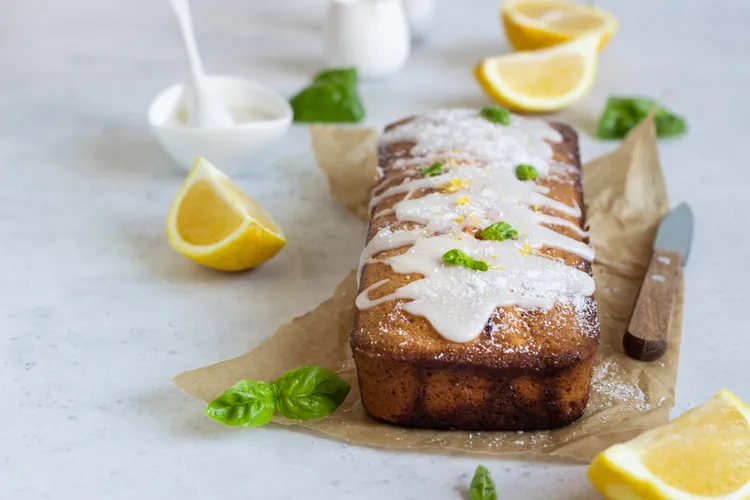
The lemon drizzle finish - hot sugar syrup poured over a just-baked hot cake - is the single technique that most dramatically transforms a loaf cake. It does three things simultaneously:
Creates a crunchy sugar crust. The syrup soaks into the hot surface and, as it cools, the sugar crystallises and forms a slightly crunchy, sugary top that contrasts with the moist interior.
Adds intense flavour. A lemon drizzle is made from undiluted lemon juice and caster sugar - concentrated, bright, intensely acidic and sweet. Poured over a warm cake, it penetrates the top centimetre of the crumb and permeates it with lemon flavour more effectively than any zest-only preparation could.
Keeps the cake moist. The sugar syrup is hygroscopic - it draws moisture into the cake and keeps the crumb moist for days longer than a non-drizzled version.
The technique: Immediately from the oven (while still in the tin), use a skewer to poke approximately 20-30 holes across the surface, distributing them evenly and going nearly to the base. Mix the drizzle liquid (acidic element + sugar - no heating required). Spoon slowly over the surface, allowing it to sink into the holes and spread across the surface. Allow to cool completely in the tin before removing - the syrup needs to set before the cake can be moved.
Cake 1: Classic Lemon Drizzle
The most popular loaf cake in Britain and one of the highest-traffic baking searches globally. This version has two stages of lemon - zest in the batter, concentrated drizzle on top - producing maximum lemon impact.
Serves 8-10 | Active time: 15 minutes | Total time: 55 minutes
Ingredients
Batter:
- 175g unsalted butter, at room temperature
- 175g caster sugar
- 3 large eggs, at room temperature
- 175g self-raising flour, sifted
- Finely grated zest of 2 unwaxed lemons (approximately 2 tsp)
- 2 tbsp whole milk
Drizzle:
- Juice of 2 lemons (approximately 60-70ml)
- 100g granulated sugar - granulated rather than caster; the coarser crystals produce a crunchier surface texture
Method
Preheat oven to 170°C (fan). Grease a 900g loaf tin and line the base with parchment.
Beat butter and caster sugar together for 5 minutes until pale and fluffy. Add eggs one at a time, beating well after each. Add lemon zest and beat briefly to combine.
Fold in the sifted self-raising flour until just combined. Add milk and fold in - the batter should drop from the spoon in a slow, reluctant fall (dropping consistency).
Pour into the prepared tin. Bake for 45-50 minutes until a skewer inserted in the centre comes out clean and the surface is golden and springs back when pressed.
The drizzle: Immediately from the oven, poke 20-25 holes across the surface with a skewer. Mix lemon juice and granulated sugar - don't dissolve the sugar. Spoon slowly and evenly across the surface. The syrup will sink into the holes and pool across the top.
Leave to cool completely in the tin before removing. The drizzle sets during cooling.
Cake 2: Olive Oil and Orange Loaf
A Mediterranean-inflected loaf - olive oil produces a moister, denser crumb than butter, and the orange provides a sweeter, warmer citrus note than lemon. No creaming required; this is a stir-together batter.
Serves 8-10 | Active time: 10 minutes | Total time: 55 minutes
Ingredients
- 200g plain flour
- 200g caster sugar
- 1 tsp baking powder
- ½ tsp fine salt
- 3 large eggs
- 120ml good olive oil - the olive oil is a flavour ingredient here; a fruity, mild one is ideal
- 120ml whole milk or plain yogurt
- Finely grated zest of 2 oranges
- 2 tbsp fresh orange juice
Optional glaze: 60ml orange juice + 60g icing sugar, mixed until smooth, poured over the cooled cake.
Method
Preheat oven to 170°C (fan). Grease and line a 900g loaf tin.
Whisk together flour, sugar, baking powder, and salt in a large bowl. In a separate bowl, whisk eggs, olive oil, milk, orange zest, and orange juice together.
Pour the wet ingredients into the dry and fold until just combined - approximately 15 folds with a spatula.
Pour into the prepared tin. Bake for 48-52 minutes until a skewer comes out clean.
Allow to cool 10 minutes in the tin, then turn out. Pour the orange glaze over the top while still warm.
Flavour profile: Less sharp than lemon, more rounded and floral. The olive oil adds a slight fruitiness and a rich, moist crumb. Excellent with afternoon tea or as a dessert cake alongside crème fraîche.
Cake 3: Courgette and Walnut Loaf
The vegetable-inclusion loaf - courgette adds moisture, walnuts add texture, and the warm spicing creates a cake that surprises people who are sceptical of vegetables in baking. The courgette is invisible in flavour but transformative in texture.
Serves 8-10 | Active time: 15 minutes | Total time: 1 hour
Ingredients
- 250g plain flour
- 180g caster sugar (or 120g caster + 60g soft brown for depth)
- 1 tsp baking soda
- ½ tsp baking powder
- 1 tsp ground cinnamon
- ½ tsp ground nutmeg
- ½ tsp fine salt
- 3 large eggs
- 150ml neutral oil
- 1 tsp vanilla extract
- 200g courgette, coarsely grated and excess liquid gently squeezed out
- 80g walnuts, roughly chopped and lightly toasted
Method
Preheat oven to 170°C (fan). Grease and line a 900g loaf tin.
Whisk together all dry ingredients in a large bowl. Whisk eggs, oil, and vanilla in a separate bowl. Add the grated courgette to the wet ingredients.
Fold the wet into the dry until just combined. Fold in most of the walnuts, reserving a handful for the top.
Pour into the prepared tin. Scatter the reserved walnuts over the surface.
Bake for 55-65 minutes until a skewer comes out clean. Courgette adds moisture - this loaf takes slightly longer to bake through than a plain cake.
The moisture content: The squeezed courgette adds just enough moisture to produce a beautifully moist crumb. Don't squeeze too aggressively - some moisture should remain in the grated courgette. Don't add it without squeezing at all - the excess liquid will make the cake gummy.
Cake 4: Apple and Cinnamon Loaf
The autumn loaf - diced apple pieces (not purée) create bursts of soft, sweet fruit against the spiced crumb. This version uses brown butter (connecting to the Banana Bread post) for additional depth.
Serves 8-10 | Active time: 20 minutes | Total time: 1 hour 10 minutes
Ingredients
- 200g plain flour
- 180g caster sugar
- 1.5 tsp ground cinnamon
- ¼ tsp ground cardamom
- 1 tsp baking powder
- ½ tsp fine salt
- 150g unsalted butter, browned and cooled
- 2 large eggs
- 120ml soured cream or buttermilk
- 1 tsp vanilla extract
- 2 medium eating apples (Granny Smith or Cox - firm varieties that don't dissolve during baking), peeled, cored, and cut into 1.5cm dice
Cinnamon sugar topping: 2 tbsp caster sugar + ½ tsp cinnamon, mixed
Method
Preheat oven to 170°C (fan). Grease and line a 900g loaf tin.
Brown the butter (see Banana Bread for the complete technique). Cool to room temperature.
Whisk dry ingredients in a large bowl. Whisk the cooled brown butter, eggs, soured cream, and vanilla in a separate bowl. Fold the wet into the dry until just combined. Fold in the diced apple.
Pour into the prepared tin. Scatter the cinnamon sugar over the top.
Bake for 55-60 minutes until a skewer comes out clean.
The apple pieces: Firm apple varieties (Granny Smith, Braeburn, Cox) hold their shape during baking and produce distinct apple pieces in each slice. Softer varieties dissolve and produce a purée-like effect - less texturally interesting.
Cake 5: Matcha and White Chocolate Loaf
The cross-pillar cake - connecting to the Matcha pillar's extensive collection. Matcha's slight bitterness and the earthy-sweet flavour work perfectly against white chocolate's sweetness. The vivid green colour makes this one of the most visually striking loaf cakes in the collection.
Serves 8-10 | Active time: 15 minutes | Total time: 55 minutes
Ingredients
- 200g plain flour
- 200g caster sugar
- 2 tsp culinary-grade matcha powder - see the Matcha Buyer's Guide for the correct grade for baking
- 1 tsp baking powder
- ½ tsp fine salt
- 175g unsalted butter, at room temperature
- 3 large eggs, at room temperature
- 3 tbsp whole milk
- 150g good-quality white chocolate, chopped - half folded into the batter, half scattered on top
Method
Preheat oven to 170°C (fan). Grease and line a 900g loaf tin.
Beat butter and caster sugar for 5 minutes until pale and fluffy. Add eggs one at a time. Sift together flour, matcha, baking powder, and salt (sifting matcha eliminates clumps). Fold into the butter mixture. Add milk and fold to dropping consistency.
Fold in half the white chocolate. Pour into the prepared tin. Scatter the remaining white chocolate across the surface.
Bake for 45-50 minutes until a skewer comes out clean. The matcha produces a vivid green crumb - brighter than you might expect.
Matcha grade for baking: Culinary grade is appropriate (the nuanced flavour differences between ceremonial and culinary grades are less detectible in baking). Ensure the matcha is fresh - old matcha loses its vibrant green colour and much of its flavour. See the Matcha collection for more baking applications.
Storage and Slicing
All five loaf cakes keep in a sealed container at room temperature:
- Lemon drizzle: 4-5 days (the drizzle preserves moisture)
- Olive oil and orange: 4-5 days (oil-based cakes keep longer than butter-based)
- Courgette and walnut: 4-5 days (high moisture from the courgette)
- Apple and cinnamon: 3-4 days
- Matcha and white chocolate: 3 days
Freezing: All five freeze well. Slice completely cooled cakes and freeze slices individually in cling film, then in a sealed bag. Thaw at room temperature for 30-45 minutes.
Slicing technique: A serrated bread knife produces cleaner slices than a straight-bladed knife - the saw motion cuts through the crust without compressing the crumb.
Pro Tips
- Line the tin with parchment overhang. Leave a generous parchment overhang on the two long sides - these become handles for lifting the baked cake out of the tin cleanly without any sticking or tearing.
- The skewer test is more reliable than the spring-back test for loaf cakes. Loaf cakes have a thick cross-section - the centre may still be liquid when the top looks and feels done. Insert the skewer all the way to the base; it must come out clean throughout, not just near the surface.
- Zest before juicing. Always zest citrus before cutting and juicing - it is much easier to zest a whole fruit than a cut one. Roll the fruit firmly on the counter before cutting to loosen the juice for maximum yield.
- The drizzle is always better poured over a hot cake. A cold cake resists the syrup - it pools on the surface rather than soaking in. Pour the drizzle within 2 minutes of the cake coming out of the oven for maximum penetration.
Common Mistake: Removing the Drizzle Cake from the Tin Too Soon The drizzle needs time to set and the syrup needs time to penetrate the crumb - both happen as the cake cools in the tin. Moving a drizzled cake before it is fully cooled breaks the delicate sugar crust, causes the syrup to run off the sides, and produces an uneven finish. Leave it in the tin until completely cool - at least 1.5 hours. The patience is rewarded with a clean, crisp, perfectly glazed top.
FAQ
Q: Can I make these in muffin tins instead of a loaf tin?
Yes - fill muffin cases two-thirds full and bake at the same temperature for 18-22 minutes. Check with a skewer from 18 minutes. The drizzle can be applied to muffins in the same way - a little syrup per muffin, applied while hot.
Q: Why does my loaf cake sink in the middle?
Most commonly: underbaked (the structure hasn't set at the centre), or the oven door was opened during the critical first 30 minutes (cold air enters and the cake deflates before the structure sets). Test with a skewer before removing and don't open the oven before the 40-minute mark.
Q: Can I substitute oil for butter in these recipes?
For cakes 1 (lemon drizzle) and 5 (matcha): oil can substitute for butter but produces a slightly less complex flavour. For cake 2 (olive oil) and 3 (courgette): already uses oil. For cake 4 (apple): the browned butter is a flavour ingredient - oil produces a noticeably different result.
🔗 Continue Baking
- Banana Bread: The Science Behind a Perfect Loaf
- Victoria Sponge: The British Classic, Made Properly
- Chocolate Brownies: The Definitive Fudgy Recipe
- Matcha collection: The Ultimate Matcha Guide
- Flour, Butter, Eggs, Sugar: What Every Baking Ingredient Actually Does
- Baking From Scratch: The Complete Guide
Latest