Panna Cotta: The Simplest Impressive Dessert
Four ingredients, one technique, six toppings - the Italian set cream that reveals the quality of everything in it
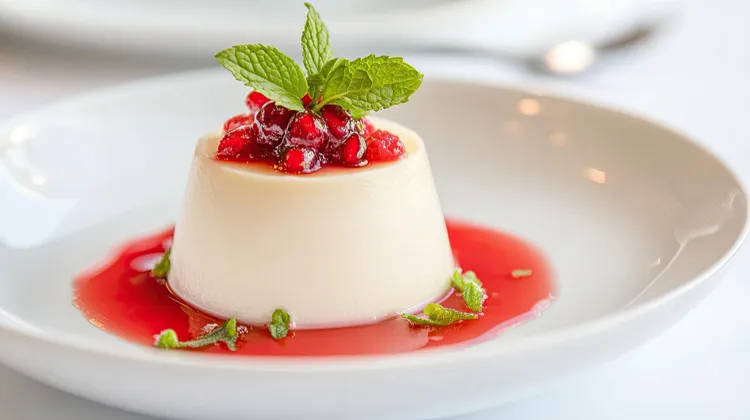
Panna cotta - "cooked cream" in Italian - is the most honest dessert in this collection. It has four ingredients: cream, sugar, gelatin, and vanilla. It requires no eggs, no baking, no sugar thermometer, and no bain-marie. The active preparation takes 10 minutes. The result, presented in a glass or unmoulded on a plate with a coulis poured over it, looks like something from a patisserie.
It also reveals, more than almost any other dessert, the quality of what goes into it. A panna cotta made with excellent double cream and a whole vanilla pod produces something silky, fragrant, and deeply satisfying. A panna cotta made with single cream and vanilla extract produces something adequate. With four ingredients and nowhere to hide, every ingredient is present at full volume in the finished dessert.
The single technical challenge is the gelatin ratio. Too much: rubbery, bounces back when pressed, unpleasant mouthfeel. Too little: doesn't set or falls apart when unmoulded. The correct set is barely there - the panna cotta should tremble when shaken, melt immediately on the tongue, and hold its shape just long enough to be appreciated. The ratio in this recipe is calibrated exactly for this result.
The Gelatin Science
Gelatin is a protein derived from animal collagen - it dissolves in warm liquid and forms a gel network as it cools. The strength of the gel depends on the ratio of gelatin to liquid.
Standard gelatin leaf: 1 platinum-grade gelatine leaf sets approximately 200-250ml of liquid to a light, wobbly set. This recipe uses 3.5 leaves for 600ml of cream - slightly under the standard ratio, producing the soft, trembling set that distinguishes excellent panna cotta from rubbery panna cotta.
Powdered gelatin: 1 tsp (approximately 3g) powdered gelatin sets approximately 250ml of liquid. This recipe uses 1.5 tsp for 600ml.
Vegetarian alternatives: Agar-agar (derived from seaweed) sets more firmly than gelatin at equivalent quantities. Use approximately half the quantity of agar-agar compared to gelatin, and note that agar sets at room temperature rather than requiring refrigeration - it also produces a slightly more brittle, less silky set.
Ingredients
Makes 6 | Active time: 10 minutes | Setting time: 4 hours minimum
- 600ml double cream - full-fat, the best available; the cream is the entire flavour of the dessert
- 80ml whole milk - the small quantity of milk slightly reduces the richness and helps the gelatin distribute evenly
- 60g caster sugar
- 3.5 platinum gelatin leaves (or 1.5 tsp powdered gelatin / 4.5g)
- 1 vanilla pod, split and scraped - or 2 tsp vanilla bean paste (preferable to extract for this dessert, as the specks of vanilla are visible and beautiful in the white cream)
- Pinch of fine salt
Method
Step 1: Bloom the gelatin
Gelatin leaves: Place the 3.5 gelatin leaves in a wide bowl of cold water. Leave for 5 minutes until softened and pliable. They will absorb water and become transparent and floppy.
Powdered gelatin: Sprinkle the powdered gelatin over 3 tbsp of cold water in a small bowl. Leave for 5 minutes until it becomes sponge-like and swollen.
Step 2: Warm the cream
Combine the double cream, milk, sugar, vanilla pod and seeds (or paste), and salt in a medium saucepan. Heat over medium-low heat, stirring gently, until the sugar dissolves and the mixture is steaming - small bubbles forming at the edges. Do not boil. Remove from heat.
Step 3: Add the gelatin
For gelatin leaves: Lift the softened leaves from the water, squeezing out as much water as possible. Add directly to the hot cream mixture. Stir gently until completely dissolved - approximately 1 minute.
For powdered gelatin: Pour the bloomed gelatin into the hot cream. Stir gently until completely dissolved.
Remove the vanilla pod if used. Allow the mixture to cool for 5 minutes.
Step 4: Strain and pour
Strain the cream mixture through a fine-mesh sieve into a jug. This removes any undissolved gelatin or vanilla pod fragments, and produces a silkier result.
For serving in glasses: Pour directly into 6 × 150ml serving glasses or small bowls. Allow to cool to room temperature, then refrigerate.
For unmoulding: Lightly oil 6 × 150ml dariole moulds or ramekins with a neutral oil (a very thin film - wipe the inside with a piece of kitchen paper dipped in oil). Pour the cream mixture into the oiled moulds. Cool, then refrigerate.
Step 5: Refrigerate
Refrigerate for a minimum of 4 hours - overnight is preferable. The gelatin sets gradually as the temperature drops.
The set test: After the minimum time, lift a mould and gently shake. The panna cotta should move as one cohesive trembling mass - not slosh as liquid. A glass of water sloshed. A set panna cotta trembles as a unified whole.
Unmoulding
This is the step that intimidates most panna cotta first-timers, but it is reliable when done correctly.
Method:
- Run a thin knife or palette knife around the inner edge of the mould - one careful pass, angling the knife inward toward the panna cotta rather than outward toward the mould wall
- Dip the base of the mould in a bowl of hot (not boiling) water for 5 seconds - not longer. The heat melts the outer surface of the panna cotta very slightly, releasing the suction
- Place a serving plate face-down over the mould
- Invert in one confident motion - pause for 3 seconds
- Lift the mould
If the panna cotta doesn't release: dip in hot water for 3 more seconds and try again.
The serving-in-glass alternative: Serving panna cotta in glasses (without unmoulding) is elegant, practical, and eliminates all unmoulding anxiety. Pour the topping directly over the set panna cotta in the glass. The visual of the two layers - white cream beneath, coloured sauce or coulis above - is beautiful.
Six Toppings
1. Mixed Berry Coulis
Blend 300g of mixed berries (frozen is fine) with 3 tbsp icing sugar and 1 tbsp lemon juice. Strain through a fine sieve to remove seeds. The bright colour against the white panna cotta is the most striking presentation in this collection.
2. Salted Caramel Sauce
Make a dry caramel: heat 150g caster sugar in a dry heavy-based pan over medium heat until amber. Add 120ml warm double cream carefully (it will spit). Add 50g butter and 1 tsp sea salt. Stir until smooth. Cool to a pourable consistency. The caramel-cream-salt combination against the delicately vanilla cream is one of the great flavour pairings.
3. Honey and Roasted Figs
Halve 6 fresh figs. Drizzle with honey. Roast at 200°C for 8 minutes until softened and slightly caramelised. Serve warm alongside or on top of the cold panna cotta. The contrast of warm-cold and fruit-cream is excellent.
4. Mango and Lime
Dice 2 ripe mangoes finely. Dress with the juice and zest of 1 lime and a pinch of chilli flakes (optional). Spoon over the panna cotta. The tropical fruit sweetness against the delicate cream is ideal for summer.
5. Espresso and Dark Chocolate
Brew a very strong espresso (or use 1 tbsp instant espresso dissolved in 2 tbsp boiling water). Cool completely. Pour 1 tbsp over each panna cotta. Grate dark chocolate over the top. This is effectively an affogato-panna cotta hybrid.
6. Prosecco and Strawberry
Macerate 300g sliced strawberries with 2 tbsp sugar and 100ml Prosecco for 30 minutes. Spoon over the panna cotta with the Prosecco syrup.
Variations
Coffee Panna Cotta
Add 2 tsp of instant espresso powder to the cream with the sugar. The espresso dissolves completely, producing a pale coffee-coloured panna cotta with a delicate coffee flavour.
Coconut Panna Cotta
Replace the double cream and milk with 400ml full-fat coconut milk and 200ml coconut cream. Reduce the sugar to 40g (coconut milk is naturally sweeter). The result is a lighter, dairy-free panna cotta with a specific tropical character. Pair with mango or pineapple.
Buttermilk Panna Cotta
Replace 200ml of the double cream with 200ml of full-fat buttermilk, added after the gelatin is incorporated and the mixture has cooled slightly (buttermilk curdles if added to very hot liquid). The buttermilk adds a gentle tartness that balances the richness of the cream.
Pro Tips
- Never boil the cream. Boiling changes the texture of the proteins in the cream and can produce an off flavour. Heat gently to steaming.
- The gelatin must be fully dissolved. Undissolved gelatin produces patches of set and unset cream in the finished panna cotta. Stir gently for a full minute after adding gelatin to the hot cream, and strain before pouring.
- Add toppings at serving, not in advance. Berry coulis or caramel added before refrigeration sinks into or stains the surface of the panna cotta. Add immediately before serving.
- Serving in glasses eliminates the unmoulding step entirely. For a first attempt, or for a casual occasion, glasses are the more practical format. Reserve unmoulded panna cotta for when the elegance of the shape specifically matters.
Too Firm, Too Soft: Getting the Gelatin Right The specified gelatin quantities produce the correct barely-set result in standard double cream. Cream with a lower fat content (e.g. whipping cream at 35%) contains more water, which means the same quantity of gelatin produces a slightly firmer set - reduce the gelatin very slightly. Cream with a higher fat content (extra-thick double cream) produces a softer set from the same gelatin quantity - increase very slightly. Make a note of the result on the first attempt and adjust if needed.
FAQ
Q: Can I make this vegetarian?
Use agar-agar instead of gelatin - approximately half the quantity (if the recipe uses 3.5 gelatin leaves or 4.5g, use approximately 2g of agar-agar powder). Note that agar sets differently: it sets at room temperature, more firmly than gelatin, and produces a slightly less silky texture. Dissolve in a small amount of the cold cream first, then add to the warmed cream mixture and bring briefly to a boil (agar must boil to activate), then pour into moulds.
Q: My panna cotta didn't set. What went wrong?
The gelatin wasn't fully dissolved (check for visible grains or lumps in the cream before straining), or the cream was too cold when the gelatin was added (gelatin dissolves in liquid above 50°C). Ensure the cream is steaming before adding the gelatin, and stir until completely smooth before cooling.
Q: How long will panna cotta keep?
3 days in the refrigerator, covered. Beyond this, the gelatin structure begins to weep slightly. Add toppings only at serving.
🔗 More Italian Desserts
Latest