Tiramisu Recipe: The Italian Classic, Made Properly
No baking, no cooking beyond espresso - the make-ahead Italian dessert that improves overnight and serves twelve without any day-of stress
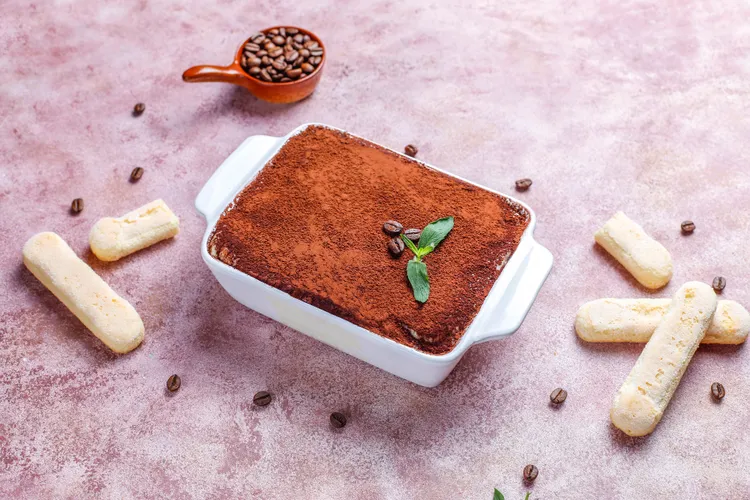
Tiramisu is the most underrated impressive dessert available to a home cook. It requires no oven, no sugar thermometer, no bain-marie, no specialist equipment beyond a whisk or hand mixer. The active preparation time is approximately 25 minutes. It serves 10-12 people. It can be made 24 hours in advance - and it should be, because it tastes noticeably better after a night in the refrigerator than immediately after assembly.
The version most commonly made at home produces something that is pleasant but not quite right: too sweet, not coffee-forward enough, the cream layer too stiff, the ladyfingers either too soggy (they disintegrate) or too dry (they remain biscuity rather than becoming the soft, yielding layer that defines the dish). The authentic Italian version - specifically from the Veneto region where tiramisu originated in the 1960s - is a more restrained, more coffee-intense preparation where the cream is lighter and the coffee is not sweetened.
This recipe produces the authentic version.
The Ingredients That Matter
Mascarpone: Use full-fat, the best quality available. Mascarpone is essentially very thick cream cheese (higher fat content, lower acidity than standard cream cheese). Low-fat mascarpone produces a thinner, less stable cream that does not set correctly overnight.
Eggs: The traditional recipe uses raw egg yolks whisked with sugar (zabaglione-style) and egg whites beaten to stiff peaks. This produces the lightest, most stable cream. For those who prefer to avoid raw eggs: a cooked version using pasteurised eggs or replacing the egg whites with whipped cream is given as a variation below.
Coffee: Real espresso - strongly brewed, not instant. The coffee flavour is the dominant note in tiramisu; it must be assertive. If instant coffee is used, the result tastes of sweet instant coffee rather than espresso, which is a different experience entirely. If you don't have an espresso machine: very strong moka pot coffee, or a double-strength French press, or strong filter coffee.
Savoiardi (ladyfingers/sponge fingers): Genuine Italian Savoiardi are drier and crispier than most supermarket ladyfingers. The dryness is intentional - the drier the biscuit, the more coffee it can absorb without disintegrating. Savoiardi are available in most supermarkets in the baking section.
Marsala or dark rum: A small amount of alcohol in the coffee for soaking, and in the cream. Optional but traditional - it adds a specific depth that makes tiramisu taste Italian rather than just good.
Ingredients
Serves 10-12 | Active time: 25 minutes | Refrigeration: minimum 4 hours, ideally overnight
- 6 large eggs, separated (yolks and whites in separate bowls)
- 150g caster sugar
- 500g full-fat mascarpone, at room temperature
- 300ml strong espresso or very strong coffee, cooled to room temperature
- 4 tbsp dark rum or Marsala (optional - 2 tbsp for the coffee, 2 tbsp for the cream)
- 300g Savoiardi (ladyfingers/sponge fingers) - approximately 40-50 biscuits depending on their size and the dish size
- 30g good-quality cocoa powder for dusting - Dutch-process for a darker, smoother result
Method
Step 1: Make the zabaglione (egg yolk cream)
In a large bowl, whisk the 6 egg yolks with the 150g caster sugar until the mixture is pale, thick, and falls in slow ribbons from the whisk - approximately 4-5 minutes of vigorous whisking, or 3 minutes with a hand mixer. The mixture should roughly triple in volume and be the colour of pale cream.
Add the mascarpone to the egg yolk mixture. Whisk gently until completely combined and smooth. If using, add 2 tbsp of the rum or Marsala here.
The temperature of the mascarpone matters: Cold mascarpone from the refrigerator seizes into lumps when whisked into the egg mixture. Room-temperature mascarpone incorporates smoothly.
Step 2: Whisk the egg whites
In a separate, completely clean bowl (any trace of fat prevents the whites from beating), whisk the 6 egg whites to stiff peaks - when the whisk is lifted, the white should form peaks that hold their shape and do not fall over.
The stiff peak standard: For tiramisu, stiff (not soft) peaks are correct. Stiff peaks produce a cream that is light but stable enough to set properly overnight. Soft peaks produce a cream that remains too liquid.
Step 3: Fold the whites into the cream
Using a large metal spoon, fold the beaten egg whites into the mascarpone cream in three additions - each one folded in with slow, deliberate strokes from the bottom of the bowl, preserving as much air as possible. The final cream should be light, smooth, and mousse-like.
Step 4: Prepare the coffee soak
Combine the cooled espresso with 2 tbsp of rum or Marsala (if using) in a shallow bowl wide enough to dip the Savoiardi.
The soaking technique - the most critical variable: Dip each Savoiardi in the coffee for 2-3 seconds per side - brief enough that it absorbs coffee without becoming a wet, collapsing mess. Test the first one: after soaking and placing in the dish, it should be coffee-coloured throughout but still hold its shape. Adjust the soaking time accordingly.
The soaked Savoiardi should be moist and coffee-flavoured all the way through but still structurally coherent enough to layer.
Step 5: Assemble
Use a large rectangular or oval dish (approximately 30×22cm, 6-8cm deep).
Layer 1: Arrange soaked Savoiardi in a single layer in the base of the dish, breaking them to fit if necessary.
Layer 2: Spread half the mascarpone cream over the Savoiardi layer - evenly, reaching to the edges.
Layer 3: Arrange a second layer of soaked Savoiardi over the cream.
Layer 4: Spread the remaining cream over the second Savoiardi layer. Smooth the top with a palette knife or the back of a spoon.
Dusting: Sift a generous layer of cocoa powder over the top through a fine sieve. The cocoa layer should completely cover the cream surface.
Step 6: Refrigerate
Cover and refrigerate for a minimum of 4 hours - ideally overnight (8-12 hours).
What happens overnight: The Savoiardi absorb the remaining moisture from the cream layer and become completely soft. The cream sets slightly from the cold. The cocoa on the surface absorbs the cream's moisture and becomes a thin, set layer. The flavours - coffee, mascarpone, cocoa, rum - integrate and mellow. The 24-hour tiramisu is demonstrably better than the 4-hour tiramisu.
The Cooked Egg Version (No Raw Eggs)
For those who prefer to avoid raw eggs:
Replace the egg yolk zabaglione with: Whisk 6 egg yolks + 150g caster sugar + 3 tbsp Marsala in a bowl set over a pan of barely simmering water (bain-marie). Whisk continuously until the mixture reaches 72°C and is thick and pale (approximately 8 minutes). Remove from heat and cool completely.
Replace the egg whites with: 300ml double cream, whipped to soft peaks (not stiff - the cream provides volume rather than structure). Fold the whipped cream into the cooled egg yolk mixture in the same way as the egg whites.
The cooked version is slightly richer and denser than the raw egg version but is safe for all audiences.
Serving and Storage
To serve: Use a large spoon to scoop, or slice with a sharp knife if the tiramisu has been assembled in a loaf tin or individual glasses (which produces cleaner portions).
Individual glasses: Assemble tiramisu in individual serving glasses or jars - break the Savoiardi to fit, layer the cream, dust with cocoa. Individual portions are both more visually elegant and more practically convenient (no slicing at the table).
Storage: Covered in the refrigerator, tiramisu keeps for 3 days. The quality peaks at 12-24 hours and declines slowly thereafter.
Freezing: Tiramisu can be frozen (before dusting with cocoa) for up to 1 month. Thaw in the refrigerator overnight. Dust with cocoa immediately before serving. The texture softens slightly from freezing.
Variations
Chocolate tiramisu: Replace 50g of the Savoiardi in one layer with chocolate biscuits or langue de chat. Add 30g of melted dark chocolate to the mascarpone cream.
Fruit tiramisu: Replace the coffee soak with a mixture of elderflower cordial + water, or a raspberry coulis thinned with water, for a non-coffee version that uses soft fruit between the layers instead of (or alongside) the cream.
Limoncello tiramisu: Replace the espresso with limoncello diluted with water (50/50), and the rum with additional limoncello. Top with lemon zest instead of cocoa.
Pro Tips
- Use room-temperature mascarpone. This is the instruction most people overlook. Cold mascarpone from the refrigerator seizes and lumps when whisked - room-temperature mascarpone incorporates smoothly and produces the silky cream that defines the dish.
- The coffee must be strong. Under-strength coffee produces a tiramisu that tastes of cream and biscuit with a vague coffee note. Strong espresso produces a tiramisu that tastes of coffee and mascarpone in the correct balance.
- Make it the day before. Not just for convenience - the tiramisu genuinely improves in the refrigerator as the Savoiardi absorb the cream and everything integrates.
- Two seconds per side for the Savoiardi. Test the first biscuit. If it falls apart when placed in the dish: reduce to one second per side. If it is still dry in the centre when the dish is assembled: increase to three seconds per side.
The Soggy Tiramisu Problem Tiramisu that is watery or wet has one of two causes: the Savoiardi were soaked for too long (they held more liquid than the cream could absorb) or the mascarpone was low-fat (unable to hold a stable structure). Brief soaking (2 seconds per side) and full-fat mascarpone prevent both. A properly made tiramisu, sliced after overnight refrigeration, produces a clean cross-section of set layers without any pooling liquid.
FAQ
Q: Can I make tiramisu without alcohol?
Yes - replace the rum or Marsala with an extra tablespoon of espresso or with a small amount of coffee extract. The alcohol is present for flavour; its absence produces a slightly less complex but entirely acceptable result.
Q: Can I use cream cheese instead of mascarpone?
Cream cheese is significantly more acidic and less rich than mascarpone, producing a tangier, less creamy result. It can work in a pinch but is not the same dish. Philadelphia cream cheese (full-fat) is the closest widely available substitute.
Q: Why did my cream not set? It remained liquid.
Either the mascarpone was too cold (whisked cold mascarpone never fully incorporates), the egg whites were under-beaten (soft rather than stiff peaks don't provide sufficient structure), or the refrigeration time was too short. Ensure room-temperature mascarpone, genuine stiff peaks, and a minimum of 4 hours in the refrigerator.
🔗 More Impressive Desserts
Latest