Crème Caramel: The Dramatic Unmoulded Custard
The caramel that becomes a sauce, the bain-marie custard that sets perfectly, and the unmoulding that produces the most theatrical moment in simple dessert-making
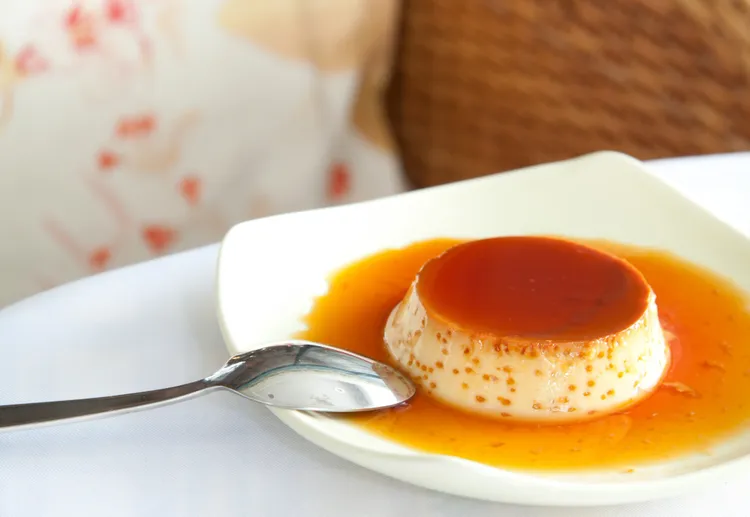
Crème caramel and crème brûlée share the same core ingredients - cream, eggs, and caramelised sugar - but they are fundamentally different desserts in concept and execution. The crème brûlée is baked in its serving vessel and the caramel is made on the surface at the last moment. The crème caramel is baked with the caramel already in the base of the mould - when it is unmoulded, the caramel that was on the bottom is now on top, flowing down the sides as a self-made sauce.
This inversion is the theatrical moment. A properly unmoulded crème caramel - the amber caramel running down the pale wobbling custard - is one of the most visually dramatic things produced by such simple ingredients.
Known as flan across Latin America and Spain, as caramel custard in some traditions, and appearing on bistro menus across France as a matter of course, crème caramel is the most internationally widespread of all the custard desserts.
Ingredients
Makes 6 | Active time: 25 minutes | Baking: 40 minutes | Chilling: 4 hours minimum
The Caramel
- 150g caster sugar
- 2 tbsp water (for the wet method)
The Custard
- 500ml whole milk - whole milk rather than cream produces a lighter, less rich custard than crème brûlée; this is the correct character of crème caramel
- 100ml double cream - a small addition of cream enriches without making the custard as rich as crème brûlée
- 4 large eggs + 2 large egg yolks - the whole eggs provide setting power; the extra yolks add richness and a silkier texture
- 100g caster sugar
- 1 tsp vanilla extract
- Pinch of fine salt
Method
Step 1: Make the caramel (wet method)
Wet method (more controlled, recommended for beginners):
Combine 150g caster sugar with 2 tbsp water in a heavy-based saucepan. Stir briefly to combine, then leave without stirring. Heat over medium-high heat.
As the mixture heats, the sugar dissolves into the water, then begins to concentrate as the water evaporates. After approximately 5-7 minutes, the edges of the syrup will begin to colour. At this point, gently swirl the pan (do not stir - stirring can cause crystallisation) to distribute the colour evenly.
Continue cooking until the caramel reaches a deep amber - the colour of old copper or dark honey. At this point, the temperature is approximately 175-180°C. Remove from heat immediately.
The colour matters: Pale gold caramel tastes only of sugar. Amber caramel has the bitter-sweet complexity that makes crème caramel distinctive. Dark amber approaches burnt - bitter and unpleasant.
Step 2: Line the ramekins with caramel
Work quickly - the caramel continues to cook from the residual heat of the pan and will darken if left sitting.
Divide the caramel equally among 6 × 150ml ramekins, approximately 2 tablespoons per ramekin. Tilt each ramekin quickly to spread the caramel across the base and slightly up the sides.
The caramel will harden within 30-60 seconds as it contacts the cold ramekin - this is correct. The solid caramel layer will dissolve back into a sauce during baking and unmoulding.
Allow the caramel to cool and harden completely before adding the custard.
Step 3: Make the custard
Preheat the oven to 150°C (fan) or 165°C (conventional). Boil a kettle of water.
Combine the milk, cream, and vanilla in a saucepan. Heat until steaming but not boiling.
In a large bowl, whisk the whole eggs, egg yolks, caster sugar, and salt together until combined and slightly pale - approximately 2 minutes. Do not over-whisk; excessive foam makes the custard surface uneven.
Pour the hot milk mixture slowly into the egg mixture while whisking continuously. The slow addition (tempering) prevents the hot milk from scrambling the eggs at the edges.
Strain through a fine-mesh sieve into a jug. Skim any surface foam with a spoon.
Step 4: Fill, bain-marie, and bake
Pour the strained custard carefully over the set caramel in each ramekin - fill to within 5mm of the rim.
Place the ramekins in a deep roasting tin. Pour boiling water around the ramekins until it reaches halfway up their sides. Transfer carefully to the oven.
Bake for 38-45 minutes until:
- The edges are set and not moving when the tin is gently shaken
- The centre still wobbles as a single cohesive mass - like a barely-set jelly
- The surface is pale and smooth - no browning (the low oven temperature prevents this)
Thermometer check: The centre should read 78-82°C. Below this: still liquid. Above 85°C: beginning to scramble.
Step 5: Cool and refrigerate
Remove the ramekins from the bain-marie immediately. Allow to cool to room temperature - approximately 45 minutes.
Refrigerate, covered, for a minimum of 4 hours. Overnight produces a firmer, better set. The custard continues to firm as it cools.
An important note on the caramel: During refrigeration, the hardened caramel at the base of the ramekin absorbs moisture from the custard, gradually dissolving back into a syrup. By the time the crème caramel is unmoulded, the caramel has become a sauce.
Step 6: Unmould
Run a thin palette knife or the tip of a small knife around the inner edge of the ramekin - a single careful pass.
Place a shallow serving plate (with slightly raised edges - the caramel sauce will flow) face-down over the ramekin. In one decisive motion, invert the plate and ramekin together. Hold for 5 seconds - the custard releases under gravity. Lift the ramekin.
If the custard doesn't release immediately: Leave for 10 more seconds. If still stuck: run the knife around the edge again, more firmly.
The caramel sauce will flow down the sides of the unmoulded custard - this is exactly correct.
Serving
Serve immediately after unmoulding. The caramel sauce continues to set slightly as the dessert cools further.
Accompaniments: Crème caramel is self-contained - the caramel sauce is built in. A small amount of lightly whipped cream alongside provides textural contrast. Nothing elaborate is needed.
For dinner parties: Unmould at the table. The movement from ramekin to plate is the theatrical moment - let your guests see it.
Variations
Orange Crème Caramel
Add the finely grated zest of 2 oranges to the warm milk during the heating step. Strain out before using. A small amount of Cointreau (1 tbsp) added to the custard reinforces the orange note.
Coffee Crème Caramel
Dissolve 1 tbsp of instant espresso powder in the warm milk before adding to the eggs. The coffee adds depth and slight bitterness that complements the caramel beautifully.
Large Crème Caramel (For a Dinner Party)
Multiply by 1.5 and bake in a single 1-litre charlotte mould or deep cake tin. Baking time: 55-65 minutes. The unmoulding of a large crème caramel - a substantial, amber-crowned custard - is even more dramatic than individual portions.
Pro Tips
- Watch the caramel closely after it starts to colour. The transition from pale amber to deep amber to burnt takes approximately 30-60 seconds. At the moment of the correct deep amber colour, remove from heat immediately.
- Cold ramekins cool the caramel instantly. Have all ramekins ready before making the caramel. The window between liquid caramel and solidified caramel in the ramekins is approximately 30-45 seconds - everything must be set up in advance.
- The caramel sauce develops overnight. Refrigerating for longer than 4 hours allows the caramel to dissolve fully into a greater quantity of sauce. A 24-hour crème caramel has significantly more sauce than a 4-hour one.
- Skim the foam. Foam from whisking the eggs produces surface bubbles in the baked custard. Strain through a fine sieve and skim the surface before pouring into the ramekins for a perfectly smooth surface.
🔗 More Custard Desserts
Latest