Pavlova and Eton Mess: Two British Meringue Desserts from One Recipe
One meringue base, two completely different desserts - and the vinegar science that produces the marshmallowy centre that defines both
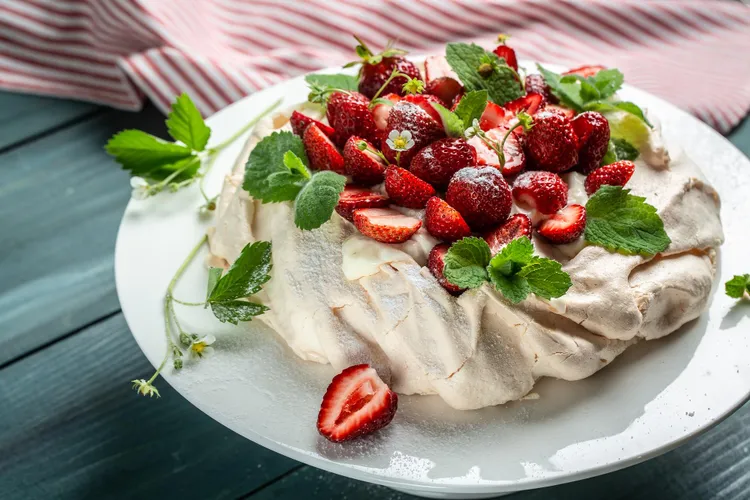
The pavlova and Eton mess are the same recipe applied differently. Both start from beaten egg whites and sugar - stiff, glossy meringue. In the pavlova, the meringue is shaped into a disc and baked slowly to produce a dessert with a thin crispy shell and a soft, marshmallowy centre. In Eton mess, the meringue is baked to a complete crisp (or bought already crisp), broken into pieces, and folded with whipped cream and strawberries into a gloriously chaotic, intensely satisfying mess.
They are both, at their best, among the finest summer desserts in the British repertoire - which is itself a short list, but these two earn their place on it.
What makes the pavlova specifically a pavlova rather than a simple meringue disc is the addition of vinegar and cornflour. These two additions, used since the dish was first made to celebrate ballerina Anna Pavlova's tours of Australia and New Zealand in the 1920s, produce the marshmallow-soft interior by stabilising the egg white foam and preventing the sugar from fully crystallising through the meringue.
The Science: Vinegar and Cornflour
Vinegar (typically white wine vinegar): The acid in the vinegar stabilises the egg white foam by slightly denaturing the proteins - this makes the foam more resistant to over-beating and produces a more stable structure. More importantly, the acidity prevents the sugar from fully crystallising during baking, which is what produces the chewy, marshmallow-soft interior rather than a crisp-throughout meringue.
Cornflour: Absorbs moisture during baking, helping the interior stay soft and chewy rather than drying out completely. It also contributes to the glossy exterior.
The pavlova vs. plain meringue difference: A plain meringue (no vinegar or cornflour) bakes to a uniform crisp throughout. A pavlova with vinegar and cornflour bakes to a crisp shell with a marshmallow interior. This distinction is the pavlova's entire character.
The Meringue Base (Makes One Pavlova or Eton Mess Quantity)
Serves 8-10 | Active time: 20 minutes | Baking time: 1 hour 15 minutes + cooling
Ingredients
- 6 large egg whites, at room temperature - temperature matters; cold whites don't incorporate as much air
- 300g caster sugar - always caster, never granulated (too coarse, doesn't dissolve completely, produces a grittier texture)
- 2 tsp white wine vinegar (or cider vinegar)
- 2 tsp cornflour
- 1 tsp vanilla extract
- Pinch of salt
Method
Step 1 - Ensure clean equipment. Any fat on the bowl or whisk prevents the whites from whipping. Wipe the bowl, whisk, and spatula with a piece of kitchen paper dampened with white wine vinegar before starting. This removes any trace of fat.
Step 2 - Whip to soft peaks. Place egg whites and the pinch of salt in the clean bowl. Whip on medium speed until the whites are foamy and white, forming soft peaks - peaks that curl at their tips when the whisk is lifted.
Step 3 - Add sugar gradually. With the mixer running on high speed, add the caster sugar one tablespoon at a time - every 30 seconds. This gradual addition is important: adding all the sugar at once produces a less stable meringue. Adding it slowly allows each addition to fully dissolve into the foam.
After all the sugar has been added, continue beating for 2-3 more minutes until the meringue is very thick, very glossy, and completely stiff. Test: Rub a small amount between your fingers - it should feel completely smooth, with no gritty sugar granules. If granules remain, continue beating.
Step 4 - Add the vinegar, cornflour, and vanilla. Sprinkle the cornflour over the meringue. Add the vinegar and vanilla. Fold in gently with a large spatula - 5-6 folds to incorporate without deflating.
Recipe A: The Pavlova
Shaping
Preheat the oven to 130°C (fan) or 150°C (conventional). Line a large baking sheet with parchment paper. Draw a 24cm circle on the parchment as a guide (trace around a dinner plate). Turn the paper over so the pencil mark is underneath.
Spoon the meringue onto the circle. Build up the edges slightly higher than the centre - this creates the "nest" that holds the cream and fruit. Smooth the sides with a palette knife, creating a slight inward lean.
The shape: A pavlova should have straight or slightly angled sides rather than a mounded dome. The flat top holds the cream; the high edges prevent it from spilling. The visible texture of the meringue (swirls, peaks, rough texture) is part of the aesthetic - it does not need to be perfectly smooth.
Baking
Bake at 130°C (fan) for 1 hour 15 minutes. The pavlova is done when:
- The surface is pale cream or very light gold - not white (underbaked) and not browned (overbaked)
- It peels cleanly from the parchment when a corner is tested
- The exterior feels dry and slightly crisp when touched lightly
Cooling: Turn the oven off. Leave the pavlova inside the oven with the door ajar (prop with a wooden spoon) for at least 1 hour - ideally until the oven is completely cool. This slow cooling prevents cracking from the thermal shock of moving from a hot oven to a cold kitchen.
If it cracks: Cracking is very common in pavlova and is not a failure - once topped with cream and fruit, cracks are invisible. The crack usually occurs when the pavlova is moved from the oven while still warm, when the oven temperature was slightly too high, or when the baking time was slightly too long. None of these affect the flavour.
Assembly (assemble no more than 2 hours before serving)
Cream: Whip 400ml of double cream with 1 tbsp icing sugar and 1 tsp vanilla extract to soft peaks - peaks that curl at their tips. The cream should be barely-set, flowing, not stiff. Over-whipped cream on a pavlova is too heavy.
Fruit: Any combination of fresh fruit. The classic: 400g strawberries (hulled and halved), 200g raspberries, and the seeds of 3-4 passion fruits. The passion fruit is the distinctive flavour - its tartness and seeds make the classic pavlova unmistakeable.
Assembly: Place the pavlova on the serving plate. Pile the softly whipped cream into the centre. Arrange the fruit over the cream. Drizzle the passion fruit seeds and juice over everything. Serve immediately or within 2 hours - after this, the cream softens the meringue.
Recipe B: Eton Mess
Eton mess uses the same meringue (baked to complete crispness, or bought as ready-made meringue nests), broken and folded with whipped cream and macerated strawberries. The difference from pavlova is in the texture (broken crisp meringue rather than a soft centred disc) and the presentation (deliberately chaotic rather than shaped).
For Eton Mess Meringue (completely crisp)
Use the same meringue base. Shape into small rough rounds (5cm) on parchment. Bake at 100°C (fan) for 1 hour 30 minutes until completely dry and crisp throughout. No marshmallow centre - the lower, longer baking dries the meringue completely.
Or use: Bought meringue nests - they produce a very similar result to home-baked completely-crisp meringue.
Eton Mess Assembly
Serves 8 | Active time: 15 minutes (plus meringue baking)
Ingredients:
- 6-8 ready-baked meringue nests or equivalent home-baked meringue
- 400ml double cream
- 1 tbsp icing sugar
- 600g strawberries, hulled and roughly chopped
- 2 tbsp caster sugar
- 1 tbsp lemon juice
Method:
Macerate the strawberries: combine the chopped strawberries with the caster sugar and lemon juice. Leave for 20 minutes. The sugar draws out the strawberry juice, producing a natural syrup.
Whip the cream with icing sugar to soft peaks.
Break the meringue into rough pieces - some small, some large. The variation in size produces better texture than uniformly broken pieces.
In a large bowl, gently fold together the whipped cream, broken meringue, and macerated strawberries with their syrup. Use a large spoon - fold rather than stir, to keep large pieces intact.
Serve immediately, piled into glasses or bowls. Eton mess waits for no one — the meringue softens in the cream within 30 minutes. The ideal window is in the first 15 minutes after assembly.
Making Ahead
Pavlova base: Can be made up to 3 days ahead and stored in an airtight container at room temperature (not the refrigerator - humidity softens meringue). The slightly softened meringue base from a 3-day-old pavlova is actually preferred by some - the interior is even more marshmallowy.
Eton mess meringue: Can be made weeks ahead and stored in an airtight container. This is what makes bought meringue nests practically equivalent to home-baked - the home-baked version is better, but the difference after being folded with cream is minor.
Assembly: Always assemble at serving - cream softens meringue within 30 minutes.
Seasonal Fruit Variations
Summer: Strawberry + raspberry + passion fruit (classic)
Late summer: Peach or nectarine + raspberry + a few mint leaves
Autumn: Poached pear (see Poached Pears in Spiced Wine) + blackberry + pomegranate
Winter: Mandarin + pomegranate seeds + a drizzle of honey
Tropical (any season): Mango + passion fruit + pineapple + lime zest
Pro Tips
- Add the sugar very gradually. The most common meringue failure is adding sugar too quickly, before the previous addition has dissolved. Tablespoon by tablespoon at 30-second intervals produces a more stable, glossier meringue.
- The rub test is non-negotiable. Undissolved sugar in the meringue produces a weeping, sticky meringue that doesn't crisp correctly. Rub between your fingers - completely smooth means ready.
- Cool in the oven. Rapid cooling from oven-hot to room-cold causes the pavlova to crack from thermal stress. The crack doesn't affect flavour, but slow cooling in the turned-off oven reduces it significantly.
- Soft peaks for the cream. Over-whipped cream on a pavlova sits too heavily. Cream whipped just to soft peaks is the right consistency - just barely holding its shape, still flowing when moved.
Humidity is Meringue's Enemy Meringue is hygroscopic - it absorbs moisture from the air. A pavlova assembled on a humid day, or stored in the refrigerator, softens and becomes sticky. In high-humidity conditions: bake for 10-15 minutes longer, assemble at the very last moment, and do not refrigerate the assembled dessert. Unassembled bases store best in an airtight container at room temperature.
FAQ
Q: My pavlova cracked badly. Can it be saved?
Always. Pile the cream and fruit over the top - cracks are invisible once assembled. A cracked pavlova that tastes correct is infinitely preferable to an uncracked pavlova that is under-baked. If the pavlova has cracked into pieces: reassemble as best you can, or make Eton mess.
Q: My meringue is weeping (liquid beading on the surface). What went wrong?
Undissolved sugar (add more slowly next time, use caster not granulated) or insufficient beating time. The weeping is the sugar liquifying at the surface - it doesn't affect the baked result significantly, but the rub test (completely smooth) catches it before baking.
Q: Can I make a smaller pavlova?
Halve the recipe for a 20cm pavlova serving 4-5. Reduce the baking time by 10-15 minutes and check earlier.
🔗 More Fruit Desserts
Latest