Poached Pears in Spiced Red Wine: The Perfect Make-Ahead
The elegant, dramatic dessert that costs almost nothing, requires almost no skill, and improves over 2-3 days in the refrigerator
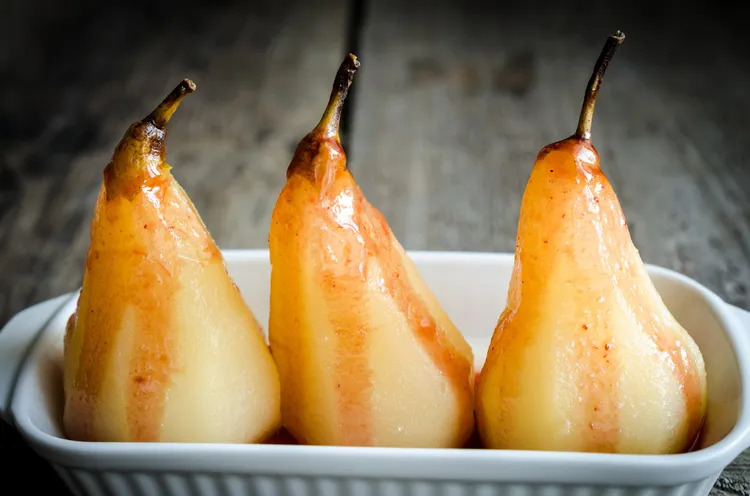
Poached pears in spiced red wine look like a restaurant dessert and require approximately 15 minutes of active preparation. The pears poach unattended for 25-30 minutes while absorbing the wine's colour and the spices' fragrance. Removed, the poaching liquid is reduced to a glossy, syrupy sauce. The result - deep burgundy-coloured pears, lacquered with their own spiced wine sauce - is one of the most visually dramatic things a home cook can produce with such minimal effort.
It is also one of the best make-ahead desserts in this collection. The pears improve over 2-3 days in their poaching liquid as the flavour penetrates deeper and the colour becomes more intense. Made on Friday for a Saturday dinner party, they are noticeably better than if made the same day.
Ingredients
Serves 6 | Active time: 15 minutes | Poaching: 25-30 minutes | Best made 24-48 hours ahead
- 6 firm pears - Conference or Bosc are ideal; William pears work but are softer. The pears must be just underripe - firm to the touch. Ripe pears collapse during poaching.
- 750ml red wine - a full-bodied red. No need for expensive wine; a £6–8 bottle of Côtes du Rhône, Malbec, or Shiraz produces excellent results. The wine's flavour matters here - it becomes the sauce.
- 200ml water
- 150g caster sugar
- 2 cinnamon sticks
- 4 star anise
- 6 cloves
- 1 vanilla pod, split - or 1 tsp vanilla extract
- Zest of 1 orange, peeled in wide strips with a vegetable peeler
- 1 bay leaf (optional but adds a subtle depth)
Method
Step 1: Peel the pears
Peel the pears with a vegetable peeler, leaving the stalk attached - the stalk is the handle and the visual element that makes the presentation work. Cut a thin slice from the base of each pear so they stand upright.
Step 2: Make the poaching liquid
Combine the red wine, water, sugar, all spices, vanilla, orange zest, and bay leaf in a saucepan large enough to hold all 6 pears standing upright. Bring to a simmer over medium heat, stirring to dissolve the sugar.
Step 3: Poach the pears
Add the pears to the simmering liquid. They should be mostly submerged - the liquid should come at least three-quarters of the way up the pears.
Place a round of parchment paper (a cartouche) directly on the surface of the liquid over the pears - this keeps the exposed tops moist during poaching. Alternatively, turn the pears gently every 5 minutes.
Poach at a gentle simmer (not a full boil) for 25-35 minutes until the pears are tender when a thin knife or skewer is inserted at the thickest point with no resistance, but still holding their shape and not falling apart.
Timing varies significantly by pear variety, ripeness, and size. Begin checking at 20 minutes. Slightly underdone is preferable to overdone - overcooked pears lose their shape.
Step 4: Cool and refrigerate
Transfer the pears carefully to a container deep enough to hold them upright. Pour the poaching liquid over them.
Refrigerate overnight or longer. The colour penetrates fully in the first 24 hours; the flavour deepens further over 48 hours. The refrigerated pears, completely submerged in their deep burgundy liquid, look extraordinary.
Step 5: Make the sauce
Remove the pears from the liquid. Pour the poaching liquid through a fine sieve into a wide saucepan. Discard the spices and zest.
Bring to a vigorous boil over high heat. Reduce by approximately two-thirds - from approximately 750ml to 250ml. The sauce will thicken and become syrupy as it reduces, coating the back of a spoon.
The gloss test: Dip a spoon into the sauce and lift it. The sauce should coat the spoon and fall in thick drops rather than running freely. If it runs freely: continue reducing. If it sets on the spoon as it cools: it has reduced enough.
Taste and adjust - if it tastes too alcoholic, continue reducing. If it tastes too sweet, add a squeeze of lemon juice.
Serving
Stand each pear on a serving plate or in a shallow bowl. Spoon the reduced sauce generously over and around each pear, allowing it to pool at the base.
Accompaniments:
Crème fraîche: The classic pairing - a large spoonful of cold crème fraîche alongside the warm pear and its sauce. The tanginess cuts the richness of the wine sauce.
Vanilla ice cream: The hot-cold contrast works beautifully here, as with most fruit desserts.
Ricotta with honey: A quenelle of drained ricotta drizzled with honey provides a lighter accompaniment than cream.
Gorgonzola or Roquefort: The French cheese course approach - a small piece of strong blue cheese alongside the wine-poached pear is one of the great cheese-and-fruit pairings. Serve as a combined dessert-and-cheese course.
White Wine Variation
White wine produces a more delicate, less dramatic result - pale gold pears with a more subtle, floral poaching flavour. Use:
- 750ml white wine (Riesling or Gewürztraminer are excellent - aromatic and slightly sweet)
- Same spices but omit the cinnamon sticks (too assertive against the delicate white wine)
- Add lemon zest in place of orange
The white wine version is lighter and more suitable for summer serving with fresh fruit alongside.
Pro Tips
- Firm, underripe pears are essential. Ripe pears collapse during poaching. Buy the pears 3-4 days before needed and allow them to remain firm - don't let them ripen fully.
- Make 48 hours ahead. The 48-hour pear has more colour, more flavour penetration, and a deeper, glossier surface than the 24-hour pear. The longest make-ahead window in this collection produces the best result.
- Reduce the sauce before serving, not before refrigerating. If you reduce and store the sauce, it will thicken further in the refrigerator and may become too set. Reduce at serving time for the ideal pourable-but-coating consistency.
- The pears can stand at room temperature for 2 hours before serving. Remove from the refrigerator 2 hours before the dinner party. They can be served at cool room temperature - not cold, not warm.
🔗 More Fruit Desserts
Latest