Why Chocolate Melts at Body Temperature - The Food Science Behind That Melt-in-Your-Mouth Feeling
Chocolate melting perfectly on your tongue isn't an accident - it's the result of one of the most precisely engineered fat structures in all of food science. Cocoa butter has a narrow melting range that sits almost exactly at human body temperature, and understanding why changes how you buy, store, melt, and work with chocolate entirely. This is the science behind one of food's most satisfying sensory experiences.
The Engineered Sensation You've Never Thought About
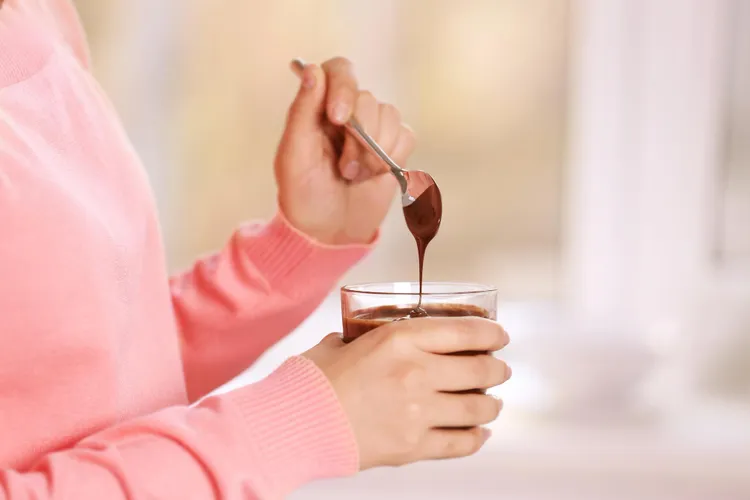
No other solid food does what chocolate does. You place a square on your tongue and it doesn't just soften - it dissolves cleanly, releasing flavor all at once, leaving nothing waxy or greasy behind. Butter melts faster. Wax melts slower. Hard candy doesn't melt at all without heat. Chocolate hits a narrow window that sits almost exactly at the temperature of the human body.
That's not a coincidence. And it's not simple. The reason chocolate melts the way it does involves a fat that can exist in six different crystalline forms - and only one of them produces that perfect melt.
Why Does Chocolate Melt at Body Temperature?
Chocolate melts at body temperature because the primary fat it contains - cocoa butter - has a melting point between 93°F and 97°F (34°C-36°C), which is almost exactly the temperature of the human mouth and skin (98.6°F / 37°C).
This is a natural property of cocoa butter, not an additive or engineering trick. The fat happens to sit in the precise range where it remains solid at room temperature but transitions to liquid the moment it contacts your body - creating the clean, complete melt-in-your-mouth sensation that makes chocolate uniquely pleasurable.
Why This Happens: Cocoa Butter and Crystal Structure
What Makes Cocoa Butter Unique
Cocoa butter is the natural fat extracted from cacao beans. Unlike most fats - which melt gradually across a wide temperature range - cocoa butter has a remarkably sharp, narrow melting point. It goes from solid to liquid within just a few degrees.
This happens because cocoa butter is unusually uniform in its fatty acid composition. Most fats are mixtures of many different fatty acid chains, each melting at slightly different temperatures, so the fat gradually softens and liquefies over a wide range. Cocoa butter is dominated by just a few specific fatty acids (primarily oleic, stearic, and palmitic acids) arranged in a consistent, tight structure - and they all let go at nearly the same temperature.
The result: a fat that stays firm and snappy at 70°F, remains solid in your hand at 80°F, and dissolves completely at 97°F. A window that maps almost perfectly onto the human body.
The Six Crystal Forms - And Why Only One Matters
Here's where chocolate science gets genuinely fascinating. Cocoa butter can crystallize into six different structural forms, called polymorphs, numbered Form I through Form VI. Each has a different melting point, different texture, and different behavior.
- Forms I-IV: Unstable, soft, crumbly, or grainy. They melt too easily, look dull, and feel wrong in the mouth.
- Form V: The target. Melts at 93°F-97°F, produces a glossy surface, gives the characteristic snap when you break chocolate, and delivers a clean, complete melt on the tongue.
- Form VI: Too stable. Melts above body temperature. Leaves a waxy, greasy feeling in the mouth and takes weeks to form naturally during improper storage.
Every professional chocolate maker works to ensure their chocolate sets in Form V crystals - and only Form V. The process of achieving this is called tempering.
What Is Tempering and Why Does It Matter?
Tempering is the process of carefully controlling the temperature of melted chocolate to encourage cocoa butter to crystallize specifically into Form V. It involves melting chocolate fully (to destroy all existing crystals), cooling it to a precise temperature to encourage Form V nucleation, then warming it slightly to eliminate any unstable forms that might have formed alongside it.
Done correctly, tempered chocolate sets glossy, snaps cleanly, and melts perfectly at body temperature. Done incorrectly - or skipped entirely - you get chocolate that sets dull, soft, or streaky, and melts unevenly with a greasy or waxy mouthfeel.
This is why melted-and-reset chocolate often doesn't behave like the original bar: you've disrupted the Form V crystal structure, and without tempering, it doesn't reform reliably.
What Most People Get Wrong About Melting Chocolate
Mistake 1: Melting chocolate directly over high heat. Chocolate scorches easily and irreversibly. Direct high heat seizes the cocoa solids, turning the chocolate grainy and thick. Always melt chocolate gently - over a double boiler or in a microwave in short 15-20 second bursts, stirring between each interval.
Mistake 2: Getting even a drop of water in melted chocolate. This is the most common and surprising problem in home chocolate work. A small amount of water causes chocolate to seize - suddenly going from smooth and fluid to a thick, clumped, unworkable paste. The water binds to the sugar particles and creates a sticky matrix that the fat can no longer flow around. Paradoxically, adding more liquid (several tablespoons) will loosen chocolate again - it's that middle-ground amount that causes trouble.
Mistake 3: Storing chocolate in the refrigerator. Cold temperatures cause condensation when the chocolate is removed, and moisture on the surface leads to sugar bloom - a dull, spotted, or streaky white film. Cocoa butter can also migrate to the surface in cold conditions, creating fat bloom - a gray or white coating that looks like mold but is harmless. Store chocolate at cool room temperature (60°F-65°F / 16°C-18°C), tightly wrapped, away from light and strong odors.
Mistake 4: Assuming all chocolate melts the same way. White chocolate, milk chocolate, and dark chocolate all contain different amounts of cocoa butter and milk solids, and they respond differently to heat. White chocolate is the most heat-sensitive and burns fastest. Milk chocolate scorches more easily than dark. Dark chocolate with high cocoa content is the most forgiving to melt but the most sensitive to water.
Mistake 5: Using "chocolate chips" for professional applications. Most commercial chocolate chips are formulated with reduced cocoa butter and added stabilizers so they hold their shape during baking rather than melting out. This is great for cookies - terrible for ganache, dipping, or molding. For any application where chocolate needs to melt smoothly and set properly, use couverture chocolate or a quality bar chocolate with high cocoa butter content.
Working With Chocolate's Melting Point
Melting Chocolate Without Equipment
The simplest, most controlled method for home cooks: microwave in short bursts.
- Chop chocolate finely so it melts evenly (large chunks create hot spots).
- Microwave on 50% power in 20-second intervals, stirring thoroughly between each.
- Stop when about 25% of the chocolate is still visibly solid - residual heat will melt the rest as you stir.
- Never let the chocolate exceed 120°F (49°C) for dark, 110°F (43°C) for milk, or 105°F (40°C) for white.
Simple Home Tempering: The Tabling Method
For home cooks who want glossy, properly set chocolate without professional equipment:
- Melt chocolate completely to 120°F.
- Pour two-thirds onto a cool marble surface (or a cold, dry baking sheet) and spread and fold with a spatula until it thickens and cools to around 80°F.
- Return it to the remaining third of warm chocolate and stir - the combined temperature should reach 88°F-90°F for dark chocolate (86°F-88°F for milk).
- Use immediately. Properly tempered chocolate will set in 3-5 minutes at room temperature with a glossy finish.
Ganache: Intentionally Breaking the Rules
Ganache deliberately keeps chocolate in a fluid, untempered state by combining it with warm cream. The fat emulsifies with the liquid and prevents any crystalline structure from forming. This is why ganache stays soft and scoopable rather than setting hard - and why the melting experience of ganache on the tongue is even smoother than solid chocolate.
The Silk Method for Perfect Tempering
Professional chocolatiers often use what's called seeding or the silk method to temper large quantities of chocolate efficiently. Instead of tabling, they add small amounts of already-tempered chocolate (called "seed" chocolate, in the form of finely chopped tempered bar or cocoa butter silk) to fully melted chocolate and stir continuously.
The pre-existing Form V crystals in the seed chocolate act as a template - they "teach" the melted cocoa butter how to crystallize back into Form V as the temperature drops. The result is perfectly tempered chocolate without needing a marble slab or precise surface cooling.
Home cooks can replicate this easily: melt about 75% of your chocolate, remove from heat, and stir in the remaining 25% as finely chopped pieces. The unmelted chocolate seeds Form V crystallization throughout the batch.
Chocolate Was Liquid Before It Was Solid
For most of its history - over 3,000 years - chocolate was consumed exclusively as a liquid drink, not as a solid food. The cacao bean was ground and mixed with water, chili, and spices and drunk cold or at room temperature throughout Mesoamerican cultures.
Solid eating chocolate was only invented in 1847, when British chocolatier J.S. Fry & Sons figured out how to mix cocoa powder, sugar, and cocoa butter back together into a moldable paste. The entire sensory experience of chocolate melting on your tongue - the thing that makes it one of the world's most beloved foods - is less than 200 years old.
The melt-in-your-mouth quality we now consider the defining feature of chocolate didn't exist for the vast majority of chocolate's history. Someone essentially discovered it by accident, and it changed everything.
The Most Precisely Engineered Bite in Food
The reason chocolate feels so uniquely pleasurable is not vague or mysterious - it's a precise physical event. A fat with a narrow melting point that sits exactly at body temperature. A crystal structure engineered through careful temperature control to release cleanly and completely. A sensory experience so specific to human physiology that it can't be replicated by any other naturally occurring food ingredient.
When you understand this, the practical lessons follow naturally. Protect the crystal structure by storing chocolate correctly. Restore it through tempering when you melt and reset. Work gently with heat to avoid destroying the cocoa solids. Use the right chocolate for the right job.
The science is remarkable. The result, when you get it right, is chocolate that melts exactly the way it's supposed to - completely, cleanly, and perfectly on your tongue.
Key Learnings
- Chocolate melts at body temperature because cocoa butter's melting point is 93°F-97°F - almost exactly the temperature of the human mouth and skin.
- Cocoa butter is uniquely uniform in fatty acid composition, giving it a sharp, narrow melting range unlike most fats, which melt gradually.
- Cocoa butter can form six different crystal structures. Only Form V produces the glossy surface, clean snap, and perfect body-temperature melt associated with quality chocolate.
- Tempering is the process of guiding cocoa butter into Form V crystals by carefully controlling temperature during melting and cooling.
- Never let even a drop of water contact melted chocolate - it causes seizing. A large amount of liquid will loosen it again; it's the small amount that causes the problem.
- Don't store chocolate in the refrigerator - condensation and fat migration cause bloom (the harmless but unappealing white film).
- Chocolate chips are not designed for smooth melting - they contain less cocoa butter and stabilizers meant to hold chip shape during baking. Use bar or couverture chocolate for ganache, dipping, and molding.
- The seeding method is the easiest home tempering technique - melt 75% of your chocolate, stir in 25% finely chopped tempered chocolate as seed, and work at the correct temperature.
- Solid eating chocolate is less than 200 years old. For most of history, all chocolate was a liquid drink — the melt-in-your-mouth experience is a relatively modern invention.
Latest