Why Does Lemon Juice Prevent Browning?
Cut an apple and walk away for five minutes - it turns brown. Squeeze a little lemon juice on it first, and it stays fresh-looking for hours. This isn't kitchen folklore; it's a precise chemical reaction, and understanding it will make you a noticeably better cook.
The Moment You Cut an Apple, a Chemical Reaction Starts
The browning that happens when you slice an apple, avocado, banana, or potato isn't spoilage. The fruit isn't rotting. It's undergoing a natural enzymatic reaction - and lemon juice is one of the most effective ways to stop it cold.
This is one of those kitchen techniques that almost everyone uses but very few people understand. Once you do understand it, you'll know exactly how much lemon juice to use, which alternatives work, and when the technique matters most.
Why Does Lemon Juice Prevent Browning?
Lemon juice prevents browning because its citric acid lowers the pH of the fruit's surface, deactivating the enzyme responsible for the browning reaction. It also contains ascorbic acid (vitamin C), which acts as an antioxidant and directly intercepts the chemical reaction before visible browning can occur.
Two mechanisms. One squeeze of lemon. That's why it works so reliably.
Why This Happens: The Science of Enzymatic Browning
What Is Enzymatic Browning?
When you cut, bruise, or peel certain fruits and vegetables, you're breaking open plant cells. Inside those cells are two things that were previously separated: an enzyme called polyphenol oxidase (PPO) and compounds called phenols.
The moment the cell walls break, PPO comes into contact with the phenols - and with oxygen in the air. The enzyme catalyses a reaction that converts the phenols into new compounds called quinones. Quinones then react with other molecules and polymerise into brown-coloured pigments called melanins.
This is enzymatic browning - the same fundamental process that gives a bruised banana its dark spots, turns a cut avocado grey-brown, and makes sliced mushrooms turn muddy in the pan.
It's worth noting: this reaction is not harmful. Browned fruit is perfectly safe to eat. The problem is purely visual - and in professional cooking, visual presentation matters enormously.
How Lemon Juice Interrupts the Reaction
Lemon juice works through two separate chemical mechanisms:
1. Acid deactivates the enzyme. Polyphenol oxidase functions optimally at a neutral to slightly acidic pH (around 5-7). Lemon juice has a pH of roughly 2-3, which is acidic enough to significantly reduce PPO activity. Lower the pH enough and the enzyme essentially stops working. No active enzyme means no quinone production, which means no browning.
2. Ascorbic acid acts as an antioxidant. Even when PPO is still partially active, ascorbic acid (vitamin C) in lemon juice intercepts the reaction. It reduces the quinones back into colourless phenols before they can form those brown melanin pigments. Think of it as a chemical buffer - catching the browning reaction mid-process and reversing it.
The combination of both mechanisms is why lemon juice outperforms many other acidic liquids on its own.
What Most People Get Wrong
Mistake 1: Using too little lemon juice
A light misting of lemon juice looks like it should work - and sometimes it does, briefly. But if there's not enough acid to cover the surface and sufficiently lower the pH, the enzyme wins eventually. The application needs to be thorough: every cut surface should have contact with the juice.
Mistake 2: Assuming any acid works equally well
Acids vary in their effectiveness. Citric acid (the dominant acid in lemon juice) is particularly effective at inhibiting PPO because it also acts as a chelating agent - it binds to the copper ions that PPO requires to function. Remove the copper, and the enzyme loses its activity. White vinegar is acidic but lacks this chelating effect, making it less effective gram-for-gram. Lime juice works comparably to lemon juice; orange juice is weaker because it's less acidic.
Mistake 3: Thinking lemon juice works indefinitely
Lemon juice significantly slows browning - it doesn't stop it forever. Ascorbic acid is consumed as it intercepts the reaction. Once it's depleted, browning can resume. For cuts that need to stay fresh for many hours (like a fruit tart or a prepared fruit platter), reapplication or a more concentrated solution may be needed.
Mistake 4: Using lemon juice on everything without tasting first
Lemon juice has a pronounced flavour. On a delicate fruit salad, it can overwhelm milder fruits. On a savoury avocado dish, it may be welcome. On a banana-based dessert, it might clash. Always consider whether the flavour is complementary before applying liberally.
Mistake 5: Not knowing that heat also stops browning
Blanching (briefly boiling then cooling in ice water) permanently denatures PPO - the enzyme is destroyed by heat. This is why cooked apples don't brown further, and why blanched vegetables stay vibrant. Lemon juice is the cold solution; blanching is the heat solution. Knowing both gives you flexibility.
Practical Cooking Tips: How to Use This Technique Properly
For Fruit Salads and Cut Fruit Platters
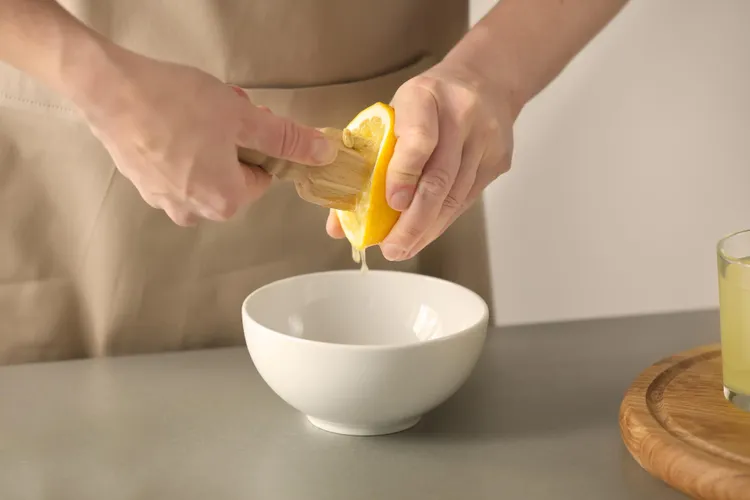
Toss the cut fruit in a small amount of lemon juice immediately after cutting. You don't need much - a teaspoon per apple, or a light coating on avocado halves. For a large fruit salad, a tablespoon of lemon juice distributed through the bowl is usually sufficient.
If you want to minimise lemon flavour while still preventing browning, dilute lemon juice in cold water (roughly one tablespoon per cup of water) and briefly dip the cut fruit. The pH is still low enough to inhibit PPO, but the flavour impact on delicate fruits like pears or bananas is much reduced.
For Avocados
Press plastic wrap directly onto the flesh (eliminating air contact) AND brush the surface with lemon or lime juice. The double approach - acid plus oxygen barrier - gives much better results than either method alone. Store in the fridge.
For Potatoes and Root Vegetables
Submerge peeled or cut potatoes in cold water with a squeeze of lemon juice or a splash of white vinegar. The water prevents oxygen contact; the acid handles any PPO activity. Change the water if storing for more than a couple of hours.
For Guacamole
The lime juice in guacamole serves two functions: flavour and browning prevention. Make sure the lime juice is fully incorporated - not just sitting on top - and again, press plastic wrap directly to the surface before refrigerating. The lime juice slows the enzymatic reaction; the plastic wrap eliminates the oxygen that the reaction requires.
The Professional Approach
In professional kitchens, the term for this acidulated water solution is acidulated water (from the French eau acidulée). It's a standard prep station technique used any time large quantities of cut vegetables or fruit need to hold their colour for service.
The ratio used in most kitchens: 1 tablespoon of lemon juice per 1 litre of cold water. Cut produce goes straight from the knife into the acidulated water. It's simple, scalable, and inexpensive.
For upscale fruit presentations - tarts, composed desserts, fruit garnishes - pastry chefs often use a citric acid solution instead of actual lemon juice. Citric acid powder dissolved in water gives precise, consistent pH control without adding any lemon flavour. It's available in supermarkets and online, and it's worth keeping in a well-stocked kitchen.
Another professional trick: Vitamin C (ascorbic acid) powder dissolved in water creates a near-flavourless anti-browning solution that's especially useful for fruit that would clash with citrus flavour - like peaches, bananas, or tropical fruit.
This Is the Same Reaction That Makes Tea Dark
Enzymatic browning involving polyphenol oxidase is closely related to the reaction responsible for the dark colour of black tea and oolong tea.
When tea leaves are harvested, they're intentionally bruised or crushed to trigger PPO activity - allowing the phenols in the leaves to oxidise. This is called oxidation in tea processing (though technically it's enzymatic browning). Green tea is unoxidised; black tea is fully oxidised. The degree of oxidation determines the tea's colour, flavour depth, and astringency.
So the same chemistry you're fighting when you squeeze lemon on an apple is the chemistry tea makers deliberately encourage to transform a fresh leaf into a black tea.
One Enzyme, One Squeeze, Better Cooking
Enzymatic browning is one of the most common and easily managed reactions in everyday cooking. Polyphenol oxidase triggers it; acid and antioxidants stop it. Lemon juice delivers both in a single squeeze.
Knowing the science tells you exactly why it works, when to use it, how much to apply, and what to reach for when lemon juice isn't the right fit. That's the difference between following a tip and actually understanding your kitchen.
Key Takeaways
- Enzymatic browning is caused by an enzyme called polyphenol oxidase (PPO), which reacts with phenols and oxygen when cells are cut or bruised, producing brown pigments.
- Lemon juice prevents browning in two ways: its citric acid lowers the pH and deactivates PPO, and its ascorbic acid (vitamin C) intercepts and reverses the chemical reaction before browning occurs.
- Citric acid is more effective than most other acids because it also chelates (binds) the copper ions PPO needs to function - weakening the enzyme at a structural level.
- Lemon juice doesn't last indefinitely - ascorbic acid is consumed as it works. For long holds, reapply or use a more concentrated solution.
- Acidulated water (1 tbsp lemon juice per 1 litre cold water) is the professional kitchen standard for keeping cut produce fresh during prep.
- Citric acid powder or ascorbic acid powder dissolved in water offer flavour-neutral browning prevention - useful for delicate fruits that clash with lemon flavour.
- Heat permanently stops browning by denaturing PPO - blanching is the alternative technique when lemon juice isn't appropriate.
- The same PPO reaction is intentionally used in tea production - oxidation of tea leaves is enzymatic browning by design, not accident.
Latest