Why Homemade Stock Beats Store-Bought Every Time
Store-bought stock and homemade stock are not the same product with different levels of effort involved - they are fundamentally different substances with different physical structures, different flavour compounds, and different behaviours in cooking. The gap isn't snobbery. It's gelatin, collagen, and the irreplaceable chemistry of roasted bones. Here's exactly what makes real stock different, and why it matters every time liquid appears in a dish.
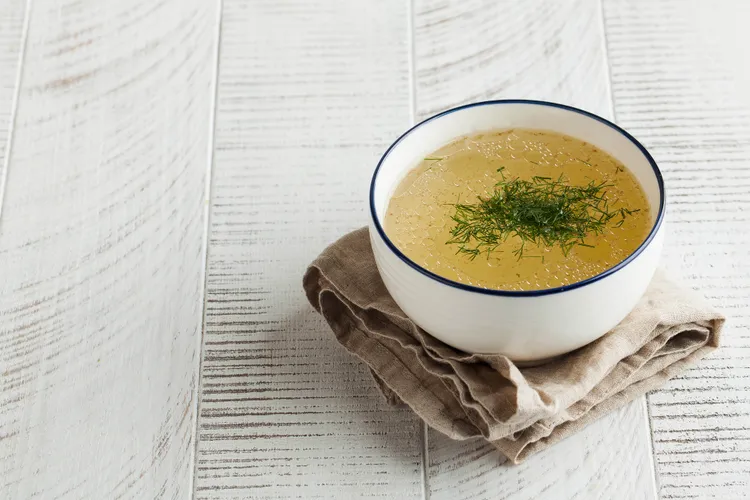
Here's a simple test that reveals everything: take a cup of good homemade chicken stock and refrigerate it overnight. The next morning, it will have set into a firm, wobbly gel - something between a loose jelly and a very soft panna cotta. Take a cup of store-bought chicken stock and do the same. It will remain liquid, watery, and thin.
That difference in physical state is the entire story. A stock that gels is a stock built on dissolved collagen - a stock with body, richness, and the structural ability to produce glossy sauces, silky risottos, and braises with genuine depth. A stock that stays liquid is essentially salted water with flavouring. Useful, but a different product entirely.
Homemade stock beats store-bought because of gelatin - the dissolved collagen extracted from bones during long, slow simmering that gives real stock its body, glossiness, and ability to reduce into a concentrated sauce. Store-bought stocks contain little to no gelatin (because collagen extraction requires time and bones, both of which are expensive), relying instead on salt, flavour extracts, and often monosodium glutamate to approximate the taste of stock without its physical structure. The flavour can be approximated. The gelatin cannot.
The Science of Real Stock
Collagen: The Source of Everything
Bones, cartilage, connective tissue, and skin are rich in collagen - the most abundant protein in animal bodies. Collagen is a triple-helix protein structure, extraordinarily tough and fibrous, that holds connective tissue together. At room temperature and in cold water, it barely dissolves. But subjected to sustained heat - simmering at 85-95°C / 185-200°F for several hours - collagen undergoes hydrolysis: the triple helix unwinds and the protein chains break apart into shorter fragments called gelatin.
Gelatin dissolves into the simmering liquid. As the stock cools, the gelatin molecules form a loose network of cross-linked protein chains that traps water - creating the characteristic gel of a well-made stock. The more collagen-rich the ingredients and the longer the simmer, the more gelatin is extracted and the firmer the gel.
This gel has two critical properties in cooking:
1. Body and mouthfeel. A gelatin-rich stock coats the palate in a way that thin, watery liquid cannot. When you reduce a gelatinous stock, it thickens into a glossy, viscous sauce - a reduction from the collagen-rich liquid. When you use it in a risotto, it adds a creaminess that rice and water alone could never produce. When you braise with it, the finished braising liquid becomes a natural sauce rather than a thin, flat broth.
2. Reduction and concentration. When you reduce a gelatinous stock, the water evaporates and the gelatin concentrates - producing the deeply savoury, syrupy liquid called a glace (when fully reduced) or demi-glace (at half reduction). These concentrated stocks are among the most flavourful substances in cooking, and they are only possible from collagen-rich homemade stock. Reducing a store-bought stock produces concentrated salt.
The Maillard Reaction: Why Roasted Bones Matter
Good homemade stock doesn't start with raw bones - it starts with roasted bones. The reason is the Maillard reaction: roasting bones at 200-220°C / 400-425°F for 30-45 minutes triggers the same browning chemistry responsible for the crust on a steak and the colour of toasted bread. Hundreds of new flavour compounds - pyrazines, furans, and melanoidins - form on the bone surface during roasting. These compounds dissolve into the stock during simmering, adding a deep, roasted flavour dimension that raw-bone stocks entirely lack and that no flavour extract can replicate.
This is the difference between a white stock (made from raw, blanched bones - lighter, more neutral) and a brown stock (made from roasted bones - darker, richer, more complex). Brown stocks are the basis of the great classical sauces; white stocks are used where neutrality is needed. Both beat store-bought. The roasted version is transformatively better.
Aromatics: The Supporting Cast
The vegetables, herbs, and other aromatics that go into stock - onion, carrot, celery, bay leaf, peppercorns, thyme - contribute soluble flavour compounds that dissolve into the liquid during simmering. These are the same compounds present in commercial stocks (often as extracts or dehydrated powders) but at lower concentration and without the interaction effect of simmering alongside actual bones and cartilage.
The interaction matters: aromatic compounds from vegetables simmer in the same liquid as the gelatin, the Maillard compounds from the bones, and the minerals and trace elements that leach from the bone marrow. The resulting flavour is more complex and better integrated than any combination of individual extracts.
"Store-bought stock can approximate the taste of real stock. It cannot approximate the structure. And in cooking, structure is often everything."
What Most People Get Wrong
| Myth | Fact |
|---|---|
| Stock cubes and powder are just concentrated stock and work the same way. | Stock cubes are primarily salt, flavour extracts, and MSG with minimal actual stock content. They season a liquid but provide no gelatin, no Maillard compounds from real bones, and no body. Useful as a seasoning shortcut, not as a substitute for structural stock. |
| Simmering longer always produces better stock. | Stock has an optimal simmering window: chicken stock is typically best at 3-4 hours, beef or veal at 6-8 hours, fish at 20-30 minutes. Beyond optimal time, flavour compounds from the vegetables begin to break down and turn bitter, and some collagen-derived gelatin can hydrolyse further into compounds that add a slightly unpleasant, gluey quality. Time matters - both too little and too much. |
| You should simmer stock at a rolling boil for faster extraction. | Boiling stock produces a cloudy, greasy result - the vigorous agitation emulsifies the fat into the liquid and causes proteins to cloud it. Stock should simmer gently, with only occasional small bubbles breaking the surface. Clarity, body, and flavour are all better in a gently simmered stock than an aggressively boiled one. |
| You can make good stock from the bones alone, without cartilage and connective tissue. | Bones alone contain less collagen than cartilage and connective tissue. The gelatin in a great stock comes primarily from cartilage-rich parts: chicken feet, carcass joints, beef knuckle, veal shin, pork trotters. Adding these to the bones dramatically increases gelatin yield. Pure marrow bones contribute flavour and fat but relatively little gelatin. |
| Homemade stock requires hours of active work. | The active time for making stock is approximately 15-20 minutes - chopping aromatics, roasting bones, skimming the surface in the first 30 minutes. The rest is completely unattended simmering. A stock that takes 4 hours from start to finish requires less than 30 minutes of actual attention. |
The Gelatin Test: How to Know If Your Stock Is the Real Thing
Refrigerate a small amount of finished stock overnight. The result tells you everything:
| Gel Firmness | What It Means | What To Do |
|---|---|---|
| Firm, wobbly jelly | Excellent gelatin content - premium stock | Use as is; reduces beautifully into sauces |
| Soft, barely-set gel | Good gelatin content | Good for soups, risotto, braises |
| Loose, slightly viscous | Low gelatin - needs more cartilage next time | Add a pig's trotter or chicken feet next batch |
| Completely liquid | No significant gelatin - essentially flavoured water | Add unflavoured gelatine powder to rescue for sauce applications |
Stock by Type: Bones, Time, and Best Uses
| Stock | Best Bones | Optimal Simmer | Best Applications |
|---|---|---|---|
| Chicken | Carcasses, feet, wings, necks | 3-4 hours | Risotto, soups, pan sauces, braises, rice |
| Beef / Veal | Knuckle, shin, oxtail + marrow bones | 6-8 hours | Brown sauces, braises, French onion soup, demi-glace |
| Pork | Trotters, ribs, neck bones | 4-6 hours | Asian braises, ramen base, bean soups |
| Fish | Frames, heads (no gills), prawn shells | 20-30 minutes | Bouillabaisse, fish sauces, seafood risotto |
| Vegetable | No bones - depends on aromatics only | 45 min-1 hour | Lighter soups, vegetarian braises, risotto base |
| Lamb | Neck, shoulder bones, ribcage | 4-5 hours | Lamb braises, Middle Eastern dishes, stews |
Making Real Stock at Home
Save bones continuously - the freezer method
The most practical approach to homemade stock is to collect bones over time rather than buying them specifically. Every roast chicken carcass, every pork rib bone, every prawn shell goes into a freezer bag. When the bag is full, make stock. The cost is essentially zero - you are turning food waste into one of the most valuable cooking liquids available.
Blanch bones before making white stock
For clear, clean-tasting white stocks (chicken, veal), blanch the raw bones before roasting or simmering. Place bones in cold water, bring to a boil, drain, and rinse. This removes blood, impurities, and excess proteins that would otherwise cloud the stock and produce off-flavours. Skip this step for brown stocks made from roasted bones - the roasting achieves similar results.
Skim the surface in the first 30 minutes
As stock comes to a simmer, grey foam (denatured proteins) rises to the surface. Skim this off with a ladle during the first 30 minutes of simmering. After this, the protein has largely coagulated and the skimming phase is over. Neglecting this step results in cloudier, slightly bitter stock.
Never add salt until the stock is finished
Salt concentrates as stock reduces. A stock seasoned at the beginning may become unpleasantly salty once it's reduced for a sauce. Add salt only at the end, or leave it unsalted and season each dish individually. Unsalted stock is also far more versatile as a cooking liquid because you control the seasoning of the finished dish rather than working around the stock's existing salt level.
Reduce and freeze in ice cube trays for convenient portions
Reduce finished stock by half or two-thirds over high heat to concentrate it. Pour the concentrated stock into ice cube trays and freeze. Once frozen, transfer to a bag. Each cube is a concentrated stock portion - add to a pan sauce, a stir-fry, or a grain dish for an instant depth boost that takes seconds to prepare.
The Quick Gelatin Fix for Store-Bought Stock If you're using store-bought stock in a recipe that requires body - a pan sauce, a braise, a risotto - dissolve 1 teaspoon of unflavoured powdered gelatin per 500ml of stock before using. Bloom the gelatin in a cold tablespoon of stock for 5 minutes, then stir into the warm stock. This won't add Maillard flavour compounds or the complex aromatic depth of homemade, but it will give the stock the physical body and glossiness that commercial stock lacks. A meaningful improvement for applications where structure matters.
Why Stock Is the Foundation of Professional Cooking
In the hierarchy of professional kitchen skills, the ability to make an excellent stock sits very high - not because it is technically difficult, but because everything that comes after it depends on it. A great sauce is a great stock, reduced. A great risotto is great stock, absorbed. A great braise is great stock, concentrated during cooking. Stock is not a supporting ingredient in professional cooking - it is the medium through which everything else is expressed.
The classical French kitchen had an entire role dedicated to stock production: the poissonnier managed fish stocks, the saucier managed veal and chicken stocks, and the quality of the stocks was considered the single most revealing indicator of a kitchen's overall standard. Visiting chefs would often ask to taste the stocks before forming any opinion about the restaurant.
This professional perspective is worth borrowing even at home: the stock you cook with sets a ceiling on the quality of everything you make with it. A mediocre braising liquid produces a mediocre braise. Excellent stock elevates every dish it touches. The investment - a freezer bag of bones, four hours of unattended simmering - returns dividends in every meal for a week.
The most concentrated form of stock - called glace de viande (meat glaze) in classical French cooking - is produced by reducing a rich brown beef or veal stock until it is thick enough to coat a spoon and sets into a solid, dark, intensely flavoured block when cold. A full pot of stock reduces to perhaps a quarter-cup of glace. This substance contains so much concentrated collagen and Maillard flavour compounds that a single teaspoon dissolved into a simple pan sauce transforms it completely. Classical French kitchens kept glace de viande available at all times; adding a piece the size of a sugar cube to any sauce was considered a routine technique rather than a special touch. The modern equivalent - labelled "demi-glace" or "reduced stock" - is available commercially, but the homemade version made from genuinely good stock is incomparably better and costs almost nothing to produce from what would otherwise be discarded bones.
Here's What It All Comes Down To
The difference between homemade stock and store-bought is not a matter of preference or effort or tradition. It is a matter of physical chemistry: gelatin, collagen, Maillard compounds, and the irreplaceable structural properties that only slow, long extraction from real bones can produce. Commercial stock can approximate flavour. It cannot replicate structure - and in cooking, structure determines everything from sauce consistency to risotto creaminess to braise depth.
Making stock at home requires no special equipment, almost no active time, and costs nothing if you collect bones as you cook. The return - a stock that gels, reduces, and transforms every liquid application it touches - is one of the most significant quality upgrades available to any home cook.
Save the carcass. Fill the bag. Simmer when you have time. Every dish you make with that stock will be better in a way that no store-bought product can match.
Quick Recap
- Homemade stock gels when refrigerated because it contains dissolved gelatin - collagen extracted from bones during long simmering. Store-bought stock stays liquid because it contains little to no gelatin.
- Gelatin gives stock body, glossiness, and the ability to reduce into a concentrated sauce. Reducing store-bought stock concentrates salt; reducing homemade stock concentrates flavour.
- Roasting bones before simmering triggers the Maillard reaction, producing hundreds of deep, roasted flavour compounds that raw bones and flavour extracts cannot replicate.
- Never boil stock - vigorous boiling emulsifies fat and clouds the liquid. Simmer gently at 85-95°C / 185-200°F throughout.
- The collagen-rich parts for best gelatin yield: chicken feet and wing tips, beef knuckle and shin, pork trotters. Pure marrow bones contribute flavour and fat but less gelatin.
- Optimal simmer times: chicken 3-4 hours, beef/veal 6-8 hours, pork 4-6 hours, fish 20-30 minutes. Beyond optimal time, flavour degrades.
- Never salt stock during cooking - salt concentrates as the stock reduces and can make the finished sauce over-seasoned.
- The freezer collection method turns food waste into premium stock: save every carcass, bone, and shell until you have enough to fill a pot.
- To fix store-bought stock in sauce applications: bloom 1 tsp unflavoured gelatin per 500ml and stir in - this restores physical body without adding flavour.
Latest