How to Fry Food Safely at Home
Frying food at home can feel intimidating - hot oil, popping sounds, and the fear of grease fires. But frying isn’t dangerous when you understand how heat, oil, and moisture interact. With the right setup and a few safety habits, you can fry confidently and safely.
Most frying accidents don’t happen because oil is “too hot.”
They happen because of moisture, poor temperature control, overcrowding, or panic reactions. When you control those factors, frying becomes predictable instead of stressful.
To fry food safely at home, use a heavy pot, keep oil at the proper temperature (typically 325-375°F / 160-190°C), dry food thoroughly before adding it, never overcrowd the pan, and never add water to hot oil. Always keep a lid nearby to smother flames in case of emergency.
Why Frying Can Be Dangerous
Understanding the risks removes most of the fear.
1. Oil Gets Extremely Hot
Water boils at 212°F (100°C).
Frying oil usually sits between 325-375°F (160-190°C).
That’s hot enough to cause instant burns.
2. Water and Oil Don’t Mix
When water touches hot oil:
-
It turns into steam instantly.
-
Steam expands rapidly.
-
Oil gets pushed outward (splatter).
This is why wet food causes popping and burns.
3. Oil Can Ignite If Overheated
Every oil has a smoke point - the temperature where it begins to break down and smoke.
If heated far beyond that point, oil can ignite.
This is called a grease fire.
The key to safety is temperature control.
What Most People Get Wrong
Myth: Frying Is Too Dangerous for Home Kitchens
It’s not inherently dangerous.
It becomes risky when:
-
Oil is overheated
-
Food is wet
-
The pan is overfilled
-
There’s no plan for emergencies
Prepared cooks rarely have issues.
Myth: You Need a Deep Fryer to Be Safe
You don’t.
A heavy pot with high sides works well.
Safety depends more on oil depth and temperature than special equipment.
Myth: Water Puts Out Oil Fires
Never use water on a grease fire.
Water causes oil to explode outward, spreading flames.
This mistake makes fires worse instantly.
Essential Safety Setup Before Frying
Preparation prevents accidents.
1. Choose the Right Pot
Use:
-
Heavy-bottomed pot
-
High sides (at least 3-4 inches above oil level)
-
Stable base
Avoid:
-
Thin pans
-
Shallow skillets for deep frying
Tall sides contain splatter and prevent overflow.
2. Don’t Overfill With Oil
Fill the pot no more than halfway.
When food goes in, oil level rises.
Too much oil increases overflow risk.
3. Use the Right Oil
Choose high smoke point oils:
-
Avocado oil
-
Peanut oil
-
Canola oil
-
Sunflower oil
Avoid low smoke point oils like unrefined olive oil for deep frying.
Stable oils reduce fire risk.
4. Keep a Lid Nearby
If oil ignites:
-
Turn off heat.
-
Cover the pot with a lid.
-
Do NOT move the pot.
-
Do NOT use water.
The lid removes oxygen and smothers flames.
This is your emergency plan.
How to Control Oil Temperature Safely
Ideal Frying Temperature
Most foods fry well between:
350-375°F (175-190°C)
Too low:
Food absorbs oil.
Too high:
Oil smokes and can ignite.
Use a Thermometer When Possible
A clip-on frying thermometer provides control and confidence.
If you don’t have one:
-
A small bread cube should brown in about 60 seconds at proper frying temp.
But a thermometer is safer and more accurate.
Never Leave Hot Oil Unattended
Oil heats quickly.
Stay in the kitchen while frying.
Distraction is a major cause of kitchen fires.
How to Add Food Safely
This is where most splatter happens.
1. Pat Food Completely Dry
Moisture causes violent popping.
Dry:
-
Chicken
-
Fish
-
Tofu
-
Vegetables
Especially important for previously frozen foods.
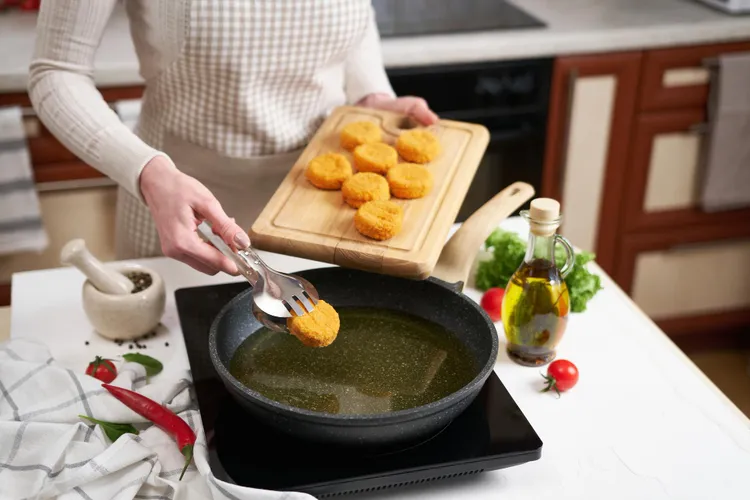
2. Lower Food Gently
Use:
-
Long tongs
-
A slotted spoon
-
A spider strainer
Lower food away from you.
Do not drop from height.
3. Fry in Batches
Overcrowding causes:
-
Oil temperature drop
-
Excess bubbling
-
Increased overflow risk
Cook in manageable amounts.
What to Do If Oil Starts Smoking
If oil begins smoking heavily:
-
Turn off heat immediately.
-
Move pot off burner if safe.
-
Allow oil to cool completely.
-
Do not add food.
Smoking oil is near ignition point.
Act early, not late.
What to Do If a Grease Fire Starts
Stay calm.
Follow this order:
-
Turn off heat.
-
Cover with lid.
-
Do NOT move the pot.
-
Do NOT use water.
-
Use a fire extinguisher rated for grease fires if necessary.
Never throw water on burning oil.
Water spreads flames explosively.
How to Avoid Burns
Simple habits matter.
-
Wear short or tight sleeves.
-
Use long-handled tools.
-
Stand slightly back when adding food.
-
Keep children and pets away from stove.
-
Don’t lean over the pot.
Small precautions make frying much safer.
How to Dispose of Oil Safely
Never pour oil down the sink.
To dispose:
-
Let oil cool completely.
-
Strain out food particles.
-
Pour into sealed container.
-
Throw away or recycle according to local rules.
Hot oil in drains causes plumbing damage.
Is Pan Frying Safer Than Deep Frying?
Yes, generally.
Less oil means lower fire risk and easier control.
But splatter still requires moisture control.
Can You Reuse Frying Oil Safely?
Yes, if:
-
It was not overheated
-
It smells neutral
-
It’s strained and stored properly
Discard oil that smells rancid or looks dark and foamy.
Why Does Oil Bubble So Much?
Bubbling is steam escaping from food.
Heavy bubbling means high moisture release.
It slows as food crisps.
The bubbling you see while frying is not oil boiling.
Oil doesn’t boil at frying temperatures.
Those bubbles are steam escaping from inside the food.
Once bubbling slows dramatically, most moisture has left - and crisping begins.
Frying safely at home comes down to three principles:
Control heat.
Control moisture.
Stay prepared.
Use the right pot.
Dry your food.
Monitor temperature.
Keep a lid nearby.
When you understand how oil behaves, frying becomes controlled and confident - not chaotic.
What to Remember
-
Frying oil is much hotter than boiling water.
-
Water causes splatter and increases burn risk.
-
Use heavy pots with high sides.
-
Never overfill with oil.
-
Keep oil between 350-375°F (175-190°C).
-
Never leave hot oil unattended.
-
Dry food thoroughly before frying.
-
Never use water on a grease fire.
-
Keep a lid nearby to smother flames.
-
Preparation makes frying safe and predictable.
Latest