Sticky Toffee Pudding: The British Classic at Home
The date sponge that almost doesn't taste of dates, the toffee sauce that makes it a sauce rather than a topping, and the make-ahead strategy
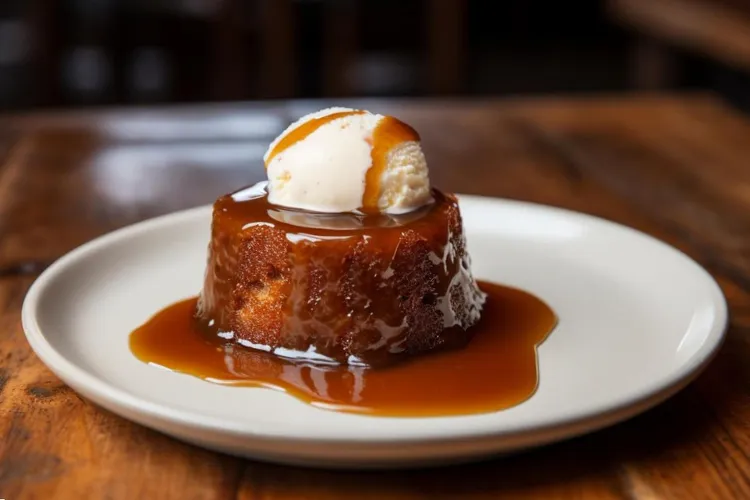
Sticky toffee pudding occupies a specific place in British dessert culture - it is simultaneously the most exported British dessert (present on menus from New York to Tokyo) and the one most home cooks have never attempted, assuming it requires more skill than they have. The assumption is wrong. Sticky toffee pudding is one of the more forgiving cakes in British baking - the dates and their soaking liquid provide so much moisture that it is very difficult to dry out, and the toffee sauce covers any surface imperfection.
The key insight that makes this recipe work: the dates are not an add-in. They are the cake. Their job is not to provide visible pieces of date scattered through a cake - their job is to break down completely into the batter, providing moisture, sweetness, and a molasses-like depth that makes the cake taste of something rich and complex. Most people eating sticky toffee pudding cannot identify dates as an ingredient. They taste the result of the dates: a dense, moist, dark, slightly treacly sponge with a specific depth that no date-free cake produces.
The Science
Why bicarbonate of soda with the dates: The dates are soaked in boiling water and then bicarbonate of soda is added. The bicarb raises the pH of the date mixture, which accelerates the breakdown of the dates' cell walls. Within a few minutes of the bicarb addition, the dates become very soft and fall apart when mashed. Without the bicarb, the dates remain in more discrete pieces; with it, they break down to a near-paste that distributes invisibly through the batter.
Why the soaking liquid goes into the batter: The date soaking liquid is not discarded - it is added to the batter along with the mashed dates. This liquid, dark and sweet and infused with all the date flavour extracted by the boiling water, is part of the cake's moisture and flavour. Discarding it would be discarding a significant portion of what makes the pudding itself.
The toffee sauce: The toffee sauce is a standard caramel sauce - butter, brown sugar, and cream cooked together until the sugars dissolve and the sauce reduces slightly. The sugar and butter are cooked first (without the cream) until slightly caramelised, then the cream is added. This produces a slightly more complex flavour than adding all three together from the start.
Ingredients
The Pudding
Makes 8 individual puddings or one 23cm round cake | Active time: 25 minutes | Baking: 25-30 minutes
- 200g medjool dates (or regular dried dates - Medjool produce a sweeter, more caramel-flavoured result), pitted and roughly chopped
- 250ml boiling water
- 1 tsp bicarbonate of soda
- 80g unsalted butter, at room temperature
- 150g dark muscovado sugar - the molasses content of muscovado adds depth; if unavailable, use dark soft brown sugar
- 2 large eggs, at room temperature
- 180g self-raising flour (or 180g plain flour + 2 tsp baking powder)
- 1 tsp vanilla extract
- Pinch of fine salt
The Toffee Sauce
- 200g dark muscovado or dark soft brown sugar
- 200ml double cream
- 100g unsalted butter
- 1 tsp sea salt - the salt is what distinguishes a modern toffee sauce from an old-fashioned one; it cuts the sweetness and adds complexity
- 1 tsp vanilla extract
Method
Step 1: Prepare the dates
Place the pitted, roughly chopped dates in a large heatproof bowl. Pour the 250ml of boiling water over them. Add the bicarbonate of soda and stir. The mixture will foam slightly from the bicarb reaction.
Leave to soak for 10 minutes. The dates will absorb the water and soften significantly. After 10 minutes, mash with a fork or the back of a spoon until the dates are a rough paste - some texture remaining is fine; the goal is the breakdown of the date structure rather than a completely smooth purée.
Step 2: Make the batter
Preheat the oven to 175°C (fan). Grease 8 individual 200ml pudding moulds (dariole moulds or muffin tin holes) generously with butter. Or grease and line a 23cm round cake tin.
Beat the butter and muscovado sugar together with an electric mixer for 4-5 minutes until pale and fluffy. The muscovado sugar is slightly lumpy - break up any large lumps before beating.
Add the eggs one at a time, beating well after each addition. Add the vanilla. The mixture may look slightly curdled at this stage - this is normal.
Add the date mixture - all of it, including the soaking liquid. Stir to combine. The mixture will now look quite wet and loosely mixed.
Sift over the self-raising flour and salt. Fold gently until just combined - a few strokes of the spatula, no over-mixing.
Step 3: Bake
Divide the batter among the prepared moulds or pour into the cake tin. For individual moulds, fill to approximately two-thirds.
Individual puddings: 20-25 minutes at 175°C until risen, set, and a skewer inserted in the centre comes out clean.
Large cake tin: 35-40 minutes at 175°C until risen, set, and a skewer comes out clean.
The surface should be dark - almost mahogany from the muscovado. This is correct.
Step 4: Make the toffee sauce
While the puddings bake, make the toffee sauce. Combine the butter and muscovado sugar in a medium heavy-based saucepan. Heat over medium heat, stirring, until the butter melts and the sugar dissolves. Continue cooking, stirring occasionally, until the mixture begins to bubble and turns slightly darker - 3-4 minutes.
Add the double cream carefully - it will bubble up vigorously. Stir to combine. Add the salt and vanilla. Simmer for 2-3 minutes until the sauce is smooth, slightly thickened, and glossy.
The consistency: The sauce should pour easily and coat the back of a spoon. It thickens as it cools - if it becomes too thick, add a splash more cream.
Serving
The make-it-sticky technique: Remove the hot puddings from the oven. Pour half the toffee sauce over the hot puddings while still in the moulds - the sauce absorbs slightly into the surface and top of the sponge, making it genuinely sticky (not just sauced). Leave for 5 minutes, then unmould.
To unmould: Run a thin knife around the edge. Invert onto a plate - the puddings should release cleanly.
Pour additional toffee sauce over the unmoulded pudding immediately before serving.
Serve with: Vanilla ice cream (the cold-hot contrast is essential), cold clotted cream, or cold pouring cream. The temperature contrast is part of the dessert.
Make-Ahead Strategy
Sticky toffee pudding is one of the best desserts in this collection for making ahead - it actually improves with 24 hours of storage as the sponge absorbs the toffee sauce completely.
Option 1 - Bake ahead, sauce at serving: Bake the puddings. Cool completely. Refrigerate for up to 3 days. To reheat: place individual puddings in a 160°C oven for 10-12 minutes. Make the sauce fresh, or reheat a pre-made sauce. Pour over and serve.
Option 2 - The restaurant method (best results): Bake and unmould the puddings. Place in a deep baking dish. Pour all the toffee sauce over the puddings. Cover and refrigerate. To serve: reheat in a 160°C oven for 15-20 minutes until the sauce is bubbling and the puddings are heated through. The sauce completely impregnates the pudding during the resting and reheating - the result is noticeably more sticky and flavourful than freshly baked and sauced.
Freezing: Freeze the baked, unsauced puddings for up to 2 months. Thaw overnight in the refrigerator. Reheat as above and sauce at serving.
Variations
Sticky Toffee Pear Pudding
Add 1 large pear (peeled, cored, diced into 1cm pieces) to the batter before pouring into the moulds. The pear adds a fruity freshness that cuts the richness of the date-and-toffee combination.
Sticky Toffee Banana Pudding
Replace 100g of the dates with 2 ripe mashed bananas added to the batter. The banana adds sweetness and a different fruit note; reduce the muscovado sugar in the sponge by 30g.
Orange and Sticky Toffee
Add the finely grated zest of 2 oranges to the batter and 2 tbsp of Cointreau to the toffee sauce. The orange cuts through the richness and adds a specific brightness.
Pro Tips
- Medjool dates are significantly better than regular dried dates. They are more moist, more caramel-flavoured, and produce a more complex pudding. They cost more per gram but the quantity used is not large - the premium is worth it for this specific application.
- The bicarb is essential. It is not a leavening agent here - it is a chemical that breaks down the date cell walls. Without it, the dates don't break down correctly and the batter has a different character.
- Don't skip the soaking liquid. The dark, date-infused soaking liquid is not excess moisture - it is flavour and moisture that belongs in the batter.
- Make twice the sauce. The toffee sauce keeps in the refrigerator for 2 weeks and is excellent over ice cream, on porridge, drizzled over the banana bread from the Baking pillar, or on pancakes. Making a double batch costs almost nothing extra.
The Dry Pudding Problem Sticky toffee pudding only dries out if significantly overbaked (the high moisture content of the date mixture is very forgiving). Check with a skewer from 20 minutes for individual puddings - it should come out clean but moist, not with wet batter on it. The other cause of a dry pudding: not enough toffee sauce poured over while the pudding is still warm. Be generous - the hot pudding absorbs the sauce rather than merely being coated by it.
FAQ
Q: Can I make this without a muffin tin or dariole moulds?
Yes - a large 23cm round cake tin or a square brownie tin produces a tray bake version. Slice and serve with sauce poured over individual portions. The result is less elegant in presentation but identical in flavour.
Q: My toffee sauce is too thick. How do I fix it?
Add a splash of double cream and stir over low heat. The sauce thins significantly when warmed - if it thickened in the refrigerator, rewarm gently in a small saucepan.
Q: Can I use golden syrup instead of muscovado sugar in the sauce?
Yes - replace 100g of the muscovado with 3 tbsp of golden syrup for a slightly lighter, less molasses-forward sauce. The flavour is less complex but still very good.
🔗 More British Puddings and Classics
Latest