Why Vegetables Turn Grey When Cooked - And How to Keep Them Vibrantly Green
Perfectly vibrant green beans go into boiling water looking like they belong on a restaurant plate. Two minutes later they're army green. Four minutes after that they're grey. This isn't random - it's a specific, predictable chemical reaction happening to a molecule called chlorophyll, and once you understand it, keeping vegetables green becomes a precise technique rather than a matter of luck.
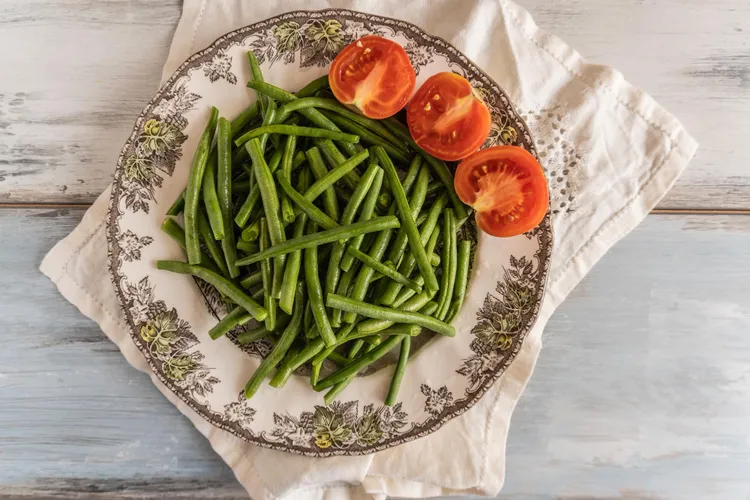
Here's what most people assume: green vegetables turn grey because they're overcooked. That's partly right - but it misses the mechanism entirely. Vegetables begin to lose their vivid green colour within the first minute of cooking, long before texture degrades. By the time they look grey, something specific has happened to the molecule that makes them green in the first place. And the conditions that cause it are not just about time - they're about acid, heat, and the physics of cell walls.
Understanding the chemistry turns "cook until it looks right" from a guess into a science.
Green vegetables turn grey-green when heat and acid convert chlorophyll - the vivid green pigment in plant cells - into pheophytin, a dull, olive-grey compound. This happens when the magnesium ion at the centre of the chlorophyll molecule is displaced by hydrogen ions released from the vegetable's own cells during cooking. The reaction accelerates dramatically with heat and in acidic environments. The fix is a combination of very high heat, very short time, abundant water, and immediate chilling - the technique used in every professional kitchen in the world.
The Chlorophyll Molecule
What Makes Vegetables Green
The green colour of vegetables comes from chlorophyll - specifically chlorophyll a and chlorophyll b, two closely related molecules found in the chloroplasts of plant cells. Chlorophyll is a large, complex molecule with a magnesium ion (Mg²⁺) at its centre, held in place by four nitrogen atoms in a ring structure called a porphyrin. This magnesium-centred ring is precisely what absorbs red and blue wavelengths of light and reflects green - giving leaves, broccoli, peas, and spinach their vivid colour.
The magnesium ion is the key. It is the atom that makes chlorophyll green. When it leaves, the colour leaves with it.
The Chemistry of Greying: Magnesium Displacement
When plant tissue is heated, several things happen simultaneously:
1. Cell walls rupture. The heat disrupts the cell membranes and vacuoles inside plant cells. These vacuoles contain organic acids - primarily malic acid and oxalic acid - that are normally kept separate from the chloroplasts by the cell membrane.
2. Acid is released. Once the membranes rupture, these organic acids flood into the cell environment where the chloroplasts are. The acids release hydrogen ions (H⁺) into the surrounding liquid.
3. Magnesium is displaced. The hydrogen ions are strongly attracted to the porphyrin ring at the centre of the chlorophyll molecule. They displace the magnesium ion - pushing it out of the ring and taking its place. The resulting molecule, now with hydrogen at its centre instead of magnesium, is called pheophytin.
4. Colour shifts to grey-green. Pheophytin absorbs light differently from chlorophyll - it reflects a dull olive-grey rather than vivid green. The visual shift from bright green to army green to grey is the accumulation of pheophytin replacing chlorophyll throughout the vegetable's cells.
This reaction happens faster in acidic conditions (because more hydrogen ions are available) and faster at higher temperatures (because the reaction rate, like all chemical reactions, accelerates with heat). Adding acid to cooking water - even a splash of lemon juice or wine vinegar - dramatically accelerates the greying. Prolonged cooking at high heat compounds it.
"Chlorophyll doesn't fade - it gets replaced. The magnesium that makes vegetables green is displaced by hydrogen ions, and the new molecule that forms is a completely different colour."
The Other Vegetable Pigments: Red, Yellow, and White
Chlorophyll is only one of four major pigment types in vegetables, and each behaves differently under heat and acid:
Carotenoids - Yellow and Orange (Stable)
Carrots, sweet potatoes, yellow peppers, and sweetcorn get their colour from carotenoids - fat-soluble pigments that are extremely heat-stable. Cooking actually makes carotenoids more bioavailable by breaking down the cell walls that encase them. Orange carrots look more vividly orange after roasting than before. Carotenoids do not grey, do not fade significantly under normal cooking, and are unaffected by acid. They are the most cooking-stable of all vegetable pigments.
Anthocyanins - Red and Purple (Acid-Sensitive, Unpredictable)
Red cabbage, beetroot, red onion, and purple cauliflower get their colour from anthocyanins - water-soluble pigments that are highly pH-sensitive. In acid conditions, anthocyanins are vividly red. In neutral conditions, they turn purple. In alkaline conditions (like water with added bicarbonate of soda), they turn blue-green. This is why red cabbage braised with apple (acidic) stays red, but red cabbage cooked in plain water turns an alarming shade of blue-grey. Adding a small amount of vinegar or acid to the cooking water preserves the red colour.
Betalains - Deep Red (Beetroot-Specific)
Beetroot's deep crimson colour comes from betalains - a separate pigment class from anthocyanins, found almost exclusively in the plant order Caryophyllales (beetroot, chard, prickly pear). Betalains are moderately heat-stable but highly water-soluble - they bleed readily into cooking water, which is why everything in a pot of boiling beetroot turns pink. Roasting beetroot in its skin contains the betalain bleed far more effectively than boiling.
Flavonoids - White (Alkali-Sensitive)
Cauliflower, white onions, and parsnips contain flavonoids - white or cream pigments that are stable in acid but turn yellow or brown in alkaline conditions. Adding bicarbonate of soda to the cooking water of white vegetables makes them turn yellow. Slightly acidulated water keeps them white and bright. This is the opposite of the anthocyanin situation.
What Most People Get Wrong
| Myth | Fact |
|---|---|
| Grey vegetables are simply overcooked. | Greying begins before texture degrades - the colour change is one of the first signs of chlorophyll-to-pheophytin conversion, not the last. Vegetables can still have good texture when they look grey. Timing and acid conditions, not just time alone, determine colour change rate. |
| Adding bicarbonate of soda to cooking water keeps vegetables green. | Bicarbonate of soda neutralises the acids released from the vegetables, slowing the displacement of magnesium and keeping vegetables green for longer. But it also softens vegetables rapidly by breaking down pectin (the structural compound in cell walls), making them mushy. It works for colour; it ruins texture. Professional cooks don't use it. |
| A lid on the pot helps preserve green colour. | Putting a lid on the pot traps the volatile acids that would otherwise evaporate. These trapped acids accelerate pheophytin formation. Cooking green vegetables uncovered - allowing acids to escape - helps preserve colour slightly. |
| Cold water after blanching is unnecessary - the vegetable is already cooked. | Immediate chilling in ice water arrests the cooking process precisely at the point of perfect colour and texture. Without it, residual heat continues cooking the vegetable from the inside - converting more chlorophyll to pheophytin - for another two to three minutes after removal from the water. The ice bath is not cosmetic; it stops a chemical reaction. |
| Lemon juice over cooked vegetables helps maintain their colour. | Lemon juice added after cooking has no effect on chlorophyll that has already converted to pheophytin. The conversion is irreversible. Acid speeds the conversion before and during cooking; it cannot restore colour after the fact. Lemon juice is a flavour choice at the table, not a colour rescue. |
The Professional Method: Blanching and Refreshing
The technique that keeps vegetables vivid in every professional kitchen in the world is blanching and refreshing - sometimes called blanching and shocking. It is precise, fast, and completely reliable.
The Method
1. Use a large volume of heavily salted, rapidly boiling water. The water should be salted to roughly the saltiness of seawater - about 10g of salt per litre. The large volume maintains temperature when the cold vegetables are added. The salt seasons the vegetables from the outside and also slightly raises the boiling point.
2. Add vegetables in small batches. Adding too many vegetables at once drops the water temperature dramatically, extending the cooking time and increasing the window for chlorophyll conversion. Small batches maintain the vigorous boil.
3. Cook briefly - much shorter than you think. For most green vegetables: French beans 2-3 minutes, broccoli florets 2 minutes, asparagus 1.5-2 minutes, peas 60-90 seconds, spinach 30-45 seconds. The goal is bright colour and slight crunch - the vegetables will soften slightly during the reheating stage when they're served.
4. Immediately transfer to an ice bath. A large bowl of water with significant amounts of ice, cold enough to feel genuinely cold. Submerge the vegetables completely. Leave until they are cold to the touch - typically 1-2 minutes. This arrests every reaction simultaneously: cooking stops, chlorophyll conversion stops, enzyme activity stops.
5. Drain and dry completely. Wet vegetables steamed when reheated, losing their crunch. Dry them on kitchen paper or a clean towel before storing or reheating.
Why It Works
The combination of high heat and very short time limits the window for chlorophyll conversion. High heat cooks the vegetable fast enough that texturally it's done before too much pheophytin accumulates. The immediate ice bath stops the reaction at that moment - preventing the residual heat from continuing the conversion during carryover. The result is a vegetable that is simultaneously perfectly cooked in texture and maximally green in colour.
Keeping Every Vegetable Its Best Colour
For green vegetables
Use the blanch-and-refresh method for any green vegetable that will be stored or reheated. If cooking and serving immediately, cook in large amounts of boiling, salted water for the minimum time that achieves the texture you want, and serve immediately without delay. Delay allows acids to continue their work even off the heat.
For red and purple vegetables
Add a splash of vinegar, lemon juice, or another acid to the cooking water. This keeps anthocyanins in their vivid red form rather than allowing them to shift toward blue-purple in neutral water or the alarming blue-green of alkaline conditions. Red cabbage and beetroot particularly benefit from acidulated cooking water.
For white vegetables
Do the opposite: avoid alkaline cooking conditions. Do not add bicarbonate of soda. If you want to keep cauliflower particularly white, a small amount of lemon juice or white wine vinegar in the cooking water prevents the flavonoid yellowing that occurs in neutral or alkaline water.
For orange and yellow vegetables
Carotenoids are the most forgiving pigments in the kitchen. Roasting, boiling, steaming - none of these significantly diminish the colour of carrots, sweet potatoes, squash, or yellow peppers. If anything, cooking concentrates the vivid orange by removing water from the cells and making the carotenoids more visible. No special technique needed; just cook them well.
Why Restaurant Vegetables Always Look Better
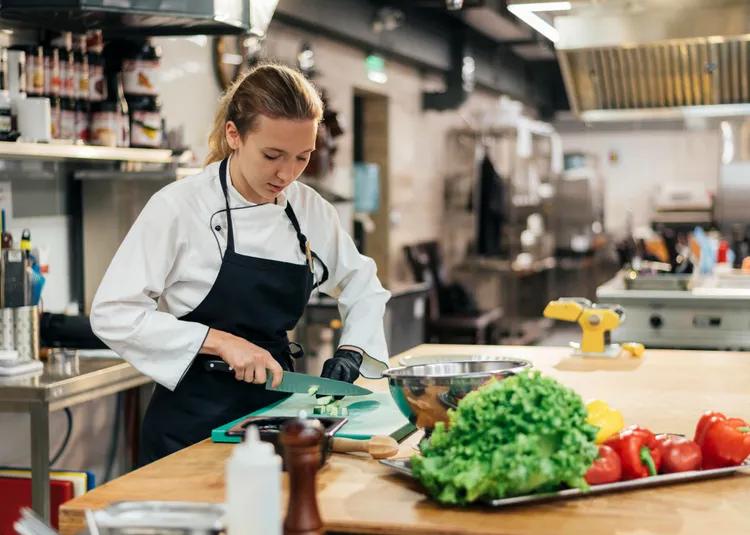
The vivid green of restaurant broccoli, the perfect colour of plated asparagus, the brilliant green of pea purée - all of it comes from the same technique: blanch early, refresh immediately, reheat only at service. In a restaurant, vegetables are almost never cooked to order from raw. They are blanched in advance, stored in the refrigerator, and then reheated - briefly, gently - at the moment of plating.
This system solves two problems simultaneously: it preserves colour (the conversion stopped at blanching), and it allows precise service timing (reheating takes 30 seconds; blanching takes three minutes). A busy restaurant kitchen cannot blanch vegetables to order during service. So it does the careful colour-preserving work in advance, and the fast reheating at the point of service.
The professional habit worth adopting at home: blanch vegetables for the week at the beginning of the week, shock in ice water, dry, and store in the fridge. Then reheat in butter or olive oil with a splash of water when needed. Each portion takes under a minute to prepare, the vegetables are perfectly coloured every time, and the week's vegetable cooking is essentially done in one 20-minute session.
The same magnesium-centred porphyrin ring that makes chlorophyll green is the structural template for haemoglobin in human blood - except that haemoglobin uses iron (Fe²⁺) at the centre of its ring instead of magnesium. This is why blood is red (iron-centred porphyrin reflects red) and plants are green (magnesium-centred porphyrin reflects green). The two molecules are remarkably similar in structure - both are large, ring-shaped protein complexes whose colour is determined entirely by which metal ion sits at the centre. Replace the iron in haemoglobin with magnesium and you'd have something resembling chlorophyll. Replace the magnesium in chlorophyll with iron and you'd have something resembling haemoglobin. Life, it turns out, uses the same molecular architecture to carry oxygen in blood and capture light in leaves - with a single atom of difference between them.
Here's What It All Comes Down To
Vegetables turn grey when heat and acid displace the magnesium ion at the centre of the chlorophyll molecule, converting it to the grey-green compound pheophytin. The reaction is irreversible, accelerated by acid and heat, and begins within the first minute of cooking - long before texture degrades.
The solution is the same technique professional kitchens have used for generations: large amounts of rapidly boiling, heavily salted water, very short cooking times, and an immediate ice bath that stops every reaction simultaneously at the moment of perfect colour and texture.
Understand the chemistry and the technique makes sense. Apply the technique and restaurant-quality vegetables become a reliable, repeatable result rather than a lucky accident.
Summary of Key Points
- Green vegetables turn grey when chlorophyll is converted to pheophytin - a dull olive-grey compound that forms when hydrogen ions from the vegetables' own organic acids displace the magnesium ion at the centre of the chlorophyll molecule.
- The conversion is irreversible and accelerated by both heat and acid - meaning it begins within the first minute of cooking and is worsened by covering the pot (which traps volatile acids).
- The professional fix is blanching and refreshing: cook briefly in large amounts of heavily salted, rapidly boiling water, then transfer immediately to an ice bath to stop all reactions at the moment of perfect colour and texture.
- Adding bicarbonate of soda to cooking water preserves colour by neutralising acids but destroys texture by breaking down pectin - professional kitchens do not use this technique.
- Different pigments require different treatments: green (avoid acid during cooking, use ice bath), red/purple anthocyanins (add acid to preserve red), white flavonoids (avoid alkaline conditions), orange carotenoids (stable - no special treatment needed).
- Adding lemon juice after cooking has no effect on colour - the chlorophyll-to-pheophytin conversion is irreversible. Acid must be avoided during cooking, not added afterward.
- Blanch vegetables for the week in one session - shock in ice water, dry, refrigerate - then reheat briefly at serving time. This is exactly how restaurant kitchens manage perfect vegetable colour every service.
- The magnesium-centred porphyrin ring that makes chlorophyll green is structurally almost identical to the iron-centred porphyrin ring that makes haemoglobin red - the same molecular architecture, separated by one atom.
Latest