Summer Seasonal Cooking: What to Cook June-August
The peak season - tomatoes at their best, stone fruit at their sweetest, and the cold, fresh dishes that suit summer eating
British summer cooking is a specific thing. It is not year-round cooking conducted in warm weather. It is a brief, specific period - June through August - when a particular set of ingredients are at their peak and no other cooking moment can replicate. A properly ripe British-grown or European tomato in August, eaten at room temperature with olive oil and flaky salt, is a different ingredient from the tomato available in January. A fresh-picked strawberry in June has a flavour and acidity that January strawberries lack entirely. These are not better versions of the same ingredient - they are different ingredients that happen to share a name.
Summer cooking's job is to honour this specificity. Buy the best of what is in season. Do as little as possible to it. Eat it at the right temperature (room temperature for tomatoes; barely warm for corn; cold for a proper gazpacho).
What's in Season: Month by Month
June
British strawberries: The most eagerly anticipated fruit of the summer - a good British strawberry in June has an aromatic intensity and balance of sweetness and acidity that imported strawberries cannot replicate. Eat them as they are or with cream and sugar. The strawberry season runs from mid-June through July.
Elderflower: The cream-white flower clusters of elder trees, with a fragrance that is one of summer's most distinctive. Used in cordials (which keep all winter as a taste of summer), in champagne-adjacent elder flower fizz (with sparkling water or Champagne), in desserts, and in dressings for summer salads. The season is short - approximately 3 weeks in early June.
New season British garlic (wet garlic): Garlic harvested before it has dried fully. Milder, moister, with a more gentle flavour than dried garlic. The skins are pale and papery rather than dry. Use wherever garlic is wanted for a less aggressive result.
Mackerel: Summer mackerel is at its fattest and most flavourful - the oily fish at its peak. Excellent pan-fried, grilled, or BBQ'd (see Summer BBQ Guide), or served as whole smoked mackerel with horseradish.
July-August
Tomatoes: The peak of the British tomato season - grown outdoors or under glass, at their most flavourful in late July and August. Heritage varieties (Brandywine, Green Zebra, Costoluto Genovese) are particularly worth seeking at this time. Eat at room temperature - refrigerating tomatoes below 13°C destroys the volatile flavour compounds that make them taste like tomatoes.
Courgettes: Prolifically available throughout summer, cheap, and versatile. Best when small (15-18cm) - larger courgettes develop a pithy, watery interior. Excellent raw (ribboned with a peeler, dressed with lemon, oil, and Parmesan), grilled, in fritters, and in the courgette and walnut loaf cake from Loaf Cakes: Five Recipes in the Baking collection.
Corn on the cob: Fresh British corn arrives in late July and August - deeply sweet, milky, and requiring nothing more than boiling for 4 minutes and butter with salt. The American tradition of corn on the cob on the BBQ (see Summer BBQ Guide) works equally well with British corn.
Peaches and nectarines: European stone fruit at its peak in August - ripe to the point of dripping when bitten, intensely sweet and aromatic. Eat as they are or pair with prosciutto, blue cheese, or burrata.
Raspberries: Reach their peak in July-August. Serve simply with cream, use in a summer pudding (below), or make into a jam.
Sea bass: The summer sea bass, available along British coasts from June through September. Clean, delicate flavour; excellent pan-fried skin-side down with brown butter and capers.
French and runner beans: Summer's fresh beans - French beans (thin, no stringing required) and runner beans (larger, need stringing). Blanch briefly and dress while warm.
The Summer Recipes
The Perfect Tomato Salad
The pinnacle of summer simplicity - and the recipe that most depends on ingredient quality.
Choose 600g of the best, ripest tomatoes available - mix of varieties and sizes if possible (halved cherry tomatoes alongside thicker-sliced beefsteak provides interesting texture contrast). Slice the larger tomatoes; halve the smaller ones.
Lay on a large, flat plate. Season generously with flaky sea salt. Leave for 10 minutes - the salt draws out the juice and creates a dressing from the tomato's own liquid.
Drizzle with the best olive oil available (this is the moment for excellent olive oil - the flavour is unmediated by cooking). Add a small splash of red wine vinegar if the tomatoes are particularly sweet. Scatter fresh basil leaves (torn, not chopped - tearing releases less of the bruising compounds that turn basil black).
Optional additions: Burrata or torn mozzarella, thinly sliced red onion soaked in cold water for 10 minutes to remove the sharpness, capers, cucumber, or a handful of black olives.
Do not refrigerate. A cold tomato salad is a significantly worse tomato salad.
Gazpacho
The cold soup that is specifically a summer preparation - genuinely excellent only when made with peak summer tomatoes.
Serves 6 | Active time: 20 minutes | Chill: 2 hours minimum
In a blender, combine: 1kg very ripe tomatoes (roughly chopped, no need to peel) + 1 medium cucumber (peeled, deseeded, roughly chopped) + 1 red pepper (deseeded, roughly chopped) + 2 cloves garlic + 50ml good olive oil + 3 tbsp sherry vinegar or red wine vinegar + 1 tsp fine salt + pinch of cumin.
Blend until completely smooth. Add 100ml of cold water to adjust consistency - gazpacho should be pourable, not thick. Taste and adjust: more salt, more vinegar, more olive oil as needed.
Strain through a fine-mesh sieve for a smooth, glossy result (optional but produces a more refined texture). Refrigerate for at least 2 hours - gazpacho must be served very cold.
Garnish: A few drops of olive oil, a few cherry tomato halves, diced cucumber, and fresh basil. Serve in small glasses or bowls with ice.
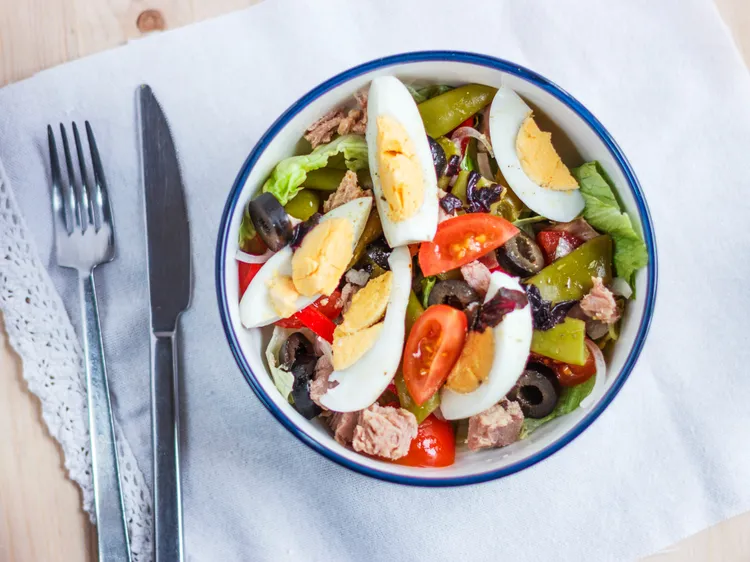
Salad Niçoise
The definitive summer main course salad.
Serves 4 | Active time: 30 minutes
Compose, don't mix. A proper Niçoise is arranged - each element in its own section on the plate, not tossed together.
The components:
- 4 ripe tomatoes, quartered (or 200g cherry tomatoes, halved)
- 200g French beans, blanched 3 minutes, refreshed in cold water
- 4 eggs, soft-boiled 6.5 minutes, peeled and halved (the yolk should be jammy)
- 200g good tuna (fresh-seared, or tinned in olive oil - the very best tinned tuna for this application)
- 8 anchovy fillets
- 80g good black olives (Niçoise olives if available)
- 4 spring onions, sliced
- A handful of fresh basil
The dressing: 4 tbsp good olive oil + 1.5 tbsp red wine vinegar + 1 tsp Dijon mustard + ½ tsp honey + salt + pepper. Shake in a jar.
Arrange each component in its own section on 4 plates or one large platter. Drizzle the dressing over everything. Serve immediately.
Summer Pudding
The British summer dessert - bread soaked with the juices of summer berries.
Serves 6 | Active time: 20 minutes | Setting: overnight
Place 700g of mixed summer berries (raspberries, redcurrants, blackcurrants, strawberries) in a saucepan with 80g of caster sugar and 2 tbsp of water. Heat gently until the berries begin to burst and the sugar dissolves - approximately 5 minutes. The berries should remain largely intact but have released their juice. Cool.
Line a 1-litre pudding basin with cling film (overhang generously). Trim 8–10 slices of good white bread, crusts removed, to fit the basin: one circle for the base, strips to line the sides, and a circle for the top.
Dip each bread piece briefly in the berry juices until completely saturated (bright red all the way through). Line the basin, filling any gaps.
Pour the berries and remaining juice into the centre. Top with the final bread circle, saturated in juice. Fold the cling film over the top. Place a plate on top and weight it with tins. Refrigerate overnight.
Unmould by inverting onto a serving plate. The bread should be completely dark red, no white patches visible. If any white patches remain, spoon additional reserved berry juice over them.
Serve with: Thick cream or clotted cream.
Charred Courgette with Lemon and Ricotta
A simple summer starter or side - 15 minutes.
Using a vegetable peeler or mandoline, cut 2 medium courgettes (18cm) into long, thin ribbons. Toss with a little olive oil and salt.
Option A (raw): Dress the raw ribbons with juice of ½ lemon, 2 tbsp good olive oil, flaky salt, and a generous handful of shaved Parmesan or pecorino. Leave 10 minutes. The lemon slightly "cooks" the courgette.
Option B (charred): Grill the ribbons on a very hot griddle pan or BBQ - 1-2 minutes per side until grill marks appear. Dress as above.
Serve on: A spread of good ricotta (250g, seasoned with salt and lemon). Scatter fresh basil, mint, or dill. Drizzle with olive oil.
Peach and Prosciutto with Burrata
The summer assembly plate - 10 minutes.
The Italian combination of sweet ripe stone fruit with salty cured meat and creamy cheese is among the most satisfying things about summer eating.
Halve and stone 3 ripe peaches or nectarines. Tear 150g of prosciutto crudo into large pieces. Place 2 burrata balls on a large platter. Arrange the peaches and prosciutto around and between the burrata. Drizzle with the best olive oil available. Scatter fresh basil leaves and a crack of black pepper. Season lightly with flaky salt.
Eat immediately - burrata begins to separate if it sits too long.
Elderflower Cordial
Make when the blossom is at peak (early June). Keeps 6 months refrigerated.
Gather 20-25 elderflower heads when fully open and fragrant (avoid any that are browning or smell unpleasant). Shake gently to remove any insects.
Syrup: Combine 1.5kg caster sugar with 1 litre of boiling water. Stir until dissolved. Cool to warm.
Add the flower heads, 2 lemons (sliced), and the zest of 2 additional lemons. Stir. Cover. Leave for 24-48 hours.
Strain through muslin or a very fine sieve. Bottle in sterilised bottles. Refrigerate.
Uses: Dilute approximately 1:10 with sparkling or still water. Add to Prosecco or Champagne (2 tbsp per glass). Use in panna cotta, summer salad dressings, or as a glaze for summer cakes.
The Summer Cook's Principles
Eat at room temperature. Refrigerated tomatoes, cheeses, stone fruit, and cured meats lose their flavour. Remove from the refrigerator 30 minutes before serving.
Cold dishes are a summer genre. Gazpacho, salad Niçoise, summer pudding, the tomato salad - these are not lesser versions of warm food. They are the appropriate format for summer eating and make no apology for being cold.
The best ingredient needs the least cooking. A peak-season tomato is better raw than cooked. A perfectly ripe peach is better as it is than poached. The summer cook's restraint is a form of respect for the ingredient.
🔗 Continue Through Summer
Latest