Autumn Seasonal Cooking: What to Cook September-November
The richest cooking season - wild mushrooms, game, squash, apples, and the return of warming one-pot preparations
Autumn is the richest cooking season of the year. The abundance of summer - tomatoes, stone fruit, courgettes, fresh herbs - gives way to something deeper and more satisfying: the earthy, complex flavours of wild mushrooms, the sweetness of butternut squash and parsnips, the tartness of cooking apples and quinces, the richness of game birds and venison. The cooking shifts from the lightness and restraint of summer to warming braises, hearty soups, and the comfort foods that the cooling evenings call for.
It is also the season that feeds directly into Christmas. The wild mushrooms of October and November are at their most abundant. The root vegetables of November become the Christmas sides of December. The apples and pears of September peak at the same time as the gamekeeping season opens.
What's in Season: Month by Month
September
Apples (early season): Discovery, Worcester Pearmain, and the first Cox's Orange Pippins. British apple season runs from August through November, with the best eating varieties in September-October.
Wild mushrooms: The great mushroom season. Ceps (porcini) are at their peak in September and October. Chanterelles through September. Hen of the woods, velvet shank, and oyster mushrooms through November.
Pears: William and Conference pears from British orchards. Best bought slightly firm and allowed to ripen at room temperature until the neck yields to gentle pressure.
Figs (from Mediterranean imports): The end of the fig season - at their most concentrated and sweet in late September.
Blackberries (wild): The forager's autumn harvest, free from hedgerows. Best combined with apples in crumbles and pies.
Sea bass: Still excellent through September and October.
Mackerel: Remains excellent through autumn.
October
Butternut squash and pumpkins: The peak of the British squash season. Butternut squash is the most versatile - excellent roasted, puréed into soup, stuffed, or used in pasta and risotto. A good butternut squash roasted at 200°C with olive oil, sage, and a drizzle of honey is one of the great October side dishes.
Celeriac: The knobbly, underrated root vegetable with a flavour somewhere between celery and parsley. Excellent as a remoulade (raw, julienned, dressed with Dijon mustard mayonnaise - the classic French first course), roasted until caramelised, or puréed with butter into a silky gratin.
Game birds (pheasant and partridge): The pheasant season opens October 1st in the UK; partridge on September 1st. Both are excellent roasted simply (like chicken but leaner - needs protection from the oven's drying heat), braised slowly in cider or red wine, or made into a pot pie.
Chestnuts: Fresh British chestnuts from late September through November. Roast over an open fire or in the oven (score the shell first, 200°C for 20 minutes). Peel while hot and add to stuffing, soups, and Brussels sprouts (see the Christmas sides recipe in 8 Christmas Sides You Can Make Ahead).
November
Parsnips: At their sweetest after the first frost - the cold converts the parsnip's starch to sugar. Roasted with honey and thyme alongside the Christmas preparation; puréed into a silky soup; or raw and grated into a salad.
Celeriac (peak): November celeriac is at its best - the skin is thicker, the flesh more dense and concentrated.
Brussels sprouts: Appear in November and are best from mid-November through January. Like parsnips, they improve after cold exposure.
Venison: Available throughout the season from stalked wild deer. Lean, rich, and deeply flavoured - farmed venison is available year-round; wild is specifically autumnal.
Jerusalem artichokes: The knobbly, nutty root - available October through February. Roasted until crispy, puréed into a silky soup (with truffle oil if wanted, though olive oil and cream work equally well), or sliced thin and fried as chips.
Quinces: The golden, fragrant autumn fruit that cannot be eaten raw but becomes extraordinary when cooked. Membrillo (quince paste) is the classic preparation - cooked to a thick, ruby-red paste that is the perfect companion for aged cheese. Also excellent as a compote with game.
The Autumn Recipes
Wild Mushroom Risotto
The simplest way to celebrate the mushroom season.
Serves 4 | Active time: 30 minutes
Reconstitute 20g of dried porcini in 200ml of boiling water (20 minutes). Strain the soaking liquid through a fine cloth - this is concentrated mushroom flavour that goes into the risotto stock. Finely chop the rehydrated porcini.
Sauté 300g of fresh wild mushrooms (or chestnut mushrooms) in butter over high heat until golden (5-6 minutes). Set aside.
In the same pan: sauté 1 diced shallot and 2 cloves garlic in 2 tbsp butter. Add 300g risotto rice. Toast 2 minutes, stirring. Add 150ml white wine - stir until absorbed.
Begin adding hot stock (the mushroom soaking liquid + 1 litre of warm vegetable or chicken stock, combined) one ladleful at a time, stirring until each addition is absorbed before adding the next. This takes 18-22 minutes of steady stirring. The rice should be al dente - firm to the bite but cooked through.
Remove from heat. Fold in the sautéed mushrooms, 40g of cold butter cut into cubes, and 50g of grated Parmesan. Season generously. Leave covered for 2 minutes. Serve immediately - risotto waits for no one.
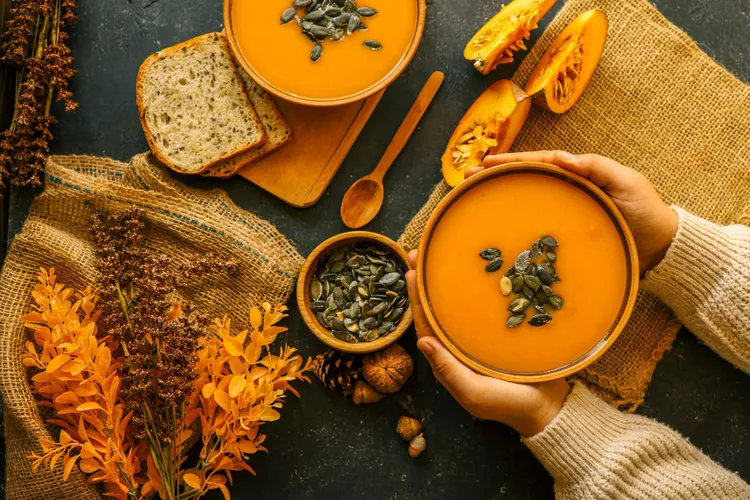
Butternut Squash Soup
The autumn soup - simple, warming, versatile.
Serves 6 | Active time: 15 minutes | Total: 45 minutes
Peel, deseed, and cube 1.2kg of butternut squash. Toss with olive oil, salt, and a pinch of chilli. Roast at 200°C for 25 minutes until golden at the edges.
Meanwhile, sauté 1 large diced onion and 3 garlic cloves in olive oil (8 minutes). Add 1 tsp ground cumin, 1 tsp smoked paprika.
Add the roasted squash and 1 litre of vegetable or chicken stock. Simmer 10 minutes. Blend until smooth. Season with salt, a squeeze of lemon, and a pinch of nutmeg.
The finishing drizzle: Good olive oil, crème fraîche, or coconut cream (for a dairy-free version). Scatter toasted pumpkin seeds and a few fresh herbs.
Game Pie (Pheasant or Venison)
The centrepiece of an autumn dinner - a deep-filled pie that can be made 2 days ahead.
Serves 6 | Active time: 45 minutes | Total: 2 hours + pastry
The filling: Cut 800g of pheasant breasts (or venison shoulder) into bite-sized pieces. Brown in batches in a hot pan with oil. Remove. In the same pan, sauté 1 onion, 2 carrots, 2 sticks celery. Add 2 cloves garlic, 2 tbsp flour, cook 2 minutes. Add 300ml red wine - let it bubble. Add 400ml game or beef stock, 2 bay leaves, 3 sprigs thyme, 100g smoked lardons. Return the meat. Simmer covered for 1-1.5 hours until tender. Cool completely.
The pastry: See Rough Puff Pastry in the Baking collection for a homemade lid, or use shop-bought all-butter puff pastry.
Assemble: Pour the cooled filling into a deep pie dish. Cover with the pastry. Brush with beaten egg. Make steam holes. Bake at 200°C for 25-30 minutes until the pastry is deeply golden.
Celeriac Remoulade
The classic French first course - best in October and November.
Peel and quarter a medium celeriac. Cut into very thin julienne strips (see Essential Knife Cuts) or grate on the coarse side of a box grater. Toss immediately with the juice of ½ lemon (prevents browning).
Remoulade dressing: 4 tbsp mayonnaise (see How to Make Mayonnaise) + 2 tsp Dijon mustard + 2 tsp white wine vinegar + 1 tsp capers, finely chopped + salt + white pepper.
Combine celeriac and dressing. Rest in the refrigerator for 30 minutes - the celeriac softens very slightly and absorbs the dressing.
Serve with: shaved parmesan, a handful of flat-leaf parsley, and toasted walnuts. As a starter, or alongside smoked fish or cold cuts.
Apple and Blackberry Crumble
The definitive autumn dessert - see Fruit Crumble Recipe: The Perfect Topping, Every Season in the Desserts collection for the complete recipe.
The apple and blackberry combination is the definitive autumn fruit pairing - the tartness of a Bramley apple against the bramble-sweetness of wild blackberries, covered with a buttery oat crumble topping.
Quince Membrillo (Quince Paste)
The autumn preserve that keeps 6 months and pairs with any aged cheese.
Peel, core, and roughly chop 1kg of quinces. Simmer in water to cover until completely soft (25-30 minutes). Drain. Weigh the cooked quince. Add an equal weight of caster sugar. Cook over low heat, stirring constantly (it scorches easily) until the paste turns ruby red and pulls away from the sides of the pan (40-60 minutes). Pour into a parchment-lined tin. Cool completely. Cut into slabs. Store wrapped in parchment.
The Autumn Pantry
Autumn is the time to build the pantry for winter and Christmas:
Preserved: Make sloe gin (sloes in gin, equal weight sugar, 3 months minimum). Make damson jam. Pickle beetroot, red cabbage, green walnuts. Make membrillo.
Foraged (where legally permitted): Ceps, chanterelles, and oyster mushrooms in September and October. Sloes in October after the first frost. Chestnuts in October.
Stocked: Dried porcini (bought or dried from the season's fresh mushrooms), dried pulses for winter soups, the dried fruit and suet for Christmas pudding (see Christmas Pudding, Mince Pies and Festive Baking).
The Autumn Cook's Principles
Roast to develop flavour. Autumn's vegetable abundance - squash, parsnips, carrots, celeriac - all improve dramatically with roasting. The Maillard reaction and caramelisation produce flavours that steaming or boiling cannot. Autumn cooking is roasting and braising season.
Embrace the warm one-pot. The evening temperatures of October and November call for dishes that cook slowly and fill the kitchen with fragrance - the game pie, the beef stew, the mushroom risotto. These are not compromises for cold weather; they are the correct food for the season.
Prepare for Christmas. The overlap between late autumn cooking and Christmas preparation is natural and intentional. Making Christmas pudding in October, making mincemeat in November, storing quince paste and sloe gin that will be opened in December - autumn is the preparation season for winter's celebration.
🔗 Continue Through the Seasons
Latest