Easter Roast Lamb: The Complete Spring Dinner Guide
Slow-roasted shoulder for effortless falling tenderness vs. roast leg for elegant sliceability - with all the spring sides that make Easter dinner distinctly its own occasion
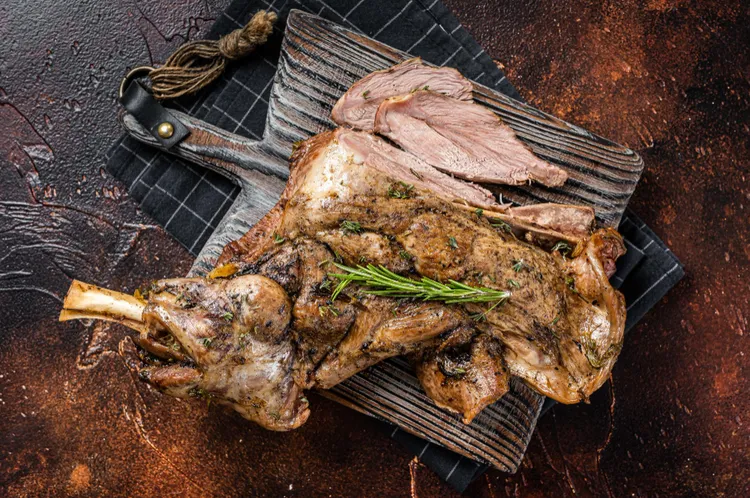
Lamb is Easter. The association is ancient - the Paschal lamb is one of the oldest symbols in both Jewish and Christian traditions, and across the Mediterranean world, the Middle East, and much of Europe, lamb is the default Easter centrepiece regardless of whether the occasion is observed religiously or simply as a spring gathering.
It is also, conveniently, the season when British and northern European lamb is at its most flavourful. Spring lamb - the new season's animals born in late winter and early spring - is the most prized designation, young and mild. The first proper spring asparagus, Jersey Royals, and spring greens arrive at the same time, making Easter the most naturally coherent seasonal menu of the year.
This guide covers two preparations: the slow-roasted shoulder (the choice for a relaxed, hands-off Easter where the lamb falls apart at the suggestion of a fork) and the roast leg (for elegance and clean slices at the table). Both have their merits; the choice depends on the occasion and how you want the meal to feel.
The Two Methods
Method 1: Slow-Roasted Lamb Shoulder (The Effortless Version)
The argument for shoulder over leg: Lamb shoulder has significantly more fat and connective tissue than the leg, which makes it the natural choice for slow cooking. Cooked at a very low temperature for 4-5 hours, the collagen in the connective tissue breaks down into gelatin, basting the meat from within and producing a falling-tender result that cannot be dry or disappointing. You cannot over-cook lamb shoulder - at the low temperatures involved, the meat simply becomes more tender the longer it goes.
Serves 6-8 | Active time: 15 minutes | Total time: 5-6 hours
Ingredients:
- 2.2–2.5kg bone-in lamb shoulder
- 6 cloves garlic, cut into thin slivers
- 4 sprigs rosemary, broken into smaller sprigs
- 2 sprigs thyme
- 2 tbsp olive oil
- 1 tsp fine sea salt
- 1 tsp black pepper
- 300ml white wine, water, or stock
- 1 large onion, halved
- 2 carrots, roughly broken
Method:
Score and stud: Using a small, sharp knife, make 20-25 deep incisions all over the surface of the shoulder. Push a sliver of garlic and a small sprig of rosemary into each incision - these perfume the meat from within during the long cooking.
Season: Rub the entire surface with olive oil, then salt and pepper.
The base: Place the halved onion and broken carrots in the base of a deep roasting tin - these prevent the lamb from sitting directly in the liquid and serve as a flavour base for the sauce. Add the wine or stock.
Cover tightly: Seal the roasting tin very tightly with two layers of foil - the steam trapped inside is what produces the slow-braised tenderness. Any gaps in the foil allow the steam to escape and the meat to dry.
Cook: Preheat the oven to 160°C (fan). Roast covered for 4 hours.
After 4 hours: Remove the foil. Increase the oven to 200°C (fan). Roast uncovered for 30-40 minutes until the exterior is golden and slightly caramelised.
Rest: Remove from the oven. Cover loosely. Rest for 20 minutes. The lamb will be so tender it falls apart at a fork - pull the meat into large pieces at the table using two forks.
The sauce: Pour the braising liquid through a fine sieve into a small saucepan. Skim off excess fat. Reduce over medium-high heat by half for a glossy, concentrated sauce. Adjust seasoning.
Method 2: Roast Leg of Lamb (The Elegant Version)
The argument for leg over shoulder: A roast leg of lamb produces clean, elegant slices suitable for carving at the table. It is the presentation for a more formal Easter gathering. The leg is leaner than the shoulder, which means it cooks faster and requires more attention to avoid drying out. The key: don't overcook it, rest it properly, and serve it with the carved slices fanned across a platter.
Serves 6-8 | Active time: 20 minutes | Total time: 1 hour 45 minutes - 2 hours 15 minutes (including rest)
Ingredients:
- 2.2–2.5kg bone-in leg of lamb
- 8 cloves garlic, cut into slivers
- 4 sprigs rosemary
- 2 tbsp olive oil
- 1 tsp fine sea salt
- 1 tsp black pepper
- Zest of 1 lemon
Method:
Score, stud with garlic and rosemary, and rub with oil and seasoning as above. Add lemon zest to the outside rub.
Preheat oven to 220°C. Place lamb on a rack in a roasting tin. Roast at 220°C for 20 minutes (the initial high heat develops the crust and begins the Maillard reaction on the exterior).
Reduce to 190°C. Continue roasting for approximately 15 minutes per 500g (for a 2.3kg leg: approximately 70 minutes more at 190°C).
Temperature targets:
- Pink and juicy (medium-rare): 55–58°C - pull at 53°C
- Pink throughout (medium): 60-65°C - pull at 58°C
- Fully cooked (well done): 70°C+
Rest for 25-30 minutes under a loose foil tent. The resting is as important for lamb as for any other large joint - the juices redistribute throughout the meat during resting.
Carve by slicing along the bone and cutting clean slices at the thickest point.
The Easter Table: Spring Sides
Easter dinner is specifically a spring table - the accompaniments should reflect the season's first fresh produce.
Minted New Potatoes
The essential Easter side. Scrub (don't peel) 1kg of Jersey Royals or small new potatoes. Cover with cold salted water. Bring to a boil. Simmer for 15-18 minutes until completely tender. Drain. Return to the pan with 40g of cold butter cut into cubes and a generous handful of fresh mint leaves. Shake to coat in the butter and mint. Season. Serve immediately.
Asparagus with Hollandaise or Butter
British asparagus season begins in late April, making this the perfect Easter accompaniment. Snap the woody ends from 500g of asparagus (they break naturally at the right point). Bring a wide pan of salted water to a boil. Blanch the asparagus for 2-3 minutes until bright green and just tender. Drain.
With hollandaise: A classic Easter pairing. See the technique in How to Make Mayonnaise (and Emulsification) for the emulsification principle behind hollandaise.
With brown butter: Heat 50g of butter in a small pan over medium heat until golden and nutty (beurre noisette - see How to Brown Butter). Pour over the drained asparagus immediately. Season with lemon juice and flaky salt.
Spring Greens with Garlic
Heat 2 tbsp olive oil in a wide pan over high heat. Add 2 cloves thinly sliced garlic - cook 30 seconds. Add 500g shredded spring greens or spring cabbage. Toss constantly for 2-3 minutes until wilted and bright green. Season. Add a squeeze of lemon juice. The simplest and most perfectly seasonal green side.
Roasted Carrots with Honey and Thyme
Peel 600g baby carrots or medium carrots (halved lengthways). Toss with 2 tbsp olive oil, 2 tbsp honey, fresh thyme, salt and pepper. Roast at 200°C for 25-30 minutes until caramelised.
A Simple Easter Salad
Combine: baby spinach or mixed leaves, shaved radishes (spring's most beautiful vegetable), cucumber, soft-boiled eggs (halved), and a simple lemon and Dijon vinaigrette. The softness of the egg yolk against the sharp lemon dressing is a spring combination that works at every Easter table.
The Mint Sauce Debate
British tradition insists on mint sauce with lamb. French tradition (and much of the Mediterranean world) would not consider it. The argument:
For mint sauce: The acid of the vinegar cuts the richness of the lamb fat; the mint's cooling, slightly sweet character is a classic lamb companion that has been served together for centuries.
Against mint sauce (or for mint in other forms): Mint jelly is sweet without the acid complexity. Mint incorporated into the minted new potatoes is a more integrated use.
The recipe: This is the correct mint sauce, not the bottled approximation. Finely chop a large handful of fresh mint leaves. Combine with 1 tbsp of caster sugar and 2 tbsp of boiling water. Stir until the sugar dissolves. Add 3 tbsp of white wine vinegar. Allow to stand for 10 minutes. Taste - adjust the balance of sugar and vinegar to preference.
The Easter Desserts
Easter dessert means one thing in Britain: hot cross buns have been eaten at breakfast (see Easter Baking), and the dessert question is open.
The seasonal choice: A pavlova (see Pavlova and Eton Mess in the Desserts pillar) with spring fruit - rhubarb compote (the first forced rhubarb of the year at Easter), strawberries if the season is early, or a lemon curd (see Lemon Tart) spread over the cream.
The traditional choice: Simnel cake (see Easter Baking) - a fruitcake with marzipan.
Make-Ahead Strategy for Easter Dinner
| When | What to Prepare |
|---|---|
| 2 days ahead | Marinate the lamb leg (if roasting). Make the mint sauce |
| 1 day ahead | Make the roasted carrot recipe through to before roasting. Prepare the salad dressing |
| Morning of Easter | Score and stud the shoulder (if slow-roasting - goes into the oven 5 hours before serving) |
| 2 hours before | Put the leg of lamb in (if roasting). Prepare the asparagus and new potatoes for cooking |
| 30 minutes before | Rest the lamb. Cook new potatoes, spring greens, asparagus. Make sauce from braising liquid |
🔗 Complete Easter Weekend
Latest