Matcha vs. Coffee: An Honest Comparison
We're not here to declare a winner. We're here to help you choose what's right for you.
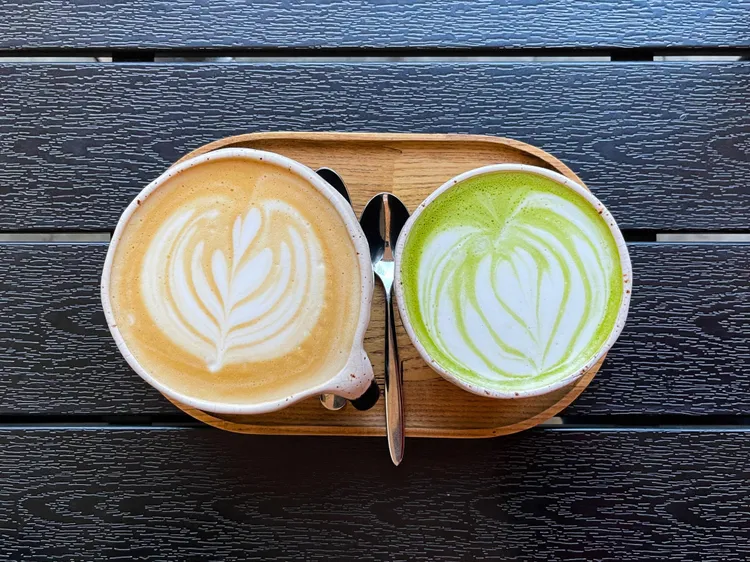
The internet would love for this to be a war. "Matcha beats coffee." "Coffee is still king." "Quit espresso forever." But the reality is more nuanced, more personal, and more interesting than any hot take suggests.
Both matcha and coffee are remarkable beverages with deep cultural roots, genuine cognitive benefits, and devoted followings. They're also genuinely different in almost every dimension - how they feel, how they taste, how they affect your body, and what they cost.
This is the honest, data-grounded comparison you've been looking for. No agenda. No wellness-culture cheerleading. Just the facts.
Want to understand matcha's energy first? Read L-Theanine: The Science Behind Matcha's Calm Energy before diving in - it'll make this comparison make a lot more sense.
Caffeine: How Much, and How It Feels
This is the comparison most people start with - and the one that's most frequently misunderstood.
By the Numbers
| Matcha (1.5g serving) | Espresso (single shot, 7g) | Drip Coffee (240ml) | |
|---|---|---|---|
| Caffeine | ~35-50mg | ~60-75mg | ~95-165mg |
| Onset | 30-45 min | 15-30 min | 15-30 min |
| Peak | ~60-90 min | ~45-60 min | ~45-60 min |
| Duration | 4-6 hours | 3-5 hours | 3-5 hours |
Matcha contains less caffeine per serving than most coffee preparations. But caffeine amount is only part of the story.
The Quality of the Energy
Coffee's caffeine hits fast, peaks sharply, and for many people - especially those who are caffeine-sensitive - produces anxiety, elevated heart rate, and a noticeable crash as it wears off.
Matcha's caffeine operates differently. The presence of L-theanine - the amino acid found in high concentrations in shade-grown matcha - modulates caffeine's stimulant effects in several key ways: reducing jitteriness, smoothing the onset curve, extending the duration, and preventing the sharp crash. The result is a qualitatively different experience - calmer, more sustained, more focused.
This isn't subjective wellness-culture language. It's a pharmacological effect with a solid body of research behind it.
Bottom line: If you want maximum alertness fast, coffee wins. If you want sustained focus without anxiety, matcha wins.
Anxiety and the Jitter Factor
For the significant portion of the population who experience anxiety, jitteriness, or heart palpitations with coffee - matcha is often a genuinely transformative switch.
The L-theanine in matcha directly counteracts the anxiety-producing mechanism of caffeine by promoting GABA (the brain's calming neurotransmitter) and alpha brain wave activity. Many people who've given up coffee due to anxiety find they can drink matcha without any of the negative effects, while still enjoying cognitive enhancement.
That said: if you have severe caffeine sensitivity, matcha isn't caffeine-free. It will still affect you - just more gently. Start with a small amount and see how your body responds.
Taste: Completely Different Worlds
There's no objective winner here - it's purely a matter of what you love.
Coffee is roasted, bitter, acidic, with a thousand flavor variations depending on origin, roast level, and preparation. Its complexity comes from the Maillard reaction - the chemical transformation that happens when organic compounds are heated.
Matcha is vegetal, umami, slightly sweet, with an earthy depth and a long, creamy finish. Good matcha has almost no bitterness. Its complexity comes from the raw chemistry of the tea leaf - chlorophyll, L-theanine, catechins, and over 200 volatile compounds.
The key point: they're not comparable. Choosing between them for taste is like choosing between red wine and sake - the question isn't which is better, it's which you prefer.
Want to develop your matcha palate? Our Complete Matcha Tasting Guide walks you through evaluating a cup of matcha like a professional.
Stomach: Acidity and Digestive Comfort
Coffee is highly acidic (pH around 5), and for many people - particularly those with acid reflux, gastritis, or sensitive stomachs - this causes real discomfort. The oils in coffee also stimulate gastric acid production, which can be problematic on an empty stomach.
Matcha has a neutral to slightly alkaline pH and contains compounds that can actually be soothing to the digestive system. Most people find it much gentler on the stomach than coffee, and it's generally safe to drink on an empty stomach.
If coffee makes your stomach unhappy, this is one of the strongest practical arguments for trying matcha instead.
Cost: The Honest Math
Good matcha is expensive. Let's not pretend otherwise.
A quality ceremonial grade matcha (30g tin, around $25-35) makes approximately 20 servings at 1.5g per cup - coming out to around $1.25-1.75 per serving. That's comparable to a mid-range specialty coffee made at home.
The expensive part is the high-end ceremonial matcha ($40-50 per 30g), which brings the per-cup cost to $2-2.50. Still less than a café latte, but notably more than a standard home-brewed coffee.
Culinary grade matcha is much more affordable and perfectly suitable for lattes and baking - typically $10–18 per 30g.
See our Best Matcha Powders of 2025, Ranked for the best value options at each price point.
Health: Antioxidants, Ritual, and the Big Picture
Both matcha and coffee have legitimate, evidence-backed health benefits.
Coffee is one of the richest dietary sources of antioxidants for most Western coffee drinkers. It's associated with reduced risk of type 2 diabetes, Parkinson's disease, and liver disease. The evidence base is enormous.
Matcha is also extraordinarily rich in antioxidants - particularly EGCG (epigallocatechin gallate), a catechin with well-studied anti-inflammatory and neuroprotective effects. Because you consume the whole leaf rather than an infusion, the antioxidant density per serving is significantly higher than brewed green tea.
Neither one is a magic health bullet. Both, consumed in reasonable amounts as part of a balanced diet, appear to offer genuine benefits.
Who Should Switch (and Who Shouldn't)
Try matcha instead of coffee if:
- Coffee makes you anxious, jittery, or gives you heart palpitations
- You have acid reflux or a sensitive stomach
- You crash hard in the afternoon and need something more sustained
- You're curious about a genuinely different kind of focus
Stick with coffee if:
- You love the taste and ritual of coffee and nothing else comes close
- You need maximum alertness very quickly
- You're on a tight budget (coffee is cheaper at scale)
- You genuinely don't notice any downsides to your current coffee habit
Try both, honestly. Start your mornings with a properly whisked bowl of ceremonial matcha for two weeks and pay close attention to how you feel. The difference might surprise you.
🔗 Continue Exploring
Latest