The Best Simple White Sandwich Loaf
The reference bread - every fundamental technique in one reliable recipe that works first time
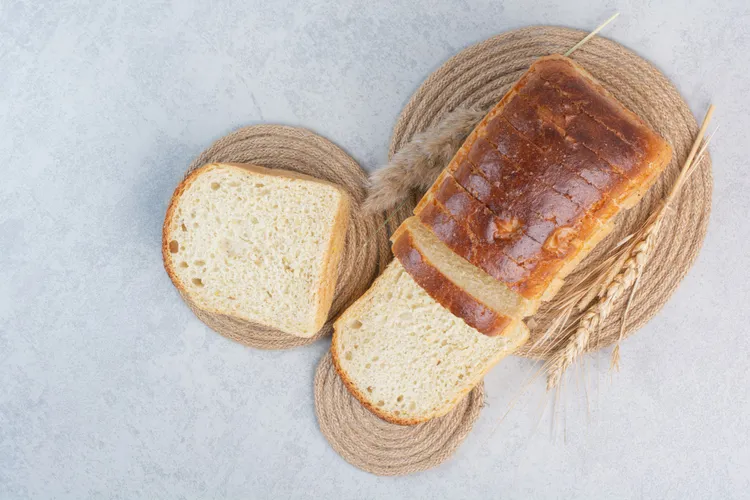
Before sourdough. Before focaccia. Before croissants. Make this bread. Not because it is the most impressive, or the most technically interesting, or the most photographed. Because it is the one that teaches everything.
A simple white sandwich loaf is the complete course in yeasted bread baking - in miniature, compressed, approachable. You will learn what active yeast smells like when it is working. You will learn what a proved dough looks and feels like. You will knead for the first time and feel the dough change under your hands from rough and ragged to smooth and elastic. You will learn the poke test and the hollow-thump test. You will slice your first loaf and see the even, open crumb inside.
And then, the second time you make it, all of this will be faster and more intuitive. And the third time, you will begin to adapt it - adding seeds, changing the prove time, trying wholemeal flour - because you will understand what you are doing well enough to experiment.
This is the recipe. No shortcuts, no machines required, and no previous experience assumed.
Ingredients
Makes 1 × 900g loaf | Active time: 25 minutes | Total time: 3 hours
- 500g strong white bread flour - not plain flour; the higher protein content (12-14%) develops the gluten structure that bread needs. See The Science of Gluten for why this matters.
- 7g instant dried yeast (1 sachet) - instant yeast can be added directly to flour without pre-activating
- 10g fine sea salt
- 1 tsp caster sugar - feeds the yeast and encourages initial activity
- 300ml lukewarm water - between 30-35°C. Too cold: yeast activity is sluggish. Too hot (above 38°C): yeast dies.
- 2 tbsp neutral oil or softened butter - adds tenderness and extends shelf life
- A little extra flour for kneading
Equipment:
- Large bowl
- Clean work surface
- 900g (2lb) loaf tin, greased
- A clean tea towel or cling film for covering
- Wire rack for cooling
Method
Step 1: Mix the dough (5 minutes)
In a large bowl, combine the flour, instant yeast, sugar, and salt. Mix briefly with your hand to combine. Make a well in the centre.
An important note on salt and yeast: Salt in direct, concentrated contact with yeast inhibits it. In this recipe they are both mixed into the flour and sufficiently diluted that it is not a problem - but avoid pouring salt directly onto a small pile of yeast.
Add the lukewarm water and oil or softened butter to the well. Mix with your hand, bringing the flour into the liquid from the edges, until a rough, shaggy dough forms and no dry flour remains at the bottom of the bowl.
Turn out onto a clean, unfloured work surface.
Step 2: Knead (10 minutes)
This is the most important step - and the one most home bakers cut short. Kneading develops the gluten network that gives bread its structure and allows it to trap the CO₂ produced by yeast. Underknead the dough and the bread will be dense with poor structure. Knead sufficiently and the dough becomes a different material: smooth, elastic, cohesive.
The technique:
- Push the heel of your hand into the dough, away from you
- Fold the far edge back toward you
- Rotate the dough 90°
- Repeat
Continue for 8-10 minutes. The dough will start rough and sticky. By 5 minutes, it will be smoother. By 10 minutes, it should be:
- Smooth - no rough patches, no torn surface
- Elastic - it springs back immediately when poked
- Slightly tacky but not sticky - it doesn't cling to the work surface
- Warm from the friction of kneading
The windowpane test: Take a small piece of dough. Stretch it gently between your fingers. If properly kneaded, it will stretch thin enough to see light through it without tearing - like a translucent membrane. This indicates sufficient gluten development. If it tears immediately, continue kneading for 2-3 more minutes.
If the dough is sticking: Resist adding flour - it stiffens the dough and makes the loaf dense. Instead, use a bench scraper to lift the dough, let it rest for a minute, and continue. A slightly sticky dough often becomes less sticky as the gluten develops and the surface becomes more organised.
Step 3: First prove - bulk fermentation (1 to 1.5 hours)
Shape the kneaded dough into a smooth ball. Place in a lightly oiled bowl and cover with a damp tea towel or cling film. Leave at room temperature (ideally 22-25°C) until roughly doubled in size.
How long this takes depends entirely on temperature. At 24°C, roughly 1 hour. At 20°C, 1.5 hours or more. At 26°C, 45 minutes. Use the size - not the clock - as your guide.
The poke test: Press a floured finger firmly into the proved dough about 2cm deep.
- If the indentation springs back immediately: the dough is under-proved - continue proving
- If the indentation springs back slowly, about halfway: this is the correct proved state
- If the indentation doesn't spring back at all: the dough is over-proved - shape immediately and proceed to the second prove without delay
Over-proved dough has exhausted its sugar supply and the gluten structure has begun to weaken. It can still produce acceptable bread, but the structure will be less open and the oven spring will be reduced.
Step 4: Shape the loaf (3 minutes)
Gently turn the proved dough out onto a lightly floured surface. Do not punch it down aggressively - you want to retain some of the gas.
The shaping method:
- Flatten the dough gently into a rough rectangle approximately the width of your loaf tin
- Fold the top third down to the centre
- Fold the bottom third up over that (like folding a letter)
- Roll the dough firmly toward you into a tight cylinder, sealing the seam with each roll
- Pinch the final seam firmly closed
Place the shaped loaf seam-side down in the greased tin. The shaped dough should fit snugly - filling about two-thirds of the tin's height.
Step 5: Second prove (45-60 minutes)
Cover the tin loosely with a damp tea towel or oiled cling film (the cling film must not touch the surface - use it as a loose tent). Leave at room temperature until the dough has risen to dome just above the rim of the tin.
The visual test: The loaf is ready for the oven when it has risen clearly above the tin's edge and looks pillowy and alive. A domed top is correct; a flat top means it needs more time.
Preheat the oven to 220°C (fan) during the second prove, so it is fully hot when the bread goes in.
Step 6: Bake (30-35 minutes)
Optional: score the top. A single slash down the centre of the loaf with a sharp knife or lame, about 1cm deep, controls where the loaf opens during baking and produces a more professional appearance. Do this immediately before going into the oven.
Place the tin on the middle shelf. Bake for 30-35 minutes until:
- Deep golden-brown on the surface - not pale gold; a properly baked loaf is deeply coloured
- The sides of the loaf have pulled away from the tin slightly
- A skewer or thermometer inserted into the centre reads 93-96°C
The hollow thump test: Remove the loaf from the tin and tap the base firmly with your knuckles. A properly baked loaf sounds hollow - the interior structure has set and the moisture has largely evaporated. A dull thud means the centre is still doughy - return to the oven for 5 minutes (without the tin, directly on the shelf, so all surfaces can dry out).
Step 7: Cool completely (essential - minimum 45 minutes)
Place the loaf on a wire rack. Do not cut it for a minimum of 45 minutes, ideally 1 hour.
A hot loaf continues to bake internally via carryover heat, and the steam inside is still redistributing. Cutting into a hot loaf produces a gummy, slightly underdone interior that will set as it cools - but once cut, it cannot set properly. Wait.
Variations
Seeded Sandwich Loaf
Brush the surface of the shaped loaf with water or beaten egg immediately before baking. Scatter a generous handful of seeds (sesame, poppy, sunflower, linseed, or a mixture) over the surface, pressing gently. The seeds toast during baking and add flavour and texture.
For seeds throughout the loaf: add 60g of mixed seeds to the dough at the beginning of kneading.
Soft Milk Loaf
Replace 100ml of the water with 100ml of whole milk. Add 20g of softened butter (in addition to the oil). Increase the sugar to 2 tsp. The milk fat produces a more tender, softer crumb; the extra sugar accelerates browning. Prove and bake as above. Milk loaves are more tender but stale faster than water-based loaves.
Wholemeal Sandwich Loaf
Replace 200g of the strong white bread flour with 200g of wholemeal bread flour. Increase the water by 20ml (wholemeal flour absorbs more water). Add 1 tbsp of honey for flavour and to feed the yeast (wholemeal flour has fewer simple sugars for the yeast to consume). The loaf will be denser than the white version - this is expected and correct. See Rye Bread and Whole Grain Baking for the full science.
Garlic and Herb Pull-Apart Loaf
After shaping, divide the dough into 8-10 equal pieces. Roll each into a ball. Mix 60g of softened butter with 3 cloves of minced garlic, 2 tbsp of finely chopped parsley, and a pinch of salt. Brush each ball with the garlic butter. Arrange the balls in the tin in two rows. Prove as above. During baking, the balls merge slightly but can be pulled apart at the table - a highly social bread that requires almost no additional technique.
Understanding What Can Go Wrong
The loaf didn't rise at all: Yeast was inactive (old, killed by hot water, or not activated). Test yeast in warm water with sugar before using. Water temperature is the most common culprit - check with a thermometer.
The loaf rose during proving but collapsed in the oven: Over-proved - the gluten structure weakened before baking. The dough exhausted its food supply and the yeast CO₂ production slowed. The structure collapsed when the oven spring began and then the weakened gluten couldn't support it. Reduce the proving time next time.
The loaf is dense with small, tight holes: Either insufficient kneading (gluten underdeveloped), under-proved (insufficient gas development), or too much flour added during kneading (stiffened the dough). Knead longer; prove until the poke test confirms readiness; use a bench scraper rather than flour to handle sticky dough.
The crust is very thick and hard: Over-baked, or the oven temperature was too high. Reduce by 10°C and check internal temperature. Or cover loosely with foil for the final 10 minutes if the surface is darkening before the bread is baked through.
The loaf has a very large hole near the top: The shaping was too loose - a large air pocket was trapped near the surface during rolling. Shape more tightly next time, ensuring no large air pockets during the folding stage.
Storing Your Bread
At room temperature: In a sealed bag or wrapped in a cloth, 3-4 days. After this, make toast - lightly stale bread makes excellent toast.
Freeze: Slice the completely cooled loaf before freezing. Store slices in a sealed bag. Toast individual slices directly from frozen - 3-4 minutes in a toaster. Homemade bread freezes very well.
Do not refrigerate: The refrigerator's dry, cool environment accelerates staling (starch retrogradation happens faster in the cold). Frozen bread actually stays fresher than refrigerated bread.
Pro Tips
- Weigh everything, including the water. Measuring water by volume (ml) and weight (grams) are effectively the same (1ml water = 1g), but using a scale for everything keeps you at the scale rather than switching to measuring cups. Consistency matters in bread baking.
- Knead for the full 10 minutes. Set a timer. Most people stop at 5-6 minutes when the dough starts to feel smoother, but the gluten continues developing for another 4 minutes. The windowpane test is the objective measure - use it.
- The second prove is as important as the first. Under-proved at the second stage and the loaf bakes with less volume and denser crumb. Over-proved and the gluten weakens. The visual test (domed above the rim) is reliable - trust it over timing.
- Steam in the home oven: Place a roasting tin of boiling water on the bottom shelf when the bread goes in. The steam it produces keeps the surface of the loaf moist during oven spring, allowing more rise before the crust sets. This produces a better crust and more volume - the same principle as the Dutch oven for sourdough, applied to a tin loaf.
The Most Common Beginner Mistake: Adding Too Much Flour A sticky dough triggers the instinct to add more flour - and the result is a stiff, dense loaf with poor structure. The correct response to sticky dough is patience and a bench scraper, not more flour. As kneading develops the gluten network, the dough naturally becomes less sticky and more manageable. If you must flour the surface, do so sparingly - a light dusting, not a coating. Trust the process; the dough changes under your hands with time.
FAQ
Q: Do I need a stand mixer to make bread?
No - this recipe is designed for hand kneading. A stand mixer with a dough hook reduces the kneading time to 6-7 minutes on medium speed, but the result is the same. Hand kneading is preferable for learning because you can feel the gluten developing under your hands - the tactile feedback teaches you what properly developed dough feels like.
Q: Can I use plain flour instead of bread flour?
You can, but the result will be noticeably different - lower gluten content produces a bread that doesn't rise as high, has a tighter crumb, and is more prone to crumbling. Strong white bread flour (12-14% protein) is specifically formulated for bread baking and produces significantly better results. It is widely available at supermarkets.
Q: How do I know if my yeast is still active?
Dissolve 1 tsp of the yeast in 100ml of lukewarm water with 1 tsp of sugar. It should foam visibly within 5-10 minutes. No foam means the yeast is dead - replace it. Fresh packs of instant yeast are reliable up to the date on the packet; opened packets should be used within 3 months, stored in a sealed container in the refrigerator.
🔗 Continue Baking
Latest