Rye Bread and Whole Grain Baking
Why rye behaves differently, what to expect from whole grain flours, and three genuinely distinct rye breads
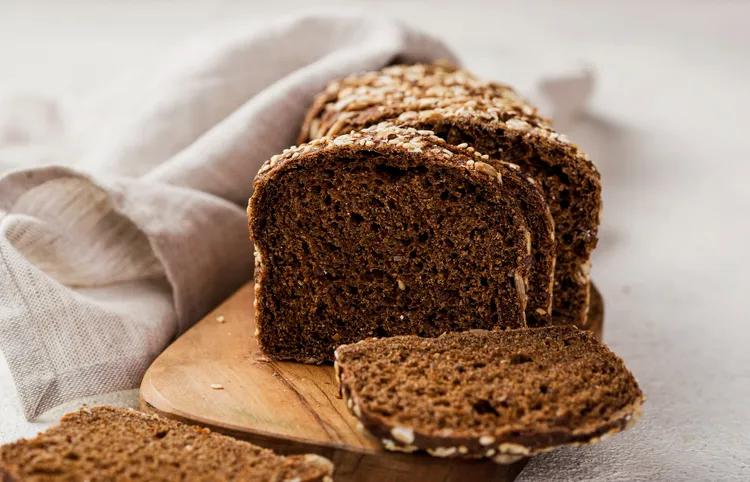
Rye bread has a reputation problem in most Western baking traditions. It is assumed to be heavy, dense, and difficult - a worthwhile health choice rather than a pleasurable eating experience. This assumption is incorrect, but it is understandable: rye bread made without understanding rye's specific properties does produce dense, heavy, sometimes gummy results. Rye bread made with that understanding produces breads with a complex, slightly sour, deeply satisfying flavour that white bread simply cannot achieve.
The key is understanding why rye behaves differently from wheat - because it does, fundamentally, at the structural level. Once the mechanism is clear, the techniques that produce good rye bread make immediate sense.
Why Rye Is Different: The Pentosan Story
Wheat flour forms gluten when mixed with water and worked (see The Science of Gluten). Rye flour contains glutenin and gliadin - the same proteins as wheat - but in much smaller quantities, and they are dominated by a different carbohydrate: pentosans.
Pentosans are complex, branching polysaccharides that behave completely differently from gluten proteins. When hydrated, they form a thick, sticky, viscous gel rather than an elastic network. This gel:
- Cannot trap gas the way gluten does - rye bread cannot rise as high as wheat bread
- Absorbs enormous quantities of water - a 100% rye dough has approximately 90% hydration (almost equal weights of flour and water), far higher than wheat bread
- Is responsible for rye's characteristic sticky, dense crumb - the gel sets during baking and produces a moist, dense, slightly sticky interior
- Does not require kneading - there is nothing to develop; the pentosans hydrate on their own with time
Rye flour is not wheat flour with added bran. It is a fundamentally different baking material that requires a different approach.
The Bran Factor in Whole Grain Baking
All whole grain flours (wholemeal wheat, rye, spelt, einkorn) contain bran - the outer layer of the grain that is removed to produce white flour. Bran:
- Cuts gluten strands during mixing, reducing the strength of the gluten network. This is why whole grain breads are denser than equivalent white breads even when made with high-protein flour - the bran physically disrupts the gluten.
- Absorbs water aggressively, requiring higher hydration to produce a workable dough.
- Slows fermentation slightly by creating a more challenging environment for yeast.
The practical implications:
- Always add 10-15% more water when substituting wholemeal for white flour
- Prove whole grain breads slightly longer than white breads
- Expect a denser crumb - this is not a failure, it is the nature of bran
Three Rye Breads
Bread 1: Dark Rye Loaf (80% Rye)
The most intensely flavoured rye bread in this collection - deeply dark, slightly sour, with a dense, slightly sticky crumb that is utterly unlike wheat bread. This is the bread of Scandinavia, Eastern Europe, and Northern Germany. Sliced thin, it carries smoked fish, strong cheese, and pickled things with authority.
Ingredients (Makes 1 × 900g loaf)
- 300g dark rye flour (whole grain rye - the darkest, most flavourful option)
- 75g strong white bread flour - provides the small amount of gluten that gives structure
- 7g instant dried yeast
- 2 tsp fine sea salt
- 1 tbsp caraway seeds (traditional, complementary to rye's earthiness; optional)
- 1 tbsp black treacle or molasses - adds colour, depth, and slight sweetness
- 1 tbsp apple cider vinegar - contributes acidity that enhances the sour character
- 300ml warm water (79% hydration - high, as required by rye)
Method:
Combine all dry ingredients including caraway seeds in a bowl. In a separate bowl, mix warm water, treacle, and vinegar. Add the wet to the dry and mix until completely combined - a thick, sticky batter rather than a workable dough. This is correct for high-rye bread.
No kneading required. Transfer directly to a well-greased 900g loaf tin. Smooth the surface with wet hands. Cover with oiled cling film. Prove at room temperature for 1.5-2 hours until the dough has risen by approximately 50% and the surface shows small bubbles.
Preheat oven to 200°C (fan). Bake for 45-50 minutes until a skewer inserted in the centre comes out clean. The internal temperature should reach 95-98°C - higher than wheat bread because the pentosan gel requires more heat to fully set.
Cool completely before slicing - minimum 2 hours. Sliced hot, the interior is gummy (the gel hasn't fully set). Sliced cold, it is correct. Rye bread continues to improve over 24-48 hours as the crumb settles.
The flavour profile: Deep, slightly sour, earthy, with a complexity that comes partly from the rye and partly from the treacle. A bread that needs specific accompaniments - it does not work as all-purpose bread. With smoked salmon, aged cheese, or herring it is exceptional.
Bread 2: Seeded Light Rye (50% Rye)
A more approachable rye bread - lighter, slightly chewy, with enough wheat gluten to produce a more open crumb while retaining the characteristic rye flavour. More versatile than the dark rye; works as an everyday bread.
Ingredients (Makes 1 × 900g loaf)
- 200g light rye flour (sifted rye - less bran than dark rye, lighter flavour)
- 200g strong white bread flour
- 7g instant dried yeast
- 1.5 tsp fine sea salt
- 1 tbsp honey - balances the rye's earthiness
- 240ml warm water
- 2 tbsp neutral oil
- Seed mix: 30g sunflower seeds + 20g pumpkin seeds + 20g linseeds
Method:
Combine dry ingredients (including seeds). Add warm water, honey, and oil. Mix until a sticky dough forms - wetter than a white bread dough but manageable.
Knead for 5-6 minutes - lighter than white bread kneading because the rye component limits gluten development. The dough should be smooth but will remain slightly sticky.
Prove at room temperature for 1.5 hours until increased by roughly 60%.
Shape into a log and place in a greased 900g loaf tin. Scatter additional seeds over the surface. Prove for 45-60 minutes until risen above the tin rim.
Bake at 200°C (fan) for 35-40 minutes until deeply golden and hollow-sounding. Internal temperature: 93-95°C.
Bread 3: Scandinavian Crispbread (Knäckebröd)
The crispbread - thin, crackerlike, almost infinitely shelf-stable - is one of the great breads of Northern European cooking. Made from rye and seeds, rolled very thin and baked until completely dry, it has none of the density problem of soft rye loaves. It is crisp, nutty, seedy, and deeply satisfying as a vehicle for anything you would put on toast.
Ingredients (Makes 20 crispbreads)
- 150g rye flour
- 100g plain flour
- 1 tsp fine sea salt
- ½ tsp baking powder
- 150ml cold water
- 3 tbsp olive oil
- Seed mix: 50g mixed seeds (sesame, poppy, caraway, sunflower)
Method:
Combine all dry ingredients and seeds. Add water and oil. Mix to a stiff, cohesive dough.
Divide into 20 portions (approximately 25g each). Roll each portion on a lightly floured surface to a round or oval, approximately 15cm in diameter and 2mm thick. The thinner the better - thicker crispbreads are dense rather than crisp.
Prick all over with a fork or the tines of a fork (prevents uneven puffing during baking).
Bake at 180°C (fan) in batches for 15-18 minutes until completely dry and crisp throughout. No soft spots. If they bend rather than snap, they need more time.
Cool completely on a wire rack. They continue to crisp as they cool. Store in an airtight tin - they keep for 2 weeks at peak quality and are still good for 4 weeks.
Serve with: Butter and smoked fish; cream cheese and cucumber; the Labneh from the Fermentation collection; any of the dips from the World Cuisines pillar.
Whole Grain Baking Beyond Rye
Wholemeal wheat bread: Replace 30-40% of the white bread flour in any recipe with wholemeal bread flour. Add 10-15ml of extra water per 100g of substituted wholemeal flour. Expect a denser, more nutritious loaf with a nuttier flavour. Add a tablespoon of honey to compensate for the slower yeast activity.
Spelt bread: Spelt flour contains gluten (unlike rye) but the gluten is more fragile - spelt doughs are extensible but not elastic. Handle gently; don't over-knead (the gluten tears easily); prove slightly shorter than wheat. Spelt produces a flavourful, slightly nutty bread with a more open crumb than rye.
Emmer and einkorn: Ancient grains with interesting flavours but very fragile gluten. Best used in small proportions (20-30%) alongside strong wheat flour.
Pro Tips
- Wet hands, not floured hands, for rye dough. Rye dough sticks aggressively to everything - flour does not help and adds too much flour to the dough. Wet hands allow you to handle the dough without it attaching itself to you.
- Let rye bread rest longer before slicing than wheat bread. The pentosan gel continues to set for 2-4 hours after baking. Sliced at 30 minutes, the crumb is gummy. Sliced at 2 hours, it is firm and correct. Patience produces the result the recipe intends.
- Rye bread freezes excellently. Slice completely cooled rye loaves and freeze in slices. Toast directly from frozen (the dense crumb doesn't dry out in the toaster the way wheat bread sometimes does). Rye crispbreads don't need freezing - they keep at room temperature for weeks.
- Caraway and rye are a traditional pairing for good reason. Caraway's warm, anise-adjacent flavour complements rye's earthiness in a way that is deeply satisfying and specifically Central/Eastern European in character. If you are unfamiliar with caraway, start with 1 tsp rather than the full tablespoon.
The Gummy Rye Interior Problem Rye bread with a gummy, underset interior is almost always sliced too soon after baking. The pentosan gel in rye flour continues to firm and set for 2-4 hours after the loaf is removed from the oven. During this setting time, the interior feels gummy when pressed and looks underbaked when cut. Wait. The loaf that seemed underset at 30 minutes will be correctly set at 2 hours. This is not a baking failure - it is a patience requirement. Do not slice rye bread hot.
FAQ
Q: Can I make sourdough rye bread?
Yes - and it is excellent. Use a sourdough starter (from the Fermentation collection) in place of the commercial yeast. The natural fermentation adds a more complex sourness that complements the rye's earthy flavour particularly well. Traditional German Vollkornbrot and Danish rugbrød are sourdough rye breads. Allow longer fermentation times (8-12 hours at room temperature for the main dough).
Q: Is rye bread gluten-free?
No - rye contains gluten proteins (smaller quantities than wheat, but present). It is not suitable for people with coeliac disease or wheat/gluten intolerance. The common confusion arises because rye behaves so differently from wheat flour (due to pentosans) that it is sometimes assumed to be gluten-free.
Q: My rye bread didn't rise very much. Did I do something wrong?
No - this is expected. 80% rye bread rises approximately 30–50% during proving, compared to 100% for a well-proved wheat loaf. The pentosans cannot trap gas as effectively as gluten. A modest rise that produces a dense loaf is the correct result for high-rye bread - evaluate it by flavour, not by volume.
🔗 Continue Baking
Latest