How Matcha Is Made: A Farm-to-Cup Story
From shaded fields in Uji to your kitchen counter - the remarkable journey of a single bag of matcha
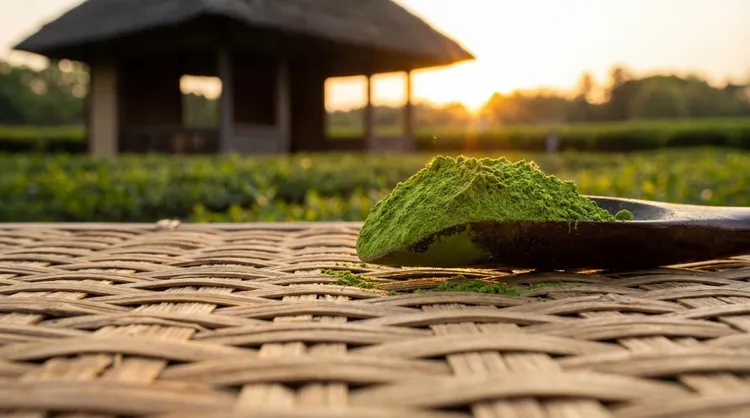
There's something almost alchemical about matcha. A handful of green leaves, grown in carefully tended shade, are transformed through a series of precise, deliberate steps into one of the most complex and nuanced flavors in the food world.
Most people who drink matcha every day have no idea what goes into making it. Once you understand the process - the shading, the steaming, the stone-grinding - you'll never look at that little tin the same way again. And you'll understand immediately why quality matters so much, and why great matcha costs what it does.
This is the full story. Let's start at the beginning.
New to matcha? Start with The Beginner's Guide to Japanese Tea first, then come back here for the production deep-dive.
Step 1: Choosing the Right Plants
Not all tea plants produce great matcha. The finest matcha comes from specific cultivars of Camellia sinensis that have been selected over centuries for their flavor, texture, and response to shade. In Japan's top growing regions - particularly Uji, Nishio, and Kagoshima - farmers cultivate these heritage varieties with extraordinary care.
The age of the plant matters too. Older plants develop more complex root systems and draw more nutrients from the soil, producing leaves with deeper, more nuanced flavor. Some of Japan's most prestigious matcha farms have plants that are decades old.
Step 2: Shading - The Most Critical Step
About three to four weeks before harvest, something unusual happens in a matcha field: the plants disappear under cover.
Traditional shading uses tana - bamboo frames draped with straw or reed screens that block 70-90% of direct sunlight. Modern farms sometimes use synthetic shade cloth, which is more economical but generally considered to produce slightly inferior results. The most prestigious farms still use traditional methods.
Why does shading matter so much?
When a tea plant is deprived of sunlight, it responds in a fascinating way. To maximize photosynthesis with limited light, it produces more chlorophyll - which is why shade-grown matcha is such an intense, vivid green. It also produces dramatically more L-theanine, the amino acid responsible for matcha's characteristic calm, focused energy and its sweet, umami flavor.
At the same time, the absence of sunlight reduces catechin production - which means less bitterness and astringency. The result is a leaf that is simultaneously sweeter, more complex, and more visually striking than anything sun-grown could produce.
This shading process is what matcha shares with gyokuro - but where gyokuro is brewed as a whole leaf, matcha's leaves are ground into powder, which amplifies every quality the shading creates.
Step 3: The First Flush Harvest
Matcha is almost exclusively made from first flush leaves - the youngest, most tender leaves that emerge in early spring (typically late April to mid-May in most Japanese growing regions).
These leaves, called ichibancha, are harvested by hand or by carefully calibrated mechanical harvesters. Hand-harvesting allows pickers to select only the newest growth - the top two or three leaves and the bud - which produces the highest-quality matcha. Mechanical harvesting is more common for mid-range grades.
The timing of the harvest is everything. A few days too early or too late can noticeably affect the flavor profile of the entire batch.
Step 4: Steaming - Locking in the Green
Within hours of harvest, the leaves are steamed at high temperatures for 15-20 seconds. This is a critical step unique to Japanese tea production.
Steaming immediately halts the oxidation process that would otherwise turn the leaves brown and alter their flavor. It locks in that vivid green color and the fresh, clean taste. It also softens the leaves, preparing them for the next stage.
This is fundamentally different from Chinese green tea production, where the leaves are pan-fired rather than steamed - which is why Japanese teas have that characteristic bright, fresh, sometimes almost marine quality, while Chinese green teas tend toward a more toasty, nutty character.
Step 5: Drying and Sorting
After steaming, the leaves are dried in large air-circulation chambers. They're then sorted and separated - stems, veins, and lower-quality leaf material are removed by machine. What remains is called aracha (rough tea).
For ceremonial grade matcha, the sorting is extremely precise. Only the finest, softest leaf tissue makes the cut. For culinary grade matcha, more of the plant is included, which is part of why it has a more robust, astringent flavor. You can read more about what this means practically in Matcha 101: Why Not All Green Powders Are Created Equal.
The sorted, dried leaf material - now called tencha - is the direct precursor to matcha powder.
Step 6: Stone-Grinding - Where the Magic Happens
This is the step that transforms tencha into matcha, and it's perhaps the most remarkable part of the entire process.
Tencha is fed into traditional granite stone mills - two heavy circular stones that rotate slowly (typically 30-60 RPM) against each other. The tea is ground gradually, a tiny amount at a time, into an ultra-fine powder.
The slow speed is essential. Faster grinding generates heat, which degrades the delicate flavor compounds and can diminish the vivid green color. Traditional stone mills produce roughly 30-40 grams of matcha per hour. That means a single 30g tin of high-quality matcha represents almost an hour of stone-grinding.
What makes stone-grinding special?
The irregular, slightly rough surface of granite creates a shearing action that preserves the cell structure of the leaf better than mechanical blade-grinding. The result is a powder of extraordinary fineness - true ceremonial grade matcha can pass through a sieve of 10 microns - with a texture that's almost silky to the touch.
When you rub a pinch of quality matcha between your fingers, it should feel as fine as eyeshadow. Coarser powder is a sign of faster, less careful grinding - often a marker of culinary grade.
Step 7: Packaging and Preservation
Once ground, matcha is extraordinarily vulnerable. Exposure to light, heat, moisture, and oxygen all degrade it rapidly - fading the color, flattening the flavor, and diminishing the nutritional compounds.
Quality matcha is immediately sealed in nitrogen-flushed, airtight, opaque tins or foil pouches and refrigerated until shipping. Once it reaches you, the clock starts ticking. Read our Matcha Storage Guide to learn how to preserve your matcha's freshness for as long as possible.
Why This Process Justifies the Price
When you understand everything that goes into a tin of ceremonial grade matcha - the heritage cultivars, the hand-harvesting, the traditional shading, the slow stone-grinding - the price tag starts to make sense.
You're not just buying a flavoring. You're buying the product of a centuries-old agricultural tradition, practiced by skilled farmers in specific microclimates, processed with extraordinary care at every step.
The difference between great matcha and cheap matcha isn't just about taste - it's about the entire philosophy behind how it was made. And once you've tasted the real thing, properly prepared, that difference is immediately, unmistakably clear.
Ready to experience it? Start with our guide to The Best Matcha Powders of 2025, Ranked and then learn How to Whisk Matcha for a perfect first cup.
🔗 Continue Exploring
Latest