Simple 4-Ingredient Flatbread Ready in 30 Minutes
What if you could have warm, fresh homemade bread on the table in the time it takes to preheat an oven and make a salad? No yeast. No rising time. No waiting.
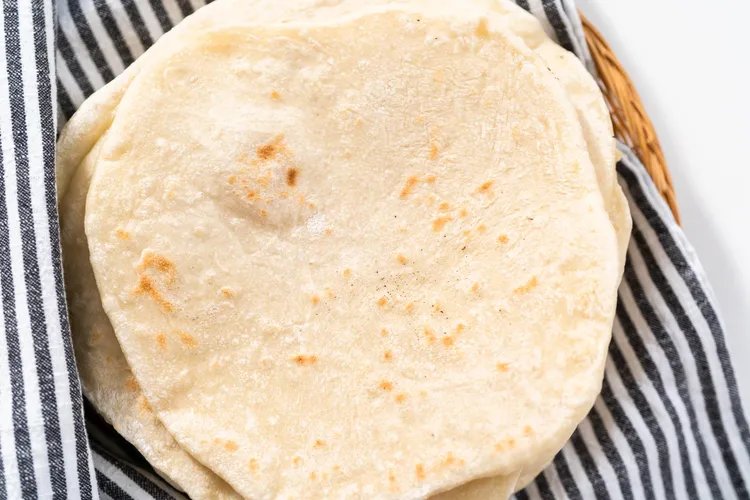
This 4-ingredient flatbread is the fastest path from flour to bread you'll ever find - and it's genuinely delicious. Soft and pliable straight off the skillet, slightly chewy, with just enough char from the heat to remind you this is something special.
It's the perfect entry point for anyone who wants to bake bread but feels intimidated by yeast, proofing times, and all the variables of a traditional loaf. If you can stir four things together and press a ball of dough flat, you can make this.
Why This Recipe Works
Traditional yeasted bread takes 3-4 hours because you need time for the yeast to leaven the dough. Flatbreads sidestep this entirely.
Instead of yeast, this recipe uses baking powder - a chemical leavening agent that activates instantly when mixed with liquid. There's no fermentation, no bulk rise, no second proof. The baking powder creates enough lift to make the flatbread tender and pillowy rather than dense and cracker-like.
The result is a completely different bread from a yeasted loaf - softer, more pliable, thinner - but just as satisfying in its own right.
This is also the ideal recipe to cook while you're building your broader baking skills. Learn the fundamentals in our Complete Beginner's Guide to Baking Bread, but make this when you want bread tonight.
The 4 Ingredients
- All-purpose flour - 250g (2 cups)
- Plain yogurt - 200g (¾ cup) - full fat or low fat, both work
- Baking powder - 1 teaspoon
- Salt - ½ teaspoon
That's it. No yeast, no eggs, no butter, no oil required in the dough (though a brush of butter after cooking is strongly encouraged).
Tip: Greek yogurt produces slightly chewier flatbreads with better structure. Regular plain yogurt creates a softer, more pliable result. Both are excellent - use whatever you have.
Optional Add-Ins
The base recipe is intentionally neutral so you can go any direction:
- Garlic flatbread: Add ½ teaspoon garlic powder to the flour
- Herb flatbread: Mix 1 tablespoon of chopped fresh rosemary or thyme into the dough
- Spiced flatbread: Add ½ teaspoon cumin and a pinch of turmeric for a warm, golden dough
- Everything bagel: Brush with butter after cooking and sprinkle everything bagel seasoning
Simple 4-Ingredient Flatbread Recipe
Makes: 6 flatbreads | Active Time: 15 minutes | Total Time: 30 minutes
Ingredients
- 250g (2 cups) all-purpose flour, plus more for dusting
- 200g (¾ cup + 2 tbsp) plain yogurt
- 1 tsp baking powder
- ½ tsp fine salt
Step 1: Make the Dough (5 Minutes)
In a large bowl, whisk together the flour, baking powder, and salt. Add the yogurt all at once.
Mix with a fork until the dough starts to come together, then switch to your hands and knead briefly in the bowl until a soft, smooth dough forms - about 2 minutes. It should feel soft and slightly tacky but not sticky. If it's too dry, add yogurt one tablespoon at a time. If too wet, add flour one tablespoon at a time.
Common Mistake 1: Over-kneading. This isn't yeasted bread - excessive kneading activates more gluten than you want, making the flatbreads tough. Knead just until the dough is smooth.
Step 2: Divide and Rest (5 Minutes)
Divide the dough into 6 equal pieces (about 75g each if you're using a scale - which you should be, see 5 Essential Bread Baking Tools).
Roll each piece into a ball. Let them rest on the counter for 5 minutes, uncovered. This brief rest relaxes the gluten slightly, making the dough easier to roll out.
Step 3: Roll Out
On a lightly floured surface, roll each ball into a rough circle or oval about 3mm thick (roughly ⅛ inch). They don't need to be perfect - irregular, slightly rustic shapes look beautiful and cook evenly.
Aim for roughly 6-7 inches in diameter for standard flatbreads. Thinner means crispier edges; thicker means chewier and more pillow-like in the center.
Step 4: Cook (2 Minutes Per Flatbread)
Heat a heavy skillet - cast iron is ideal, but any thick-bottomed pan works - over medium-high heat until very hot. Do not add oil.
Cook each flatbread for 1-1.5 minutes per side. You're looking for:
- Golden spots and slight char on the cooked side
- The flatbread puffing up in the middle (a great sign - trapped steam is doing its job)
- A dry, non-doughy appearance when you lift an edge
Common Mistake 2: Cooking on too low heat. A moderately warm pan produces pale, floppy flatbreads that steam rather than char. You want the pan genuinely hot - a drop of water should sizzle and evaporate in 2 seconds.
Step 5: Finish and Serve
As each flatbread comes off the pan, place on a plate and cover with a clean towel. The trapped steam keeps them soft and pliable.
For maximum deliciousness: brush immediately with melted butter or garlic butter, and finish with a pinch of flaky salt.
How to Serve These Flatbreads
The versatility of this recipe is half its appeal:
As a wrap or sandwich: These are pliable enough to fold around grilled chicken, roasted vegetables, hummus, or falafel without breaking.
As a pizza base: Top with sauce and cheese and finish under the broiler for 3-4 minutes. The thinner you roll them, the crispier the base.
As a side bread: Serve alongside soups, stews, dips, and salads. They're the easiest answer to "what can I make to go with dinner tonight."
As a breakfast item: Top with labneh, sliced cucumber, and za'atar - or go sweet with honey and tahini.
As a dipping vehicle: Tear and dip into hummus, baba ganoush, tzatziki, or whipped ricotta.
Make-Ahead and Storage
Same day: These are at their absolute best within 30 minutes of cooking, while still warm and pliable.
Next day: Store in an airtight container or zip-lock bag. Reheat in a dry pan for 30 seconds per side, or wrap in a damp paper towel and microwave for 20 seconds.
Freezing: Stack flatbreads with parchment between each, wrap tightly, and freeze for up to 2 months. Reheat from frozen in a dry pan or toaster.
Uncooked dough: The dough can be refrigerated (wrapped) for up to 24 hours. Roll and cook directly from the fridge - just add 30 seconds per side.
Variations Worth Trying
Dairy-free version: Substitute the yogurt with an equal weight of dairy-free yogurt (coconut or oat-based work well). The texture is slightly different but still excellent.
Whole wheat version: Replace 50g of the all-purpose flour with whole wheat. The flatbreads will be slightly denser with a nuttier flavor.
Thicker (pita-style): Roll to 5mm thick and cook slightly lower heat for 2 minutes per side. The thick center will puff dramatically and create a natural pocket when cooled.
Crispy version (like a lavash): Roll to 2mm and bake on a hot sheet pan at 450°F for 5-6 minutes. Crispy, cracker-like, excellent for dipping.
Frequently Asked Questions
Q: Can I use self-rising flour instead of all-purpose + baking powder? Yes - just omit the baking powder (self-rising flour already contains it) and reduce the salt slightly since self-rising flour also contains salt.
Q: Why are my flatbreads not puffing up? The pan isn't hot enough, or the dough was rolled too thick. Increase heat and make sure each piece is roughly 3mm. The puffing is from steam creating a pocket between two sides of the rolled dough - a very hot pan makes this happen dramatically.
Q: Can I make these without yogurt? You can substitute buttermilk (use slightly less - about 160ml) or make a DIY version by adding 1 tablespoon of lemon juice or white vinegar to regular milk and letting it sit for 5 minutes. The yogurt provides both moisture and a slight tang; these substitutes approximate it.
Q: How do I know when the pan is hot enough? Hold your hand 3 inches above the surface - you should feel strong heat radiating up. Or flick a few drops of water into the pan; they should dance and evaporate within 2 seconds.
Q: Can I add olive oil to the dough? Yes - 1-2 tablespoons of olive oil makes the dough slightly richer and the cooked flatbreads more tender. It's a nice variation, though not essential.
Make It Tonight
This is genuinely a 30-minute recipe. Mix, rest, roll, cook. There's no technique to master, no yeast to worry about, no timing anxiety. Just fresh, warm bread whenever you want it.
Once you've got this one in your rotation, explore the rest of our bread series - particularly our Beginner Focaccia for another forgiving, fast-track recipe, or our Complete Beginner's Guide to Baking Bread when you're ready to tackle a full yeasted loaf.
More from the Beginner's Bread Series:
Latest