Beginner Focaccia: Forgiving, Delicious, and Impressive
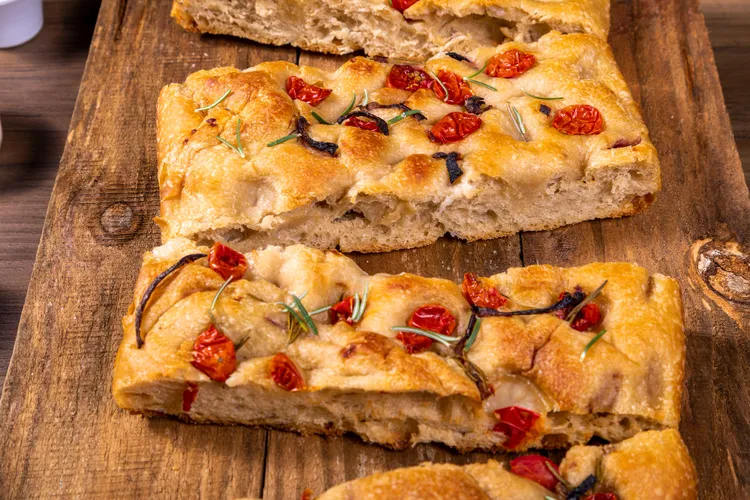
If you've been nervous about baking bread, focaccia is the recipe that will cure you of that fear permanently. It's the most forgiving bread in existence - a high-hydration dough that's virtually impossible to over-knead (because there's no kneading), impossible to mis-shape (because you just poke it), and almost impossible to mess up.
The result is extraordinary: a pillowy, golden slab with a crispy bottom, dimpled surface pooling with olive oil, and a crumb so airy and open it practically floats. It's also, without exaggeration, the recipe that turns casual bakers into obsessed ones.
Beginner focaccia belongs at the start of your baking journey - right alongside the Complete Beginner's Guide to Baking Bread. It teaches you everything important about fermentation, hydration, and gluten without any of the stressful shaping or kneading.
Why Focaccia Is Perfect for Beginners
Traditional focaccia dough is high-hydration - typically 75-80% water to flour ratio. This makes it too wet and sticky to knead in any conventional sense. Instead, it develops its extraordinary gluten through a series of stretch and fold sets during fermentation, requiring nothing more than a few minutes of effort spread over a couple of hours.
No windowpane tests. No shaping anxiety. No loaf pans. You just tip it into an oiled pan, let it relax, dimple it with your fingers, drizzle it with olive oil, and bake it.
It's also the most flexible bread recipe in terms of timing: the dough can cold-proof overnight in the fridge, can be held for up to 72 hours before baking, and tolerates an enormous range of fermentation variables that would sink a sandwich loaf.
The Olive Oil Is Not Optional
Focaccia is a deeply olive oil-forward bread. Don't stint on it.
Olive oil does three things here: it prevents the dough from sticking to the pan, it fries the bottom crust during baking (creating that irresistible crispy underside), and it soaks into the dimples on top to create rich, glistening pockets in the finished bread.
Use a good quality extra-virgin olive oil - this is a bread where the oil's flavor is front and center. The exact brand matters more here than in most recipes.
Tip: Be genuinely generous. Most beginners use too little oil out of nervousness and end up with a paler, less flavorful focaccia. A quarter cup in the pan and another quarter cup on top sounds like a lot. It's not. It's correct.
Beginner Focaccia Recipe
Makes: One 9x13 inch pan | Serves: 8-10 | Total Time: 3-4 hours (or overnight)
Ingredients
For the dough:
- 500g (4 cups) bread flour or all-purpose flour
- 430g (1¾ cups) warm water (100°F / 38°C)
- 7g (2¼ tsp) instant yeast
- 9g (1½ tsp) fine salt
- 2 tbsp extra-virgin olive oil
For the pan and top:
- 60ml (¼ cup) extra-virgin olive oil, divided
- Flaky sea salt (Maldon or similar)
- Toppings of your choice (see variations below)
Step 1: Mix the Dough (10 Minutes)
In a large bowl, whisk together flour, yeast, and salt. Add the warm water and 2 tablespoons of olive oil. Mix with a fork or your hand until no dry flour remains.
The dough will look rough, very wet, and a little alarming. This is exactly right. Don't add more flour.
Cover the bowl with plastic wrap and let it rest for 30 minutes.
Step 2: Stretch and Fold (2 Hours, Mostly Hands-Off)
Instead of kneading, focaccia dough develops through stretch and fold sets:
- Wet your hand, reach under one side of the dough
- Stretch it up as far as it'll go without tearing
- Fold it over the center of the dough
- Rotate the bowl 90° and repeat - all four sides is one set
Perform 4 sets, 30 minutes apart over the first 2 hours.
After the last set, the dough should feel noticeably more cohesive, elastic, and smooth. You should see bubbles forming throughout. The dough volume will have increased noticeably.
Step 3: Oil the Pan and Transfer
Pour 3 tablespoons of olive oil into your 9x13 inch baking pan and spread it across the bottom and sides.
Using an oiled bowl scraper or spatula, gently transfer the dough to the pan. Tilt the pan so the oil coats the bottom of the dough. Fold the dough over itself a couple of times to tighten it slightly, then flip it so the smooth side faces up.
Cover and let rest for 45-60 minutes until the dough has relaxed and filled much of the pan.
Step 4: Dimple and Top
Preheat your oven to 450°F (230°C).
Drizzle the remaining olive oil over the top of the dough. Now, using all ten fingers, press down firmly into the dough to create the signature deep dimples - go all the way to the bottom of the pan. Work confidently; timid poking creates shallow dimples that disappear.
The dimples should fill immediately with olive oil. This is perfect.
Sprinkle generously with flaky salt. Add any toppings now (see below).
Common Mistake 1: Shallow, tentative dimpling. Press your fingers all the way through the dough to the bottom of the pan. The dough is resilient and won't deflate catastrophically - the dimples hold the oil and create texture on the finished bread.
Step 5: Bake
Bake at 450°F (230°C) for 20-25 minutes until the top is deep golden brown and the underside (check by lifting a corner with a spatula) is crispy and caramelized.
You'll smell the oil sizzling under the bread as it bakes - that's the crust forming.
Remove from the oven and immediately drizzle with another tablespoon of olive oil if desired. Let cool in the pan for 5 minutes, then transfer to a wire rack.
Common Mistake 2: Pulling the focaccia when the top looks done but the underside is still pale. Lift a corner with a spatula at the 20-minute mark - the bottom should be deeply golden. If not, give it 3-5 more minutes.
Step 6: Serve
Focaccia is best eaten within a few hours of baking, still slightly warm. Tear into rough pieces or cut with a serrated knife.
It needs nothing. But a small bowl of olive oil and balsamic vinegar for dipping doesn't hurt.
Overnight Focaccia (Even Better Flavor)
After the stretch and fold stage, instead of oiling your pan immediately:
- Cover the bowl tightly and refrigerate overnight (8-16 hours)
- The next day, remove from the fridge and let it sit at room temperature for 1 hour
- Oil the pan, transfer, dimple, and bake as above
Cold fermentation develops remarkable flavor complexity - more depth, a slight tang, and a crumb that's even more open and airy. This is the method serious focaccia bakers use, and the difference is noticeable. See how the same principle applies in our No-Knead Overnight Bread recipe.
Topping Ideas
The beauty of focaccia is that almost anything works pressed gently into the dimpled surface before baking:
Classic: Flaky salt + fresh rosemary + garlic slices Tomato: Cherry tomatoes halved and pressed in, olives, dried oregano Onion: Caramelized onions + thyme + gruyère Potato: Thinly sliced potato + rosemary + sea salt (a Ligurian classic) Sweet: Sliced figs + gorgonzola + walnuts + honey drizzle after baking Simple: Flaky salt only - let the olive oil and bread speak for themselves
Frequently Asked Questions
Q: Why is my focaccia dense instead of airy? Under-fermentation is the most common cause. Make sure your dough has visibly bubbled and increased in volume before dimpling and baking. Also verify your yeast is active - proof it if in doubt.
Q: Can I make focaccia without a 9x13 pan? Yes - a 12-inch cast iron skillet, a 9x9 square pan (for thicker focaccia), or even a rimmed baking sheet work. Just adjust thickness expectations accordingly.
Q: Why did my focaccia stick to the pan? Not enough oil. Be very generous coating the pan before adding the dough - the oil should pool visibly in the pan, not just coat it. For insurance, a light dusting of semolina flour under the oil helps too.
Q: Can I use all-purpose flour instead of bread flour? Absolutely - all-purpose works well. The crumb will be slightly softer and less chewy. For the most beginner-friendly results, all-purpose is a safe choice.
Q: How do I store leftover focaccia? Room temperature, wrapped in foil or a cloth, for up to 2 days. Reheat in a 375°F oven for 5-8 minutes to restore the crust. It also freezes well - slice first, then freeze in a zip-lock bag for up to 1 month.
Your New Favorite Recipe
The first time you make focaccia, you'll be surprised how easy it is. The second time, you'll be adjusting toppings. By the third time, you'll be making it on weeknights without thinking.
It's a gateway bread - the recipe that makes you realize bread baking isn't as hard as you thought, and opens the door to everything else: sourdough, sandwich loaves, flatbreads, enriched doughs.
Start here. Then explore our Complete Beginner's Guide to Baking Bread for the full journey.
More from the Beginner's Bread Series:
Latest