10 Street Food Dishes You Can Make in 30 Minutes or Less
The world's greatest quick food - proof that the best things don't take the longest
Street food was never meant to be slow.
It was designed for people who are hungry right now, who have twenty minutes between work and wherever they're going next, who want something extraordinary without a reservation or a long wait. The vendors who make it have spent years optimising every step - the mise en place, the timing, the sequence - so that the distance between "I want that" and "here it is" is as short as possible.
Which means that street food, done right, is some of the fastest genuinely excellent cooking in the world. Not convenience food. Not shortcuts. Real cooking, real flavor, built for speed from the ground up.
This list collects the ten fastest dishes from the Global Street Food at Home collection - those that can be on the table in 30 minutes or less with minimal prep. Each entry includes the actual time, what to have ready in advance, and a link to the full recipe for when you want the deep-dive version. Some have a small make-ahead advantage (the đồ chua for bánh mì, the sauce for tteokbokki) that reduce the active time significantly - those are flagged clearly.
This is the list to bookmark for Wednesday evenings.
№1 - Socca (French Riviera Chickpea Flatbread)
Time: 20 minutes | Difficulty: Beginner | Vegan & Gluten-Free
Socca is the fastest impressive thing you can make for dinner. Five ingredients. No yeast, no proving, no complexity. A batter of chickpea flour, water, olive oil, and salt - poured into a hot cast iron pan and cooked under a grill until the edges blister and the surface chars in dark, irregular patches - produces a flatbread that is crispy at the edges, slightly soft in the centre, and deeply savory in a way that's difficult to explain from such simple ingredients.
The niçoise tradition is to eat it hot from the pan, torn rather than cut, with nothing more than flaky salt and black pepper. The more embellished version - topped with caramelised onions, black olive tapenade, or a scatter of fresh rosemary and sea salt - takes two minutes more and is outstanding.
The 20-minute breakdown:
- 2 minutes: Make the batter (whisk chickpea flour, water, olive oil, salt)
- 15 minutes: Rest the batter (non-active - do other things)
- 3 minutes: Cook under a hot grill
Make-ahead advantage: The batter keeps refrigerated for up to 24 hours. Mix it in the morning; cook it in the evening.
→ Full recipe and 6 topping variations: How to Make Socca: The Chickpea Flatbread of the French Riviera
№2 - Tteokbokki (Korean Spicy Rice Cakes)
Time: 25 minutes (or 15 minutes with pre-made sauce) | Difficulty: Beginner | Vegan Option
The speed of tteokbokki is deceptive - it looks like a dish that should take longer. The anchovy stock, the gochujang sauce, the rice cakes, the fish cakes - but it all happens in one pan, sequentially, and the entire active process from first bubble to serving bowl is under 25 minutes.
With the sauce made in advance (it keeps for 2 weeks refrigerated), the time drops to 15 minutes: make the stock, add the pre-made sauce, add the tteok, cook for 10 minutes. The fastest genuinely extraordinary meal in this collection.
The 25-minute breakdown:
- 15 minutes: Simmer anchovy stock
- 5 minutes: Build sauce and combine with stock
- 8 minutes: Cook rice cakes until sauce thickens
Make-ahead advantage: Make a double batch of the gochujang sauce paste on the weekend - weeknight tteokbokki drops to 15 minutes.
→ Full recipe, rose version, and rabokki upgrade: Korean Tteokbokki: The Spicy Rice Cake Dish Taking Over the World
№3 - Pan con Tomate (Catalan Tomato Bread)
Time: 10 minutes | Difficulty: Beginner | Vegan
Pan con tomate is the fastest dish on this list and, arguably, the most revealing: it demonstrates how few ingredients are needed to produce something genuinely delicious when each ingredient is perfect. A slice of sourdough or baguette, toasted until golden. A clove of raw garlic rubbed once across the surface - just enough for the garlic flavor to perfume the bread without overwhelming it. A ripe tomato halved and rubbed firmly over the toasted surface until the flesh has dissolved into the bread. A generous pour of good olive oil. Flaky salt.
That is pan con tomate. It is one of the best things in this collection and one of the most frequently made in this kitchen.
The critical instruction: The tomato must be very ripe. An under-ripe tomato rubbed onto toast produces damp toast. A very ripe tomato - one that yields immediately to gentle pressure - dissolves into the bread and produces something between a sauce and an absorption, with concentrated tomato flavor in every bite.
The 10-minute breakdown:
- 5 minutes: Toast the bread
- 5 minutes: Rub garlic, rub tomato, oil, salt
Make-ahead: Nothing to make ahead - the dish must be assembled and eaten immediately. The tomato-rubbed bread softens within minutes.
→ Full recipe and 4 toppings: Spanish Street Food: 5 Recipes from the Markets of Madrid
№4 - Pimientos de Padrón (Blistered Spanish Peppers)
Time: 12 minutes | Difficulty: Beginner | Vegan & Gluten-Free
Pimientos de Padrón are the Spanish roulette dish - small green peppers from the Padrón region of Galicia, almost all of which are mild and sweet, but approximately one in ten is unexpectedly and memorably hot. You don't know which until you bite. This unpredictability is part of the point.
Blister them in a very hot pan with a generous amount of olive oil for 5-6 minutes until charred in patches and slightly collapsed. Scatter with very good flaky sea salt. Eat immediately, picking them up by the stem. The entire preparation - shopping included, if you're already at a market - takes under 15 minutes.
The critical instruction: The pan must be genuinely hot before the peppers go in. A moderately hot pan produces steamed, soft peppers; a screaming hot pan produces the charred, blistered exterior and slightly smoky flavor that defines the dish.
The 12-minute breakdown:
- 5 minutes: Heat the pan to very hot
- 6 minutes: Blister peppers, turning occasionally
- 1 minute: Salt and plate
→ Full recipe: Spanish Street Food: 5 Recipes from the Markets of Madrid
№5 - Souvlaki (Greek Grilled Skewers) - Weeknight Version
Time: 25 minutes (with pre-marinated chicken) | Difficulty: Beginner | Vegan Option
The full souvlaki experience - marinated overnight, grilled over charcoal, wrapped in freshly made pita - is a weekend project. The weeknight version is a legitimate and excellent compromise: chicken thigh (which needs very little marinating time because of its fat content), 20 minutes in a cast iron pan, tzatziki from the fridge (ideally made ahead), and warmed shop-bought pita.
The trick: Chicken thighs marinated for even 20 minutes in the souvlaki mix (olive oil, lemon, oregano, garlic, salt) are noticeably better than unmarinated chicken. If you remember in the morning, combine the chicken and marinade in a zip-lock bag before leaving for work. If you don't, 20 minutes while the pan heats and the tzatziki is made is still worth it.
The 25-minute breakdown:
- 5 minutes: Marinate chicken while pan heats
- 15 minutes: Cook chicken (5–6 min per side)
- 5 minutes: Make quick tzatziki, warm pita
Make-ahead advantage: Tzatziki made a day ahead is better than freshly made - the garlic mellows and integrates. Make it on Sunday for the week.
→ Full recipe, overnight marinade, and pita guide: Greek Souvlaki at Home: The Complete Guide
№6 - Bánh Mì - Weeknight Version
Time: 10 minutes (with pre-made đồ chua and Maggi mayo) | Difficulty: Beginner
The full bánh mì guide covers bread selection, three fillings, and proper assembly. On a weeknight, with đồ chua already in the fridge, this collapses to a 10-minute assembly: warm the baguette, spread the mayo, layer the filling, add the pickle, add coriander and chili, squeeze lime, eat.
The filling can be as simple as good quality ham or pâté from the deli counter - no cooking required - or leftover lemongrass chicken reheated in a pan for 2 minutes. The đồ chua carries the flavor and makes even a simple filling taste like a properly constructed bánh mì.
The 10-minute breakdown:
- 4 minutes: Warm the bread
- 2 minutes: Spread Maggi mayo, lay filling
- 2 minutes: Add đồ chua (squeezed), coriander, chili
- 2 minutes: Squeeze lime, close, eat
Make-ahead advantage: Đồ chua keeps for 2 weeks refrigerated - make a large jar on Sunday and the weeknight bánh mì requires no prep at all beyond the filling.
→ Full recipe, three fillings, and assembly guide: Vietnamese Bánh Mì: Building the Perfect Sandwich at Home
№7 - Chaat (Indian Street Snack Plate)
Time: 15 minutes (with pre-made chaat masala and tamarind chutney) | Difficulty: Beginner | Vegan
Chaat is the broad category of Indian street food snacks - tangy, crunchy, spiced, layered with textures and flavors that hit every sensory register simultaneously. In its full form - pani puri, papdi chaat, bhel puri - it is a multi-component project. In its weeknight form, it is a 15-minute snack plate that uses pre-made components and still tastes extraordinary.
The weeknight chaat formula:
- Papdi or any crispy cracker/flatbread as the base
- Boiled and spiced potatoes and chickpeas (the filling)
- A drizzle of tamarind chutney
- A drizzle of mint-coriander chutney (blend fresh coriander, mint, green chili, and a squeeze of lime - 3 minutes)
- A spoonful of yogurt, seasoned with chaat masala
- A scatter of sev (crispy chickpea noodles) for crunch
The chaat masala does most of the work - its tangy, sulfurous, cumin-forward character transforms plain yogurt and boiled potatoes into something that tastes specifically and unmistakably of Indian street food.
Make-ahead advantage: Chaat masala keeps indefinitely. Tamarind chutney keeps 3 weeks refrigerated. With both made ahead, the assembly takes 10 minutes.
→ Full chaat masala recipe and five quick chaat preparations: Pakistani Chaat Masala: The Spice Blend That Makes Everything Better
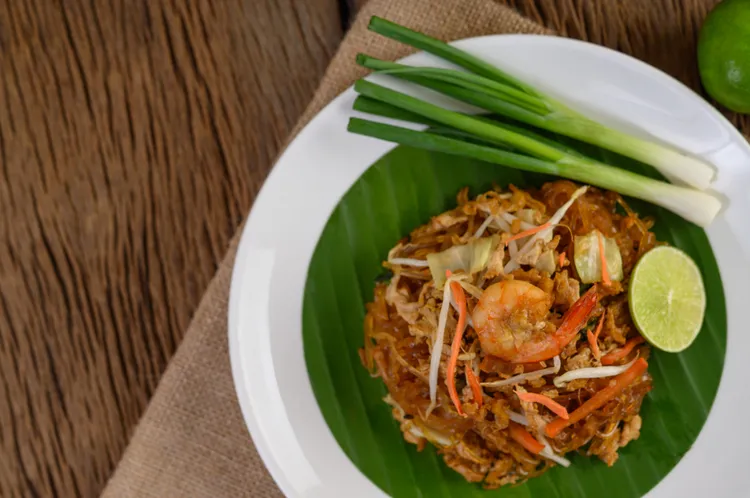
№8 - Pad Thai - Quick Version
Time: 20 minutes (with pre-made sauce and soaked noodles) | Difficulty: Intermediate
The full pad thai recipe covers sauce from scratch, wok technique, and all the details that make the difference between a good and a great result. The quick version assumes one make-ahead step - the sauce - which reduces the active cooking time from 25 minutes to under 20, with no loss of quality.
The noodle soaking can overlap with other prep - 30 minutes in cold water while you make the sauce, prepare the protein, and set up the wok. By the time everything is ready, the noodles are ready. The actual cooking is under 8 minutes per portion.
The 20-minute breakdown:
- 0 min: Put noodles in cold water to soak
- 5 minutes: Prepare protein, crack eggs, set up wok
- 5 minutes: Make sauce (or retrieve from fridge)
- 8 minutes: Cook (one portion at a time)
Make-ahead advantage: The pad thai sauce keeps refrigerated for 2 weeks. A jar of it in the fridge makes weeknight pad thai a 15-minute meal.
→ Full recipe, proper wok technique, and vegan version: Thai Pad Thai: The Street Stall Recipe, Made at Home
№9 - Vietnamese Spring Rolls (Gỏi Cuốn)
Time: 25 minutes | Difficulty: Beginner | Vegan Option
Fresh Vietnamese spring rolls - not fried, but fresh rice paper rolls filled with herbs, vermicelli noodles, prawns or tofu, and lettuce - are one of the most refreshing and genuinely healthy street foods in the world, and they are far simpler to make at home than they appear.
The technique is the only challenge: rice paper is brittle when dry and tears easily when over-wet. The correct approach is a 3-second dip in warm water - just long enough to soften, not long enough to become floppy - and immediate rolling on a damp surface.
Filling (per 8 rolls):
- 100g rice vermicelli noodles, cooked and cooled
- 200g cooked prawns (or pan-fried tofu for vegan)
- 1 head butter lettuce, leaves separated
- Large handful fresh mint and fresh coriander
- 1 cucumber, cut into thin matchsticks
- 8 sheets rice paper (bánh tráng)
Method: Dip one rice paper sheet in warm water for 3 seconds. Lay flat on a damp board. In the lower third, layer a lettuce leaf, a small amount of noodles, 2-3 prawns, cucumber, and herbs. Fold the bottom edge over the filling. Fold in the sides. Roll tightly forward to seal. Repeat. Serve with nuoc cham for dipping.
Make-ahead: Fill and roll up to 2 hours ahead - cover with a damp cloth and refrigerate. Any longer and the rice paper toughens.
→ Nuoc cham dipping sauce recipe: The Street Food Sauce Bible: 15 Sauces from 15 Countries
№10 - Korean Corn Dogs (Hot Dog with Cornmeal Batter)
Time: 25 minutes | Difficulty: Beginner
Korean corn dogs - hot dogs or mozzarella sticks on skewers, coated in a thick, slightly sweet cornmeal batter and deep-fried until golden - are one of the more joyful street food trends to emerge from Korean snack culture in the last decade. The outside is crispy and slightly cakey; the inside is hot dog and/or stretchy molten mozzarella. They are finished with a squeeze of ketchup and mustard, a drizzle of honey, and sometimes a scatter of sugar - the sweet-savory combination that is characteristic of Korean street food.
Ingredients (makes 4):
- 4 hot dog sausages (or 200g block mozzarella cut into 4 rectangles, or one of each)
- 4 wooden skewers
- Batter: 120g plain flour, 60g fine cornmeal, 2 tbsp sugar, 1 tsp baking powder, ½ tsp salt, 1 egg, 180ml cold milk - whisk together to a thick, smooth batter
- Oil for deep frying (170-175°C)
- Finish: ketchup, American mustard, honey, sugar (optional)
Method: Pat hot dogs dry and thread onto skewers. Dip into batter, turning to coat thickly and evenly. Fry in hot oil (170°C) for 4-5 minutes, turning occasionally, until deep golden and crispy. Drain on a wire rack. Apply condiments. Eat immediately.
The mozzarella version: Freeze mozzarella rectangles for 20 minutes before battering - this prevents the cheese from melting out of the batter before the exterior has time to set.
→ Deep frying technique and temperature guide: How to Fry Like a Street Food Vendor: The Complete Home Guide
The 30-Minute Street Food Pantry
The common thread across every dish on this list is a well-stocked pantry. The 10-minute bánh mì and the 15-minute tteokbokki are only possible because the đồ chua and the sauce are already made. The 10-minute pan con tomate is only extraordinary because the olive oil is good and the tomato is ripe.
The five make-ahead investments that make this entire list faster:
- Đồ chua (bánh mì pickle) - 20 minutes once, lasts 2 weeks
- Tteokbokki sauce paste - 5 minutes once, lasts 2 weeks
- Pad thai sauce - 5 minutes once, lasts 2 weeks
- Tzatziki - 10 minutes once, lasts 4 days
- Tamarind chutney - 20 minutes once, lasts 3 weeks
Make these on a Sunday and every weeknight meal from this list drops to 15 minutes or less.
Quick Reference
| Dish | Time | Region | Difficulty | Vegan |
|---|---|---|---|---|
| Pan con Tomate | 10 min | Spain | Beginner | ✅ |
| Bánh Mì (with prep) | 10 min | Vietnam | Beginner | ✅ |
| Chaat plate (with prep) | 15 min | India | Beginner | ✅ |
| Pimientos de Padrón | 12 min | Spain | Beginner | ✅ |
| Socca | 20 min | France | Beginner | ✅ |
| Pad Thai (with prep) | 20 min | Thailand | Intermediate | ✅ |
| Korean Corn Dogs | 25 min | Korea | Beginner | ⚠️ |
| Tteokbokki (with prep) | 15 min | Korea | Beginner | ✅ |
| Souvlaki (weeknight) | 25 min | Greece | Beginner | ✅ |
| Vietnamese Spring Rolls | 25 min | Vietnam | Beginner | ✅ |
FAQ
Q: Which dish is the absolute fastest if I have nothing made ahead?
Pan con tomate - 10 minutes, no specialist equipment, three ingredients (plus salt). If you have a ripe tomato, a baguette, and good olive oil, you have dinner.
Q: Which dish has the best flavour-to-effort ratio on this list?
Tteokbokki with pre-made sauce. The effort is low (add stock, add sauce, add rice cakes, wait 10 minutes), and the result is one of the most intensely flavoured and texturally satisfying things in this entire collection. If you make one batch of sauce this weekend, you have the best weeknight dinner in your rotation.
Q: Are any of these suitable for complete beginners who have never cooked Asian food?
All of them. The most technically demanding - pad thai and Vietnamese spring rolls - are intermediate only in the sense that they require a specific technique (wok heat for pad thai, rice paper rolling for spring rolls). Both techniques are explained in full in their respective recipe posts and become straightforward after one or two attempts.
Q: Can I combine multiple dishes for a street food night?
Absolutely - and it's the best way to experience this collection. Socca + pimientos de Padrón + pan con tomate is a complete Spanish spread in under 30 minutes. Tteokbokki + Korean corn dogs is a Korean pojangmacha night. Vietnamese spring rolls + bánh mì covers the Vietnamese half of the list. Mix and match by region or by what's in the fridge.
Q: Which dish on this list travels best for packed lunches or picnics?
The Vietnamese spring rolls travel well (wrapped in damp cling film, with nuoc cham in a separate container). The bánh mì travels reasonably well for up to 2 hours if the đồ chua is added at the last minute and stored separately. Everything else is best eaten immediately - street food at its truest is hot and fresh.
🔗 Full Recipes for Every Dish
- How to Make Socca: The Chickpea Flatbread of the French Riviera
- Korean Tteokbokki: The Spicy Rice Cake Dish Taking Over the World
- Spanish Street Food: 5 Recipes from the Markets of Madrid
- Greek Souvlaki at Home: The Complete Guide
- Vietnamese Bánh Mì: Building the Perfect Sandwich at Home
- Thai Pad Thai: The Street Stall Recipe, Made at Home
- Pakistani Chaat Masala: The Spice Blend That Makes Everything Better
- The Street Food Sauce Bible: 15 Sauces from 15 Countries
- How to Fry Like a Street Food Vendor: The Complete Home Guide
- Global Street Food at Home: The Ultimate Guide
Latest